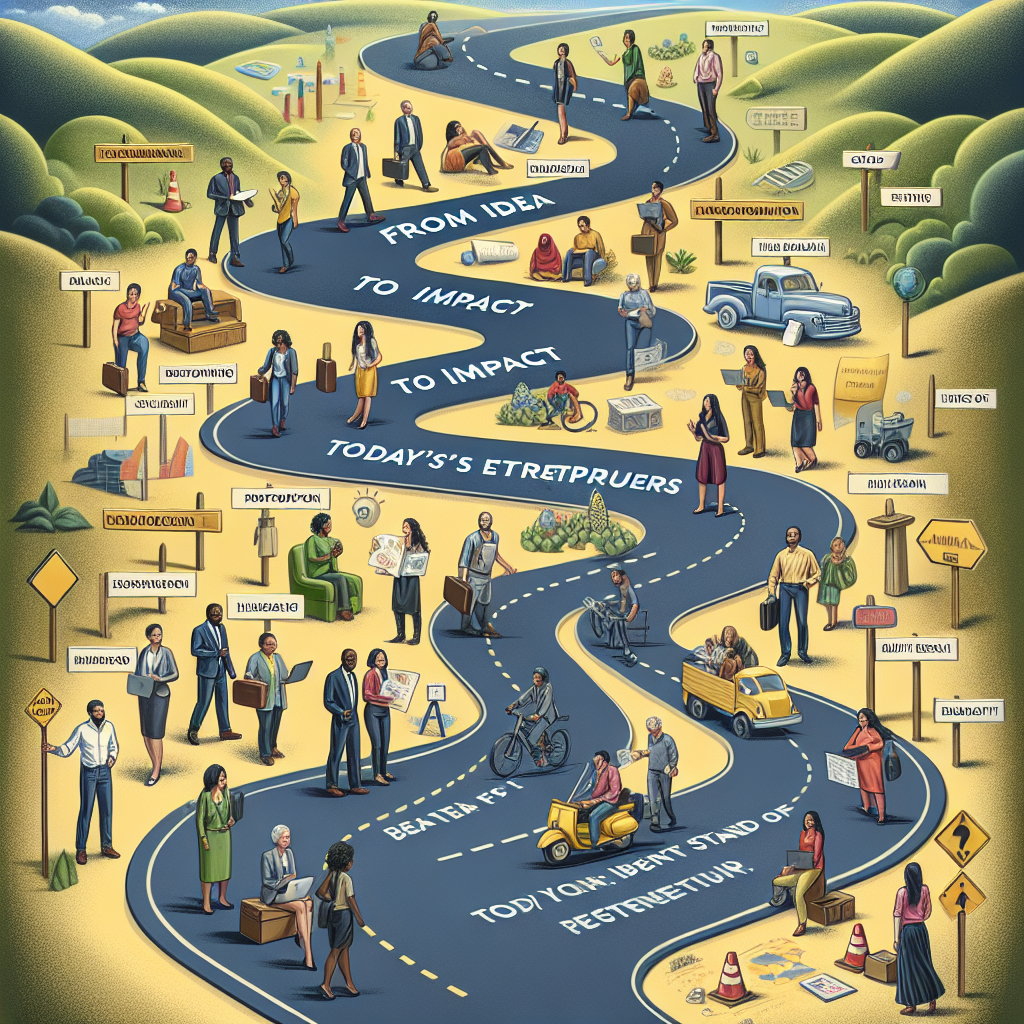
From Idea to Impact: The Journey of Today’s Entrepreneurs

From Idea to Impact: The Journey of Today’s Entrepreneurs
In today’s fast-paced digital landscape, the journey from idea to impact is more exhilarating—and challenging—than ever before. Entrepreneurs are no longer just dreamers; they are innovators who are reshaping industries and influencing how we live and work. The convergence of technology and creativity is driving this evolution, making it vital for aspiring entrepreneurs to understand the nuances of their journey.
One of the key components of entrepreneurship is recognizing a problem worth solving. Whether that’s something as localized as improving the efficiency of local delivery services or as expansive as addressing climate change through sustainable technology, identifying a genuine need is the first step. For instance, consider the story of Zoom. Founded in 2011, Eric Yuan noticed a gap in the existing video conferencing landscape—platforms that were cumbersome and unreliable. His solution not only made virtual meetings more accessible but also became an essential tool during the COVID-19 pandemic, showcasing how pinpointing a problem can lead to massive societal shifts.
Once a viable idea is framed, the next critical phase is validation. This often involves market research and, more importantly, engaging with potential users. Iterative feedback is essential here. A great example is Airbnb, which started as a simple idea of renting out air mattresses in a living room. Initially, it faced skepticism and hurdles, but the founders listened to their users. They refined their platform, emphasizing trust and community—which helped it disrupt the traditional hospitality industry and transform the travel experience.
To go from a validated idea to a viable business, access to funding becomes crucial. While traditional venture capital still plays a significant role, alternative funding options like crowdfunding have democratized financial support for fledgling entrepreneurs. Platforms such as Kickstarter and Indiegogo allow entrepreneurs to test traction while raising capital. For instance, the Pebble smartwatch garnered over $10 million in funding through Kickstarter, illustrating how these new models can empower creators while providing early backers with a stake in remarkable innovations.
Once funding is secured, the real work begins. Implementing an effective go-to-market strategy involves leveraging digital marketing, social media, and networking. Today’s entrepreneurs need a robust online presence in a world where consumers are increasingly making decisions based on a brand’s digital footprint. The success story of Glossier, a beauty brand born from a blog, epitomizes this. By cultivating a strong community around its products and using social media for direct engagement, Glossier has turned brand loyalty into a thriving business without the traditional advertising spend, proving that understanding an audience can yield significant returns.
However, the journey doesn’t end at launch. Sustaining momentum by continuously innovating and adapting is critical. For example, Netflix transitioned from DVD rentals to a streaming powerhouse, recognizing the shift in consumer behavior towards on-demand entertainment. By continually updating its content portfolio and investing in original productions, Netflix not only survived but thrived amidst competition and technological upheval.
Moreover, metrics and analytics are invaluable in today’s entrepreneurial environment. Data-driven decision-making provides insight into user behavior and market trends, allowing entrepreneurs to pivot quickly when needed. Tools like Google Analytics and social media insight platforms offer entrepreneurs the ability to measure what works and what doesn’t, enabling them to focus their efforts more effectively.
Lastly, building a supportive network cannot be overlooked. Surrounding oneself with mentors, other entrepreneurs, and industry professionals can provide guidance, open doors, and share invaluable insights based on experience. Initiatives like Startup Weekend and local entrepreneur meet-ups foster community and collaboration, ultimately enhancing the likelihood of success.
In conclusion, the journey from idea to impact is both thrilling and demanding. It involves understanding market gaps, validating concepts, securing funding, crafting effective strategies, and maintaining adaptability. As technology continues to evolve, so too will the landscape of entrepreneurship. For those ready to embrace the journey, opportunities for innovation and positive impact are boundless. Each entrepreneurial story is unique, yet the common thread remains: the courage to dream coupled with the resolve to turn those dreams into reality. So, gear up, because today’s entrepreneurs are not just building businesses; they are shaping the future.