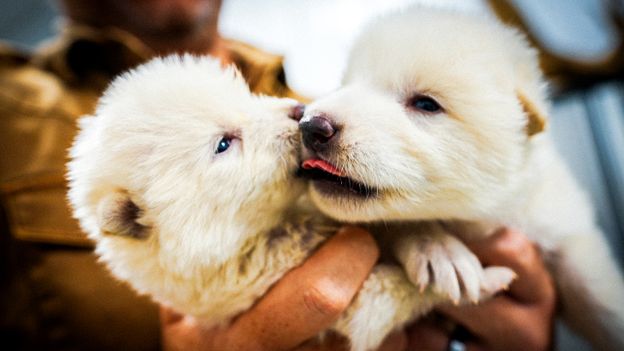

In a groundbreaking move, Dallas-based biotechnology firm Colossal Biosciences announced the genetic revival of extinct dire wolves, sparking excitement and major controversy within the scientific community. Known for their fierce depiction in popular culture, the dire wolves disappeared approximately 13,000 years ago. The resurrection of these canines has captured considerable attention, not least because Game of Thrones author George R. R. Martin shared a photo of himself holding one of the genetically modified pups. As an investor in Colossal, Martin expressed his awe on his blog, equating this scientific feat to historical achievements like the moon landing.
Colossal Biosciences, valued at $10 billion, is backed by high-profile supporters including Chris Hemsworth, Paris Hilton, and even the CIA. The company aims to restore extinct species to their former habitats, contributing to ecological stability and biodiversity. According to Matt James, the Chief Animal Officer at Colossal, the focus is on species that can transform ecosystems positively, potentially mitigating climate change effects.
Despite the enthusiasm, the endeavor has not been without its detractors. Critics argue that the resources funneled into de-extinction projects could divert attention from urgent conservation needs. Many scientists voiced concerns over the implications of such announcements, fearing they might lead to complacency in current conservation efforts. The United States Secretary of the Interior, Doug Burgum, endorsed the project, suggesting it might serve as a cornerstone for modern conservation. However, his comments have sparked debate about relying on technological solutions over traditional conservation methods.
Colossal maintains that its work will aid conservation efforts, yet some experts, like conservation consultant Kent Redford, argue that the company’s claims lack clarity on addressing the underlying threats to biodiversity. Skeptics have long questioned the feasibility and ethics of resurrecting extinct species, citing the difficulties in cloning from ancient DNA and the unknown impacts on contemporary ecosystems.
Criticism also centers on the portrayal of the wolves. Although modified from grey wolf DNA, scientists note they were given white fur, catering more to fictional portrayals than scientific accuracy. These genetic hybrids, while significant, will never fully replicate their ancient counterparts given the vastly changed ecological landscapes.
Colossal’s broader ambitions include reintroducing woolly mammoths to the Arctic, believed by the company to contribute to climate resilience. However, experts like Nitin Sekar from the IUCN challenge their claims, pointing to a lack of supporting data about mammoths’ impact on carbon storage in permafrost. Such projects also raise ethical concerns, particularly regarding the use of elephants as surrogate mothers for these prehistoric revivals.
Despite skepticism, Colossal’s techniques have potential applications in conservation biology, such as enhancing genetic diversity among endangered species. Julie Meachen, a vertebrate paleontologist, notes that while de-extinction garners headlines, the underlying genetic technologies hold more promise for present-day conservation challenges.
A shift in focus might position Colossal as innovators in addressing modern ecological crises. Nevertheless, experts urge a balance between technological advancements and foundational conservation strategies to preserve the world’s biodiversity effectively.
For continued updates on this evolving story, follow our coverage on social media platforms.
Original Source: https://www.bbc.com/future/article/20250425-why-scientists-fear-attempts-to-resurrect-extinct-animals-may-backfire
Category :
Tags:
Publish Date: 2025-04-25 18:31:00