Trump’s Bold Claim: Trade Talks with China Underway Despite Beijing’s Denial – Unveiling the Truth

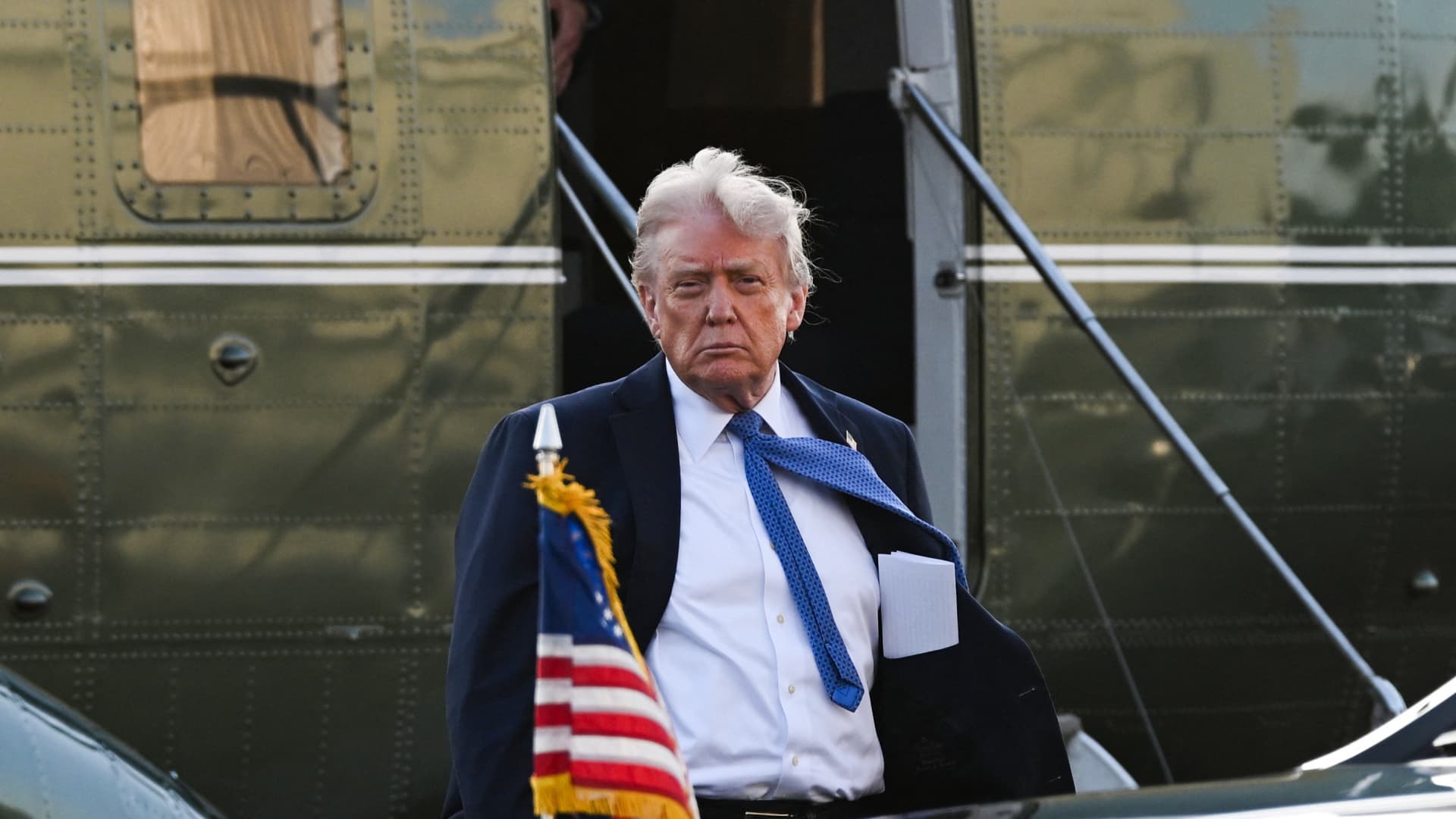
In a dramatic twist, President Donald Trump, upon touching down at Leesburg Executive Airport in Virginia, emphatically denied China’s claims of absent trade negotiations between Beijing and Washington. Speaking to reporters, Trump asserted, “They had a meeting this morning,” without divulging specific details about the meeting or its attendees. His remarks came in response to China’s insistent denial, with the Ministry of Commerce’s spokesperson, He Yadong, stating unequivocally that “at present, there are absolutely no negotiations on the economy and trade between China and the U.S.”
China’s commerce ministry holds firmly that progress in U.S.-China discussions can only occur with the abolishment of unilateral U.S. tariff measures. He Yadong criticized the United States, urging the cancellation of tariffs placed on Chinese goods as a prerequisite for deescalation and a constructive dialogue. This sentiment echoes that of Guo Jiakun from the Chinese Foreign Ministry, who echoed that there aren’t any ongoing negotiations and emphasized that China is keen to converse if treated equitably.
The backdrop of these declarations is a fraught period in U.S.-China relations, exacerbated by the recent U.S. decision to impose a steep 145% tariff on Chinese imports, met with retaliatory actions from Beijing. Amid these heightened tensions, whispers of compromise have emerged. Trump and Treasury Secretary Scott Bessent hinted at potential easing between the two economic giants.
The friction between these two superpowers has not gone unnoticed by industry experts. Yue Su, a principal economist at The Economist Intelligence Unit, noted, “China definitely wants to see the trade war deescalate, as it hurts both economies,” emphasizing China’s strategic pivot from accommodating U.S. needs to prioritizing its own. This shift is manifest in China’s demands for a reversal of unilateral tariffs.
China’s assertive stance isn’t limited to direct interactions with the U.S. It has warned other nations against forming pacts with the U.S. that could compromise Beijing’s interests. Yue Su further speculated that China might adopt a more aggressive diplomatic approach if tensions are escalated by the U.S. These developments have prompted several Wall Street firms to downgrade China’s GDP forecast, due to the persisting trade rift and consequent economic uncertainties.
Amid these tensions, China focuses on diversifying its economic strategies. The Commerce Ministry is spearheading efforts to redirect export-intended goods to the domestic market, ensuring sustained economic activity. Jianwei Xu, a senior economist at Natixis for Greater China, suggested that meaningful negotiations would likely require the U.S. to significantly reduce current tariffs. However, Xu acknowledged the political tightrope that the Trump administration would have to walk, considering the initial motivations for the tariff strategy.
Despite the ongoing tensions, the economic connection between the U.S. and China remains significant. While the U.S. maintains its status as China’s largest trading partner individually, Southeast Asia has surpassed the European Union to become China’s largest partner regionally, accentuating the layered complexity of global trade dynamics.
As the situation develops, both nations will have to navigate this tumultuous terrain carefully. With economic stakes so high, the world awaits a potential turning point that could redefine the future of international trade relationships.
Original Source: https://www.cnbc.com/2025/04/24/china-says-no-talks-with-the-us-on-trade-calls-for-canceling-unilateral-tariffs.html
Category :
Tags:
Publish Date: 2025-04-25 09:29:00