
Astrophysicists at the Aryabhatta Research Institute of Observational Sciences (ARIES), an autonomous branch of India’s Department of Science and Technology, have achieved a significant breakthrough in the study of black holes. The team successfully detected and characterized an elusive intermediate-mass black hole (IMBH), a discovery that sheds new light on these mysterious cosmic entities. This IMBH resides in NGC 4395, a faint galaxy located approximately 4.3 million light-years from Earth.
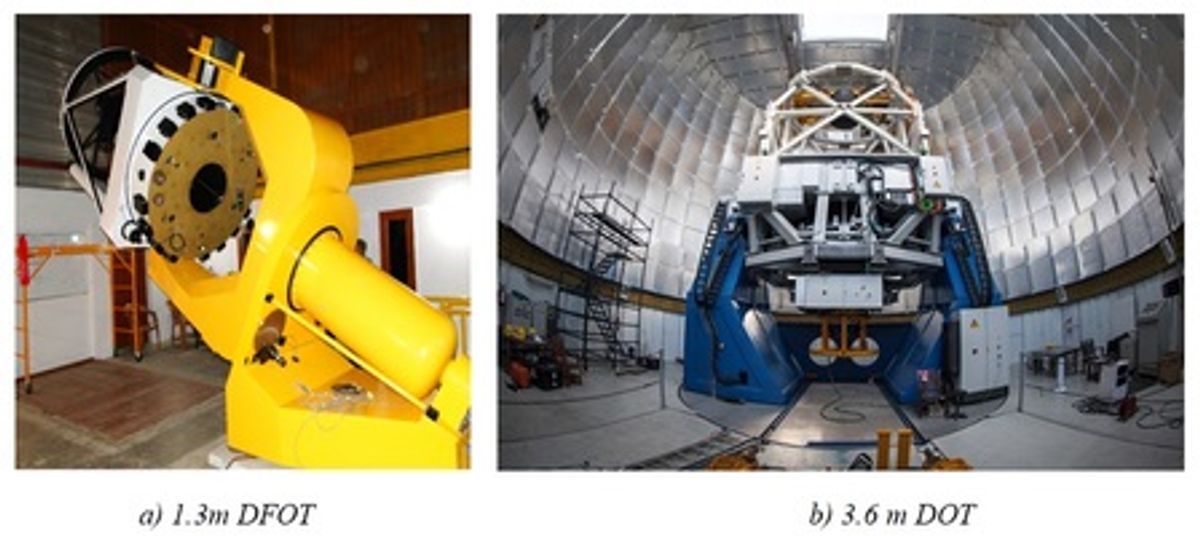
Utilizing the 3.6m Devasthal Optical Telescope (DOT), India’s largest optical telescope situated in Uttarakhand, the research team observed that gas clouds orbit this black hole at a distance of 125 light-minutes—equivalent to around 2.25 billion kilometers—with a velocity dispersion of 545 kilometers per second. “The discovery refines our understanding about how black holes, especially those that weigh between 100 and 100,000 Suns, grow and interact with their surroundings,” the scientists stated.
For many years, astronomers have sought to uncover intermediate-mass black holes, considered the missing link within the cosmic black hole family. These black holes are believed to be the seeds that eventually develop into supermassive black holes. However, their dim nature and location in relatively small galaxies have made them exceedingly challenging to detect, requiring advanced observational technology.
The team, led by Shivangi Pandey, focused their study on NGC 4395, a low-luminosity active galaxy that contains one of the faintest observed actively feeding black holes. They employed not only the 3.6m DOT but also its indigenously developed spectrograph and camera system, known as ADFOSC, alongside the smaller 1.3m Devasthal Fast Optical Telescope (DFOT). Conducting continuous observations over two nights, the researchers applied a specialized technique called spectrophotometric reverberation mapping. This method measures the delay between light emitted by the black hole’s accretion disk and that originating from the surrounding gas clouds, known as the broad-line region. The time lag observed in these emissions revealed the region’s size and contributed to an accurate calculation of the black hole’s mass.
Published in the Astrophysical Journal, the findings demonstrate that the detected IMBH has a mass roughly 22,000 times that of the Sun, marking it as one of the most accurately assessed intermediate-mass black holes on record. Remarkably, it consumes matter at only 6% of its maximum theoretical rate, highlighting the subtle yet profound influence these cosmic bodies have on their environment.
Dr. Suvendu Rakshit, a scientist at ARIES, emphasized the importance of continuing this line of research, stating, “The hunt for more IMBHs is far from over. Larger telescopes and advanced instruments will be key to uncovering these cosmic middleweights.” As scientists pursue IMBHs with more precision, the knowledge gained from such investigations could significantly enhance our understanding of black hole formation and evolution.
This discovery represents a pivotal step in astrophysics, offering a window into the complexities of black hole growth and activity. As research progresses, further breakthroughs are anticipated, promising to reveal more about these hidden titans of the universe.
Original Source: https://sambadenglish.com/national-international-news/indian-telescopes-shed-light-on-elusive-middleweight-black-holes-8972777
Category :
Tags:
Publish Date: 2025-04-17 17:34:00