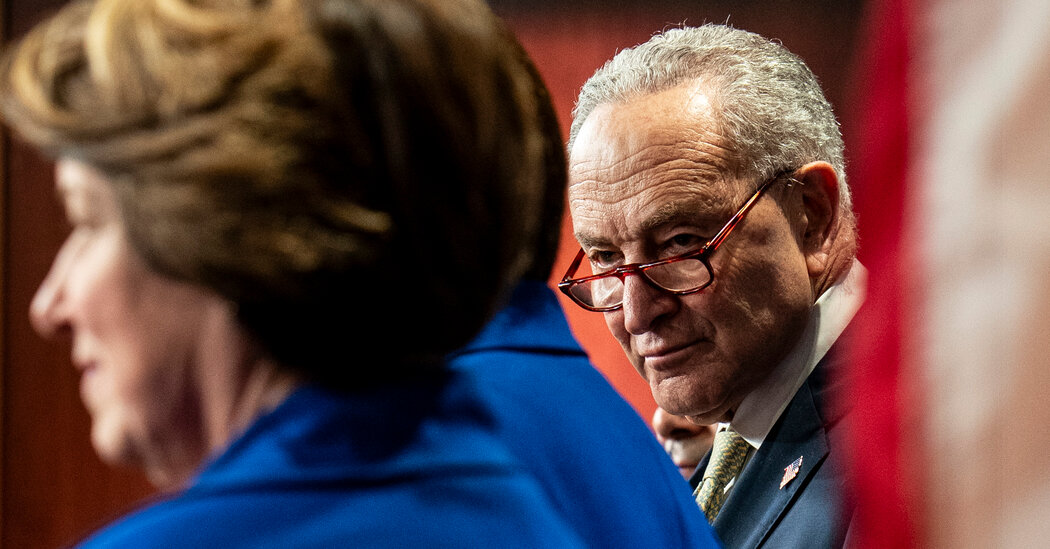

In a late-night political showdown, the Senate was embroiled in debates over President Trump’s domestic policies and reforms as Democrats initiated a series of votes to challenge the Republicans’ combined plan for spending and tax cuts. This contentious session, which extended from Friday into Saturday, highlighted ongoing tensions around the GOP’s push to pass a budget blueprint that would facilitate reconciliation, a process that accelerates the passage of budget-related legislation and protects it from a filibuster. Despite prolonged disagreements within Republican ranks over the specifics of the bill, a delicate agreement was reached to progress.
The Republicans aim to reinstate and extend the tax relief measures enacted in 2017, alongside substantial funds for border, national, and energy security. Senator John Thune of South Dakota underscored this in his remarks, emphasizing the resolution as a stepping stone to secure permanent tax relief and strategic investments.
A ritual known as “vote-a-rama” allowed Senate members to propose various amendments to budget measures, providing Democrats an opportunity to challenge the administration’s policies. Although these amendments are unlikely to become law, they serve as a strategic tool for the minority party to press Republicans on polarizing issues such as President Trump’s trade policies, Elon Musk’s Department of Government Efficiency (DOGE) cuts, proposed Medicaid reductions, and concerns over national security communications.
Senate Minority Leader Chuck Schumer urged Republicans to join Democrats in opposing Trump’s tariffs and various other administration policies, emphasizing the economic risks posed by current measures. However, the session revealed a strong Republican front, with most GOP members abstaining from siding with Democrats. Notably, an amendment by Senator Mark Warner designed to prohibit military communications over commercial apps was defeated in a party-line vote. Similarly, a proposal from Schumer to retract Trump’s tariffs if they led to increased grocery costs did not pass. An amendment aimed at ensuring uninterrupted security assistance to Ukraine saw limited cross-party support, indicating divisions among Republicans.
Some GOP senators, including Susan Collins, Lisa Murkowski, and Dan Sullivan, did cross the aisle to vote with Democrats on a measure reversing cuts to the Social Security Administration, though it failed narrowly. A separate amendment by Sullivan to symbolically uphold Medicare and Medicaid passed, reflecting some bipartisan concerns.
Despite these outcomes, significant questions remain concerning the GOP’s budget approach, particularly regarding the sourcing of the massive cuts required to support their fiscal blueprint. Earlier in the year, House Republicans had championed a plan for sweeping $4.5 trillion tax cuts coupled with significant federal expenditure reductions. In contrast, the Senate’s outline postpones such fiscal reconciliations, opting instead for increased spending on defense and border security.
The Senate plan, which outlines $1.5 trillion in new tax cuts while bypassing key fiscal restraints, contrasts sharply with the more conservative fiscal stance of House Republicans. With differences in budgetary priorities, including a $5 trillion versus $4 trillion increase in the debt ceiling, Republicans face the challenge of aligning their budgetary vision amid calls for greater fiscal responsibility from members like Representative Greg Murphy of North Carolina.
This budget saga captures a snapshot of the complex dynamics within United States politics, addressing federal budgetary processes, the legacy of the 2017 Tax Cuts and Jobs Act, and the delicate balance House and Senate Republicans must maintain. As the debate continues, the prospect of tax cuts and budgetary adjustments will remain central to the Republican agenda and pivotal in shaping the nation’s economic trajectory.
Original Source: https://www.nytimes.com/2025/04/04/us/politics/senate-republicans-budget-votes.html
Category : United States Politics and Government,Federal Budget (US),Taxation,Tax Cuts and Jobs Act (2017),House of Representatives,Republican Party,Senate
Tags:
Publish Date: 2025-04-05 09:59:00