Revolutionary Insight: Microsoft AI Chief Celebrates the Hidden Benefits of Perfectly Timed AI Models

Microsoft, despite owning a significant number of Nvidia GPUs, has strategically chosen not to chase the frontier in artificial intelligence (AI) models. In a conversation with CNBC’s Steve Kovach, Mustafa Suleyman, Microsoft’s CEO of AI, explained the company’s approach: waiting for technological developments to settle before building AI models offers multiple advantages, such as cost reduction and an emphasis on specific use cases. This tactic, termed “off-frontier,” allows Microsoft to efficiently deliver targeted solutions without incurring the heavy expenses associated with leading-edge model development.
Suleyman, who co-founded the AI powerhouse DeepMind, joined Microsoft from Inflection, bringing with him a wealth of experience. His strategy aligns with Microsoft’s broader philosophy of leveraging partnerships and maintaining a robust network within the tech ecosystem. Notably, Microsoft has forged significant partnerships with San Francisco-based startup OpenAI and computing power provider CoreWeave, enhancing Bing, Windows, and other products with cutting-edge AI systems.
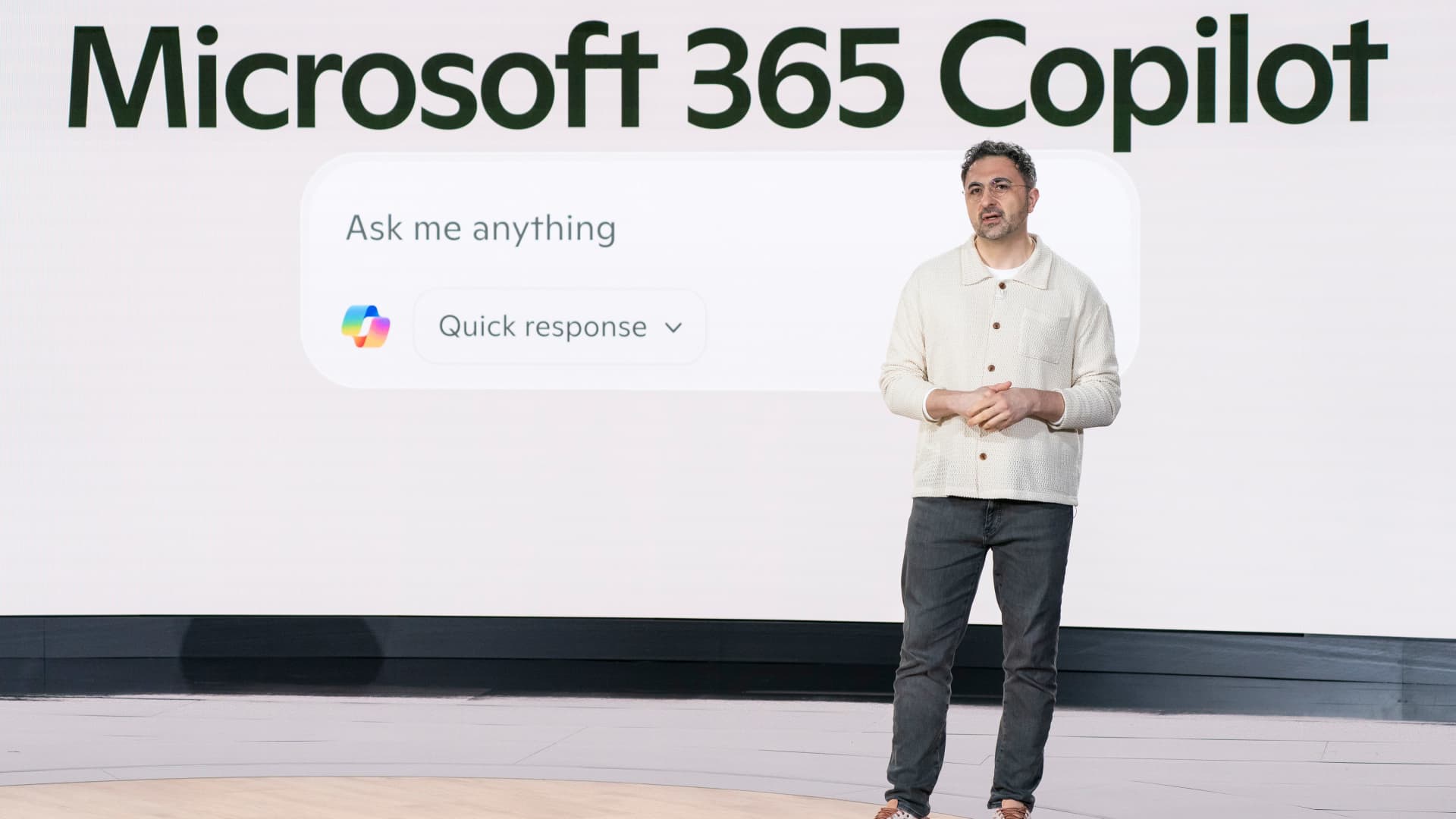
At a recent event marking Microsoft’s 50th anniversary, Suleyman highlighted future enhancements for Microsoft’s Copilot, which will soon feature a “memory” capability. This enhancement, first introduced by OpenAI in ChatGPT, which boasts 500 million weekly users, allows the assistant to remember key details about frequent users, thereby offering a more personalized experience. OpenAI’s advancements in large language models, such as the o1 reasoning model, further illustrate the benefits of Microsoft’s approach. Although initially developed by OpenAI, similar technologies like Microsoft’s “Think Deeper” capability for Copilot shortly followed.
Microsoft has also demonstrated commitment to open-source innovation by occasionally releasing small-language models suitable for personal computers, circumventing the need for powerful servers. This differentiation adds another layer to Microsoft’s AI strategy, distinct from OpenAI’s GPU-intensive models.
The historic partnership between Microsoft and OpenAI has been mutually beneficial since the inception of OpenAI’s ChatGPT in late 2022. Microsoft has invested $13.75 billion into OpenAI but recent developments suggest some competitive tension. In January, OpenAI announced a collaboration with Oracle on the $500 billion Stargate project, deviating from their exclusive reliance on Microsoft’s Azure cloud. Despite these shifts, Suleyman emphasized the longevity and importance of Microsoft’s collaboration with OpenAI, noting, “until 2030 at least, we are deeply partnered with OpenAI.”
Microsoft’s dedication to building robust AI capabilities internally remains steadfast. Suleyman underscored the strength of Microsoft’s AI team and resources, while acknowledging that not being at the cutting-edge provides strategic advantages. “It’s very important to us that, you know, maybe we don’t develop the absolute frontier, the best model in the world first,” he noted, citing the cost and redundancy of such pursuits.
As Microsoft navigates the evolving AI landscape, its strategy of adopting a “tight second” approach reflects a deliberate balancing act: harnessing partnerships and conserving resources while focusing on innovation tailored to specific needs. Despite the competitive undertones with OpenAI, Microsoft continues to leverage its partnerships to maximize the impact of AI across its product offerings.
Categories: Technology, Business, AI.
Tags: Microsoft, AI, OpenAI, Nvidia, DeepMind, Suleyman, ChatGPT, Azure, Copilot.
Original Source: https://www.cnbc.com/2025/04/04/microsoft-ai-chief-sees-benefits-to-ai-models-that-are-months-behind.html
Category :
Tags:
Publish Date: 2025-04-05 05:41:00