Government Unveils Revolutionary Real-Time Surveillance Model to Combat Deadly Zoonotic Disease Outbreaks

India Launches Pioneering Study to Combat Zoonotic Disease Risks
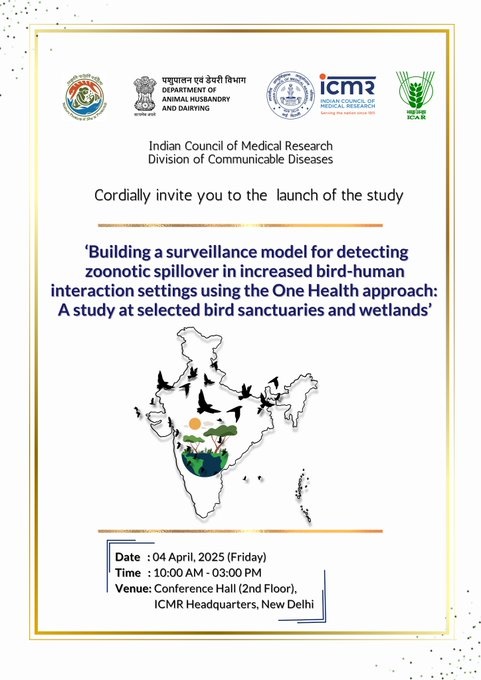
In a groundbreaking move, the Indian government has launched an inter-ministerial scientific study to address zoonotic spillover risks at the human-wildlife-environment interface. The unique research project aims to monitor the health of both human populations and migratory bird species across select bird sanctuaries and wetlands in Sikkim, Maharashtra, and Tamil Nadu.
The study, launched at the Indian Council of Medical Research (ICMR) headquarters in New Delhi, will leverage the One Health approach to develop a real-time surveillance model to detect and diagnose zoonotic diseases in bird sanctuary workers and nearby residents. According to the Union Health Ministry, the comprehensive research project is a crucial step towards shifting from reactive responses to proactive preparedness against public health risks.
The National One Health Mission, as spoken about by Dr. Rajiv Bahl, Director General of ICMR, exemplifies the government’s commitment to harnessing cutting-edge science to anticipate and mitigate zoonotic disease risks. By embracing the One Health approach, the government can better anticipate and respond to public health threats.
The study will focus on monitoring the health of human populations and migratory bird species at select bird sanctuaries and wetlands. These habitats are crucial ecosystems that provide a breeding ground for various bird species, including those that are known to carry zoonotic diseases such as avian influenza and COVID-19. The research will provide valuable insights into the transmission of these diseases and identify effective strategies for preventing their spread.
The One Health approach has been consistently adopted by various global health agencies, including the World Health Organization (WHO) and the World Organisation for Animal Health (OIE). This intersectoral approach recognizes the interconnectedness of human, animal, and environmental health and seeks to address the root causes of zoonotic diseases.
The Indian government’s initiative to address zoonotic disease risks is timely, given the increasing number of disease outbreaks that have been linked to animal-borne pathogens. As the environment continues to undergo significant changes due to climate change, there is a growing need to develop effective strategies to mitigate the risks associated with zoonotic diseases.
In conclusion, India’s pioneering study on zoonotic disease risks demonstrates the government’s commitment to addressing the nexus between human, animal, and environmental health. As the research progresses, it is expected that valuable insights will be gained on the transmission of zoonotic diseases and the development of effective strategies for preventing their spread.
Original Source: https://www.newsonair.gov.in/govt-to-develop-real-time-surveillance-model-to-detect-diagnose-zoonotic-diseases/
Category : National
Tags:
Publish Date: 2025-04-04 18:17:00