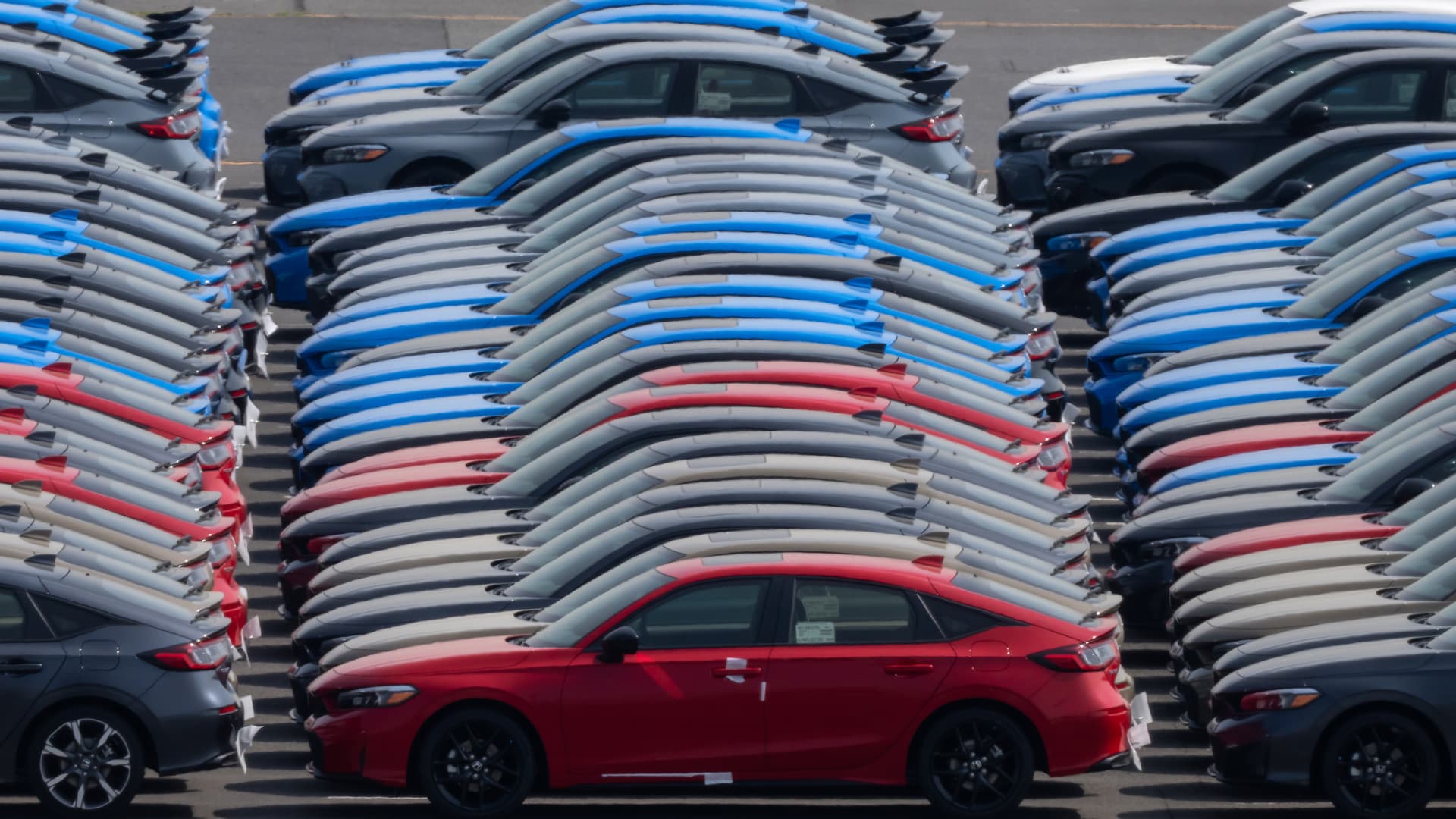

Vehicles awaiting shipment were parked at a port in Yokohama, Japan, on March 27, 2025, as the Asian auto market faced a downturn for a second consecutive day. Investor concern about U.S. President Donald Trump’s new tariffs on imported cars and certain auto parts caused shares of major Asian automakers to plummet. Japanese giants Toyota and Honda experienced significant declines of 4.29% and 4.24%, respectively. Nissan, which operates three manufacturing plants in Mexico, saw its shares drop by 1.63%, while Mazda Motor and Mitsubishi Motor recorded losses of 3.99% and 1.27%.
South Korean automakers were not spared, with Kia Motors, which also has a manufacturing presence in Mexico, falling 2.66% and Hyundai Motor tumbling 3.53%. Chinese electric vehicle makers such as Nio faced even steeper declines, experiencing a 7.83% fall in its Hong Kong-listed shares, while Xpeng and Li Auto dipped 0.57% and 0.78%. The impending tariffs, set to be implemented on April 2, will impact imported passenger vehicles, light trucks, and essential auto components like engines and transmissions, as announced by the White House.
Analysts are forecasting substantial price hikes for U.S. consumers, as Goldman Sachs projects price increases for imported vehicles ranging from $5,000 to $15,000. Even vehicles manufactured within the U.S. might see price surges of up to $8,000, warned Mark Delaney, an analyst at Goldman Sachs. Given that over 90% of U.S. motor vehicle imports originate from key partners—the European Union, Canada, Mexico, South Korea, and Japan—the consequences are extensive. ANZ analysts highlighted escalating concerns of a potential prolonged trade war, especially as the EU, Canada, and others consider retaliatory measures.
President Trump has further threatened to impose more severe tariffs on Canada and the EU should they retaliate against the U.S. decisions, adding a layer of diplomatic tension. Eurasia Group, a political consultancy, pointed out the challenges in the tariff implementation process, particularly the effort needed to apply duties specifically to auto parts. According to a statement by the White House, “Importers of automobiles under the USMCA will be given the opportunity to certify their U.S. content, and systems will be implemented such that the 25% tariff will only apply to the value of their non-U.S. content.”
Eurasia Group emphasized the importance of a method to efficiently assign tariffs solely to non-U.S. components of parts eligible under the USMCA, which will not be targeted by the 25% tariff until the Commerce Secretary, in collaboration with Customs and Border Protection (CBP), establishes an appropriate system. The global automotive sector now stands at a crossroads, awaiting the ripple effects that these international tensions and tariff impositions might unleash. As the April 2 deadline approaches, industry stakeholders and policymakers are bracing for significant shifts in trade dynamics. Kevin Breuninger of CNBC contributed to this report.
Original Source: https://www.cnbc.com/2025/03/28/trump-tariffs-drive-asian-auto-stocks-lower-for-a-second-day.html
Category :
Tags:
Publish Date: 2025-03-28 07:27:00