
President Trump’s recent announcement of tariffs on cars and auto parts is poised to trigger significant impacts across the automotive landscape, affecting U.S. and international automakers in various ways. The intricacies of this decision are likely to resonate differently across companies based on their unique operational footprints.
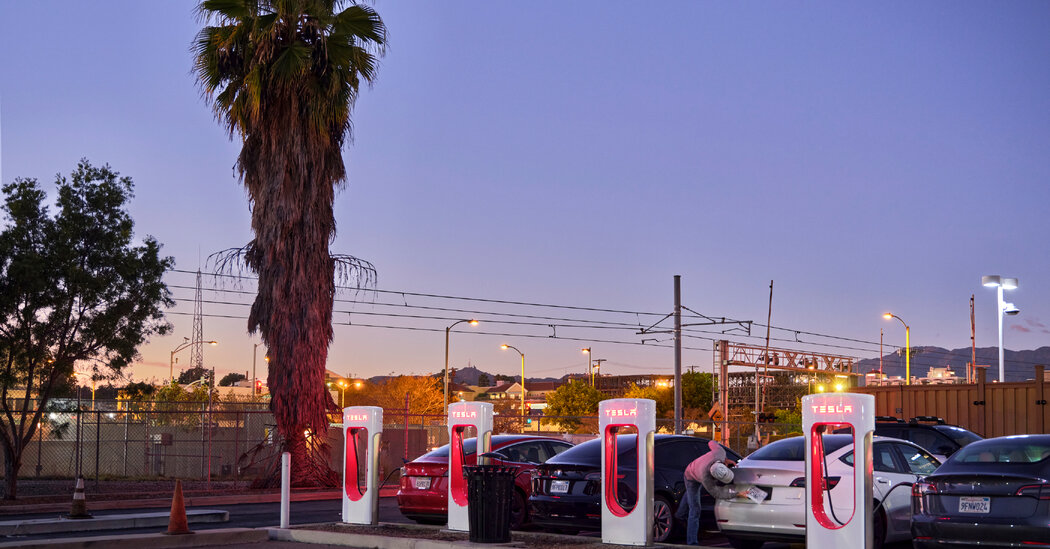
Tesla, led by Elon Musk, often described as a confidant of Trump, appears to be among those least vulnerable to these new tariffs. With manufacturing facilities in California and Texas, Tesla predominantly produces the vehicles it sells domestically within the United States. However, it’s not entirely immune; around 25% of the parts utilized in Tesla vehicles are sourced from overseas, revealed by data from the National Highway Traffic Safety Administration. Compounding this, Tesla faces declining global sales, a situation exacerbated by Elon Musk’s polarizing political stances. Some international markets might retaliate to U.S. tariffs by specifically targeting Tesla, as observed in a few Canadian provinces where electric vehicle incentives for Tesla purchases have been curtailed.
General Motors (GM), America’s largest automaker, reveals a more complex scenario. It imports a significant portion of its lucrative models like the Chevrolet Silverado from large Mexican facilities. Last year, 40% of GM’s U.S. sales consisted of vehicles assembled abroad, suggesting a considerable exposure to heightened tariffs. Nonetheless, GM’s robust financial health, underscored by consistent profitability, positions it to potentially withstand these trade pressures until the levies are reduced or revoked.
Meanwhile, Ford Motor Company is less dependent on vehicle imports, manufacturing approximately 80% of its U.S. sales locally. This domestic production focus buffers Ford from the steep 25% tariff impact on imports. Still, Ford relies on international plants for key components. For instance, engines for specific pickup trucks come from its Ontario factory. Furthermore, Ford’s financial bleeding in the electric vehicle sector remains a concern, especially with the Mustang Mach-E being manufactured in Mexico.
Stellantis, born from Fiat Chrysler and Peugeot’s 2021 merger, contends with subdued sales and leadership challenges, making it more susceptible to prolonged tariff impacts. This vulnerability is shared with companies like Nissan.
Toyota, significantly reliant on the U.S. market, has a different kind of exposure. With 2.3 million cars sold last year, about 1 million are foreign-built, from places like Canada, Mexico, and Japan. This represents a substantial risk for Toyota and collaborative partners like Subaru and Mazda. Yet, as the world’s largest automaker and with a strong profit trajectory, Toyota’s operational excellence could provide a defensive cushion.
Volkswagen, Europe’s automotive titan, faces one of the toughest scenarios. With only a single factory in Tennessee and a heavy reliance on imports from Mexico and Germany, the company could face serious hurdles. Its ambitions to expand in the U.S. market may face increased challenges as domestic competition intensifies.
Hyundai and Kia, South Korea’s automotive powerhouses, have made significant strides in the U.S. market. Their burgeoning electric vehicle facility in Georgia may offer some reprieve against tariffs on specific models. Despite three operational factories in the Southern U.S., a large portion of their inventory continues to be imported from South Korea. Modi, like their Korean counterparts negotiated during Trump’s previous trade agreements, stands as a poignant reminder of the global interdependencies in the automotive industry.
The repercussions of Trump’s tariffs reveal a multifaceted disruption, highlighting the broader complexities of international trade and domestic manufacturing dynamics in the automotive sector.
Original Source: https://www.nytimes.com/2025/03/27/business/trump-auto-tariffs-car-brands.html
Category : Automobiles,International Trade and World Market,Customs (Tariff),Factories and Manufacturing,Tesla Motors Inc,General Motors,Ford Motor Co,Stellantis NV,Trump, Donald J,Musk, Elon,Volkswagen AG,Toyota Motor Corp
Tags:
Publish Date: 2025-03-27 20:41:00