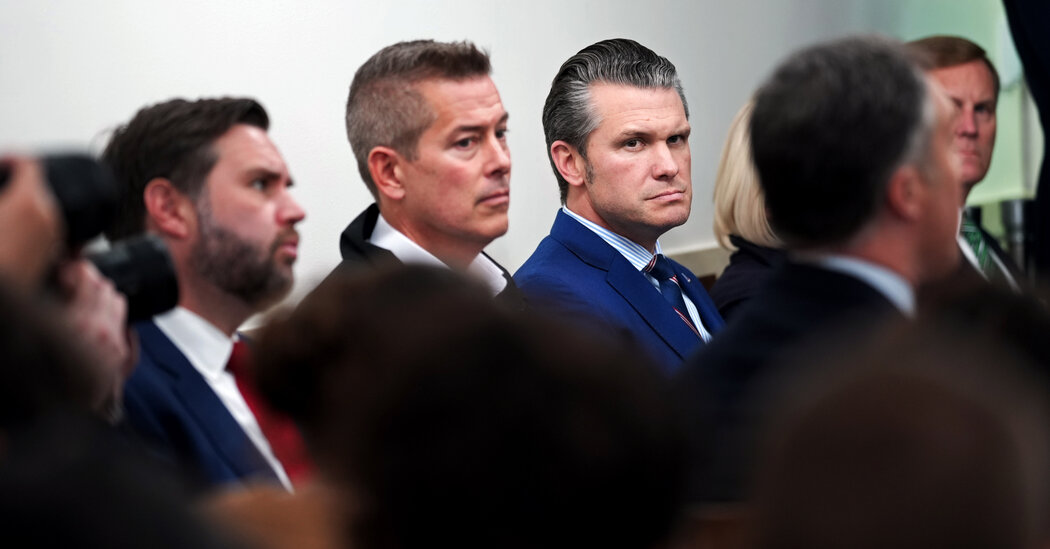

In an unfolding controversy surrounding Defense Secretary Pete Hegseth, the White House is defending his controversial Signal chat by focusing on semantics. They emphasize that what Hegseth posted was not a “war plan” per se, but rather a timeline of an impending military operation. While technically accurate, the detailed nature of the information—such as the specific launch times for F/A-18F Super Hornet jets and MQ-9 Reaper drones—has blurred the distinction.
The Signal messages have raised serious national security questions due to their sensitive content being shared on an unclassified platform. The inclusion of time stamps, made hours before the attack, could have jeopardized the operation if leaked, potentially allowing targeted Houthi fighters in Yemen to escape. Despite Hegseth’s acknowledgement of “OPSEC,” or operational security, in his messages, the level of detail shared has sparked concerns about the breach of security protocols.
This situation casts a harsh light on the Trump administration’s stance that these were not classified communications. President Trump stated at a White House meeting, “So this was not classified…if it’s classified information, it’s probably a little bit different.” However, there has been no clarification on who, if anyone, declassified the data or whether it happened post-operation.
The issue was further complicated when White House Press Secretary Karoline Leavitt denounced the uproar as a hoax, asserting, “The Atlantic has conceded: these were NOT ‘war plans.'” Her assertions, however, were countered by the director of the CIA, John Ratcliffe, who confirmed the authenticity of the Signal communications in Senate testimony, as did Director of National Intelligence, Tulsi Gabbard. Both figures insisted the chat contained no classified intelligence, yet ambiguity remains regarding its alignment with classified Pentagon operational plans.
This incident leads to broader implications for U.S.-guided military ventures and underscores the critical need for secure communications. If such details were disclosed to the media prior to the operation, it’s almost certain the administration would have sought to prevent publication to safeguard American forces. Responsible journalism protocols usually align with such requests, demonstrated in similar scenarios over the years. The mystifying decision to communicate sensitive timing with over a dozen officials on a commercial app underlines a serious lapse in national security protocol.
Secretary Hegseth, who transitioned from serving as a National Guard infantryman to a high-profile role in government, is under scrutiny for his handling of the incident. Although officials argue the posts weren’t classified, the detailed descriptions shared point to a potential gray area in security regulations.
With escalating tensions involving U.S. military actions abroad, especially concerning drone operations and strategies targeting hostile factions, this event shines a spotlight on the administration’s handling of sensitive information. It calls for a re-examination of how confidential data is managed, ensuring that communication standards meet the stringent requirements of modern warfare.
Original Source: https://www.nytimes.com/2025/03/26/us/politics/hegseth-signal-war-plan-leak-white-house.html
Category : United States Politics and Government,Classified Information and State Secrets,Drones (Pilotless Planes),United States Defense and Military Forces,Signal (Open Whisper Systems),Houthis,Atlantic Monthly,Goldberg, Jeffrey,Hegseth, Pete,Gabbard, Tulsi (1981- ),Yemen
Tags:
Publish Date: 2025-03-26 23:43:00