Breaking: Thrilling Peace Breakthrough as Ukraine and Russia Agree to Cease Black Sea Conflict, Confirms White House

In a significant, albeit limited, advancement towards peace, the White House announced on Tuesday that Ukraine and Russia reached an agreement to cease hostilities in the Black Sea and outlined preliminary steps for stopping attacks on energy facilities. While this marks a crucial step towards the broader cease-fire goal the Trump administration has advocated for, the full implementation details remain unclear, along with potential challenges ahead.
Both Ukraine and Russia confirmed this agreement, yet it comes with substantial conditions from Moscow. The Kremlin stated it would only honor the deal after Russia’s state agriculture bank is reconnected to the international payment system and certain restrictions on trade finance operations are lifted. These restrictions were part of the international sanctions imposed following Russia’s invasion of Ukraine in 2022.
The White House, indicating some level of agreement, acknowledged these conditions in their statements, highlighting the goal to restore Russia’s agricultural and fertilizer export access to global markets, pertinent reductions in maritime insurance costs, and improved access to ports and payment systems for these transactions.
The development followed three days of rigorous negotiations in Riyadh, Saudi Arabia, with the U.S. mediating separate talks with delegations from Ukraine and Russia. According to the White House, separate agreements with both nations on maritime and energy matters were concluded, with all parties welcoming the involvement of third countries to support the execution of these agreements.
Though this marks a milestone in the White House’s bid to achieve even a limited cease-fire in the ongoing three-year conflict, the deal does not signify major concessions from Russia, which initiated the offensive. Both Ukraine and Russia have vested interests in halting the damaging strikes on their energy infrastructures, leading to practical motivations behind the agreement. Russia, particularly, seeks relief from the repeated Ukrainian assaults that have forced its navy to retreat in the Black Sea.
Russian President Vladimir V. Putin has suggested an openness to some of President Trump’s demands, such as limiting strikes on energy targets and securing the region around the Black Sea, aligning with longstanding Kremlin initiatives seen as beneficial to Russia. However, Mr. Putin previously rebuffed a U.S. proposal endorsed by Ukraine for a comprehensive 30-day cease-fire, insisting on conditions including the cessation of Western military aid to Ukraine and halting its mobilization efforts—terms Kyiv fundamentally rejects.
Detailed implementation plans for the maritime and energy cease-fire are anticipated, as Ukraine’s lead negotiator in Riyadh, Rustem Umerov, calls for “additional technical consultations” to ensure proper execution, monitoring, and control of the arrangements. Notably, both countries had pre-agreed to a halt on energy facility strikes but accused each other of breaches soon after.
Strikes on energy infrastructure have been pivotal strategies for both sides, with Russia targeting Ukraine’s power grid and Ukraine aiming at Russian oil sites to obstruct military operations. The Black Sea, crucial for both nations’ export economies, saw a transformative moment in 2022 with a temporary grain shipping deal, later dissolved by Russia amid sanction-linked export challenges.
Recently, Ukraine compelled Russian naval forces out of the Black Sea’s western sector, enabling near-normal grain export levels through a newly established shipping corridor. Umerov noted, “all movement by Russia of its military vessels outside of the eastern part of the Black Sea will constitute violation of the spirit of this agreement,” asserting Ukraine’s self-defense rights.
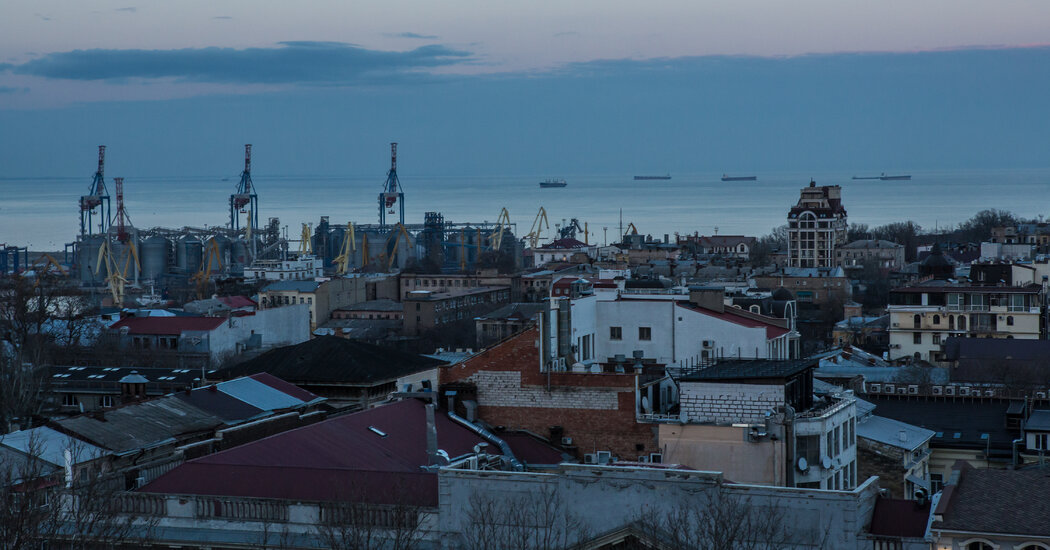
The White House declared mutual agreement to forgo force in the Black Sea, though clarification is needed on how this affects port infrastructure strikes. With frontline Ukrainian port cities like Mykolaiv and Kherson eager to resume operations, the success of this agreement bears significant implications for regional stability and global economic interests.
Original Source: https://www.nytimes.com/2025/03/25/world/europe/russia-ukraine-deal-black-sea.html
Category : Russian Invasion of Ukraine (2022),Infrastructure (Public Works),Embargoes and Sanctions,International Relations,Black Sea,Kyiv (Ukraine),Moscow (Russia),Russia,Ukraine
Tags:
Publish Date: 2025-03-26 00:23:00