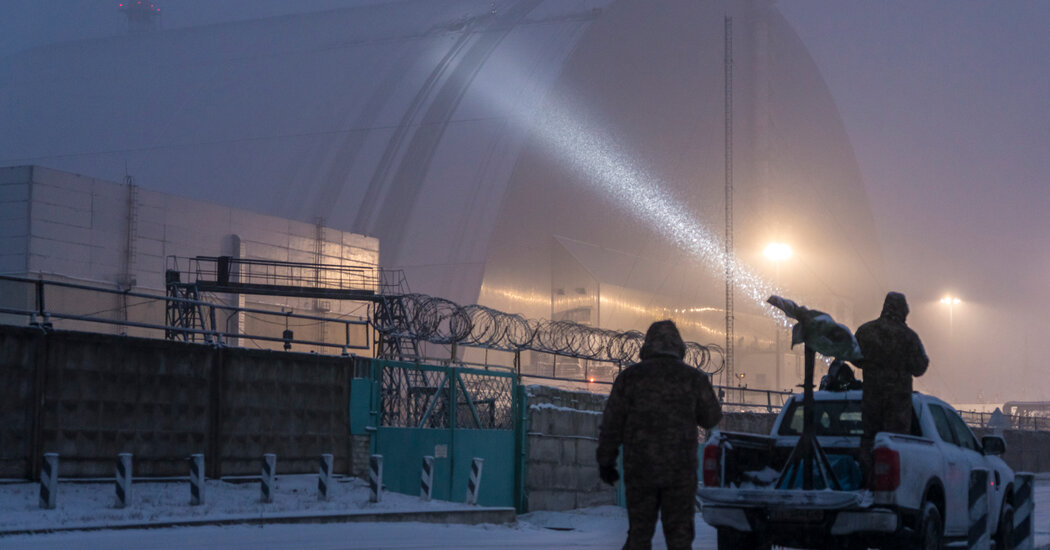
Shocking Breach: How a Inexpensive Drone Penetrated Chernobyl’s Steel Shield Amid Ukraine Conflict

Eric Schmieman, a retired civil engineer from Washington state, dedicated 15 years to what is considered the modern engineering equivalent of the Great Pyramid: the construction of a massive shield designed to protect the world from the potential fallout of the Chernobyl reactor disaster, the worst nuclear incident in history. Known as the New Safe Confinement, this colossal structure was slid into place over Chernobyl’s Reactor No. 4 on railroad tracks in 2016. Standing as tall as a football field and weighing nearly 40,000 tons, it is the world’s largest movable structure, having cost $1.7 billion from more than 45 countries and organizations.
Unfortunately, this significant feat of engineering was compromised on February 14 when a Shahed 136 drone, reportedly launched by Russia, damaged the steel exterior, punching a hole through it. Although the Kremlin denies responsibility, Ukrainian officials assert that the attack was deliberate. The immediate fire was quickly extinguished, but a waterproof membrane inside the insulation smoldered for weeks, necessitating emergency efforts that inflicted further damage on the shield. On March 7, Ukraine reported the fire extinguished, yet serious damage had been sustained, particularly in the northern section of the structure, as noted by the International Atomic Energy Agency (IAEA).
Radiation levels around Chernobyl remain stable, according to both the IAEA and Ukrainian nuclear regulators. However, the damage poses significant uncertainties regarding the cost, timeline, and method of repairs, signaling delays in dismantling the damaged reactor and handling radioactive waste—a plan initially set to commence in the next five years. Ukrainian officials and nuclear experts warn that the compromised shell could lead to corrosion, or further deterioration of the sarcophagus constructed by Soviet engineers over 40 years ago, which still sits inside the protective arch.
Shaun Burnie, a nuclear specialist at Greenpeace, emphasized the monumental significance of the structure. Built to protect Europe and beyond from radioactive threats, the shield was now undermined by the attack. A recent Greenpeace report, echoed by nuclear experts, argues that the entire structure might require replacement. The IAEA concurs that extensive repairs are necessary to ensure the shield’s effectiveness.
Despite ongoing attacks on energy infrastructure by both Russia and Ukraine since the 2022 invasion, direct targets on nuclear plants have been avoided. Recently, President Trump suggested U.S. control over Ukraine’s power sites to protect them, amid ongoing drone activity over Chernobyl.
To people who lived through the initial Chernobyl disaster in 1986, the recent drone attack stirs troubling memories. The original explosion released radioactive material across Europe, challenged public perceptions of nuclear energy, and prompted emergency responses, including the creation of a 1,000-square-mile exclusion zone. Officially, the disaster claimed 31 lives, but long-term health impacts, particularly cancer, were significant in exposed regions.
The New Safe Confinement was an extraordinary endeavor intended to contain the reactor for a century. Built at a distance to reduce radiation exposure, it features dual steel shells forty feet thick, maintaining low humidity between them to prevent corrosion. The outer shell protects from precipitation while the inner confines radioactive dust during dismantling phases. However, the drone strike and subsequent fire have stalled renovation plans, forcing experts to reconsider feasible solutions. Schmieman, reflecting on the setback, suggested quick but temporary fixes to control internal conditions, including utilizing Ukraine’s advanced drone technology to assess and address damage internally.
As the situation evolves, fixing the shield’s integrity becomes a monumental task, highlighting the delicate balance of safety, innovation, and international cooperation in nuclear energy’s shadowy legacy.
Original Source: https://www.nytimes.com/2025/03/25/world/europe/drone-chernobyl-shield-ukraine-war.html
Category : Russian Invasion of Ukraine (2022),Radiation,Nuclear Energy,Chernobyl (Ukraine),International Atomic Energy Agency,Greenpeace,Ukraine
Tags:
Publish Date: 2025-03-25 14:31:00