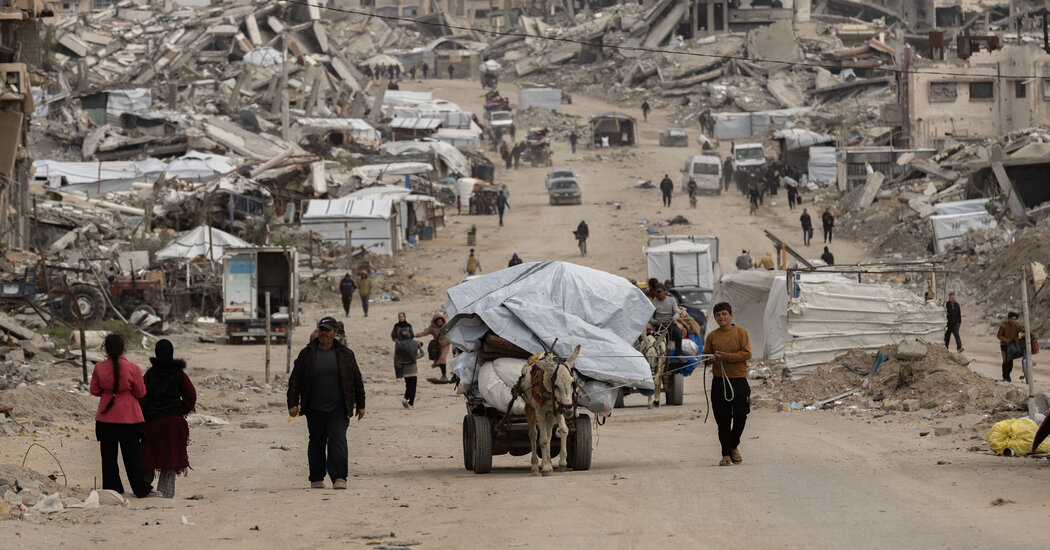

Over the past three days, Israeli forces have intensified their military operations in Gaza, targeting what they describe as Hamas sites and operatives. This escalation has seen Israeli ground troops secure a significant corridor in central Gaza, previously vacated under a cease-fire agreement, and broaden their ground presence in the northern and southern regions of the territory. The conflict escalated on Friday when the Israeli military bombed the Turkish-Palestinian Friendship Hospital in central Gaza. The military asserted that the facility, reportedly being used by militants, was no longer functioning as a medical center. It’s noteworthy that last year, before their withdrawal, Israeli soldiers had utilized the hospital as a base.
The current military engagement follows a relatively muted response from Hamas, whose military capacity has been markedly impaired by the ongoing conflict, although the group is believed to maintain a substantial force of tens of thousands of fighters. Israeli authorities allege that during the cease-fire period, Hamas focused on regrouping and planning, preparing explosive devices for future confrontations.
Despite the weakened state of its military apparatus, Hamas did retaliate by launching three rockets towards Israel on Thursday, marking the first such attack in months. However, these rockets were either intercepted or landed without causing harm, a contrast to the heavy barrages seen earlier in the conflict.
In the backdrop of these hostilities, Israel’s strategic objective remains to pressure Hamas into releasing hostages taken during the October 7, 2023, attacks. According to Israeli sources, up to 24 captives remain in Gaza, along with the remains of over 30 others. Even prior to this most recent collapse of the cease-fire, Israel had restricted humanitarian aid to Gaza, blocking essential supplies such as food and medicine from reaching a population still grappling with the aftermath of prolonged conflict and scarcity.
Israel retains significant military leverage to further intensify its offensive if deemed necessary. Thus far, Israeli forces have not undertaken sweeping incursions through major Palestinian urban areas in Gaza, nor have they divided the enclave or pursued large-scale evacuations in the north, as witnessed during previous 15-month campaigns against Hamas. Israeli leadership has committed to continuing operations until they achieve Hamas’s downfall. In response, Hamas has expressed willingness to relinquish civilian governance in the region but remains steadfast in retaining its military organization and resisting leadership exile.
International diplomatic efforts, led by figures including those from the United States, are underway to mediate a potential agreement that might not only revive a cease-fire but also facilitate the freeing of hostages and the reintroduction of humanitarian aid into Gaza. As the humanitarian crisis deepens, these diplomatic endeavors are critical in mitigating the ongoing suffering and instability in the region.
As tensions persist, the global community watches closely, hoping for a resolution that could pave the way for long-term peace and the restoration of essential services to the beleaguered inhabitants of Gaza.
Original Source: https://www.nytimes.com/2025/03/21/world/middleeast/israel-hamas-gaza-hostages.html
Category : Israel-Gaza War (2023- ),Kidnapping and Hostages,Defense and Military Forces,Humanitarian Aid,Hamas,Katz, Israel (1955- ),Gaza Strip,Israel
Tags:
Publish Date: 2025-03-21 22:04:00