Revealed: The Surprising Link Between Trump’s Ukrainian Nuclear Plant Focus and a Lucrative Minerals Deal!

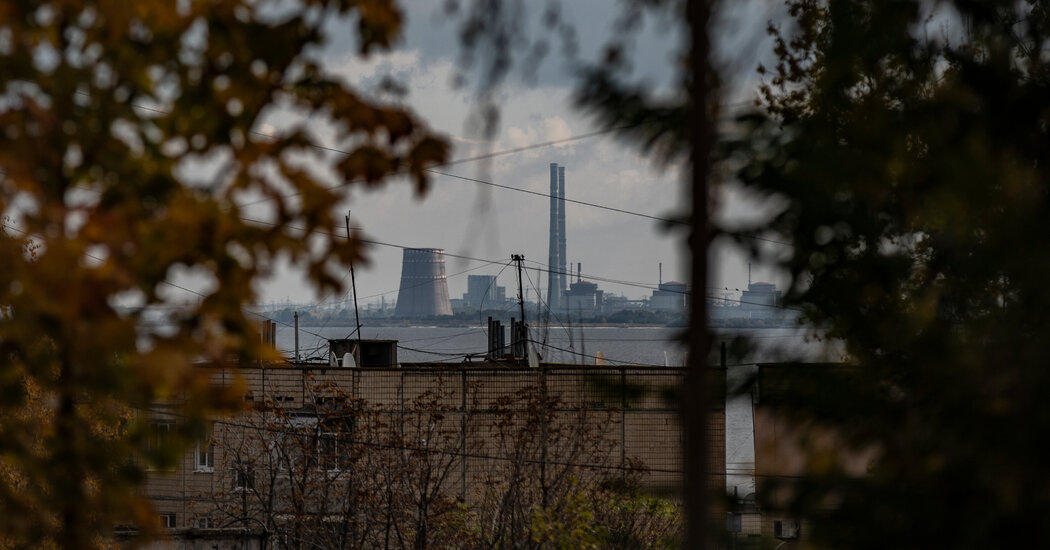
Months after the initial concerns about potential nuclear accidents at Ukraine’s Zaporizhzhia power plant, attention has refocused on the facility amid complex international negotiations. President Donald Trump’s recent declaration of his intent to discuss Ukrainian power plants with Russian President Vladimir Putin has stirred the geopolitical pot once again. Although Trump did not specifically name the Zaporizhzhia plant, which has been under Russian control since early in the conflict, his administration has hinted at its significance.
The plant, located in Ukraine’s Zaporizhzhia region, remains a point of contention partly because the negotiations between Kyiv and Washington extend beyond energy concerns. Two insiders, one a current and another a former Ukrainian official, have linked these discussions to U.S. interests in Ukraine’s untapped mineral resources. For the U.S., a deal involving critical minerals like lithium and titanium hinges on Ukraine’s ability to process these resources effectively—a process that requires substantial energy supply, which the Zaporizhzhia plant could provide.
Negotiations have been ongoing for weeks as Ukraine and the U.S. discuss access to these vital minerals crucial for modern technology production. A Ukrainian official highlighted that Ukraine has communicated the need for the plant’s return to their control to ensure the viability of mineral processing, a point reiterated during high-level talks in Saudi Arabia concerning a potential cease-fire.
The region’s instability and its proximity to active conflict zones compound safety concerns surrounding the plant. Although all six reactors have been shut down, meaning they no longer produce electricity, the plant still requires energy to maintain critical safety systems and prevent a nuclear catastrophe. Ukraine continues to insist on Russian withdrawal from the plant to mitigate these risks.
Andrian Prokip, an energy expert at the Kennan Institute, emphasizes that regaining control of the plant is vital for Ukraine to address power shortages exacerbated by Russian assaults on its energy infrastructure. Before the war, the plant accounted for nearly 25% of Ukraine’s electricity needs.
Furthermore, the relevance of the Zaporizhzhia facility in mineral processing negotiations has emerged, potentially boosting an agreement that would see the U.S. and Ukraine sharing revenue from new extraction projects, including oil, gas, and minerals. Trump has promoted this deal as beneficial, helping repay the U.S. for its significant financial assistance to Ukraine.
The Zaporizhzhia plant also holds economic interest for the U.S. because it uses technology and fuel provided by Westinghouse, an American company gradually replacing Russian technology in Ukraine’s nuclear facilities. Former Ukrainian lawmaker Victoria Voytsitska pointed out the substantial contracts involved in supplying fuel to the plant.
What remains uncertain is the leverage Trump might use to persuade Russia to relinquish control of the plant. Energy expert Prokip speculates that Russia would seek valuable concessions, potentially the easing of Western-imposed economic sanctions, noting, “They will not just give this nuclear power plant back for free.”
As negotiations continue, the Zaporizhzhia power plant sits at the intersection of strategic energy needs, international diplomacy, and geopolitical maneuvering. The outcome could signal broader shifts in regional control and illustrate the complex interplay of resources and power in the ongoing conflict.
Original Source: https://www.nytimes.com/2025/03/18/world/europe/ukraine-nuclear-plant-cease-fire-talks.html
Category : Russian Invasion of Ukraine (2022),International Relations,Nuclear Energy,Embargoes and Sanctions,Putin, Vladimir V,Trump, Donald J,Zelensky, Volodymyr,Kyiv (Ukraine),Russia,Ukraine,United States
Tags:
Publish Date: 2025-03-18 20:29:00