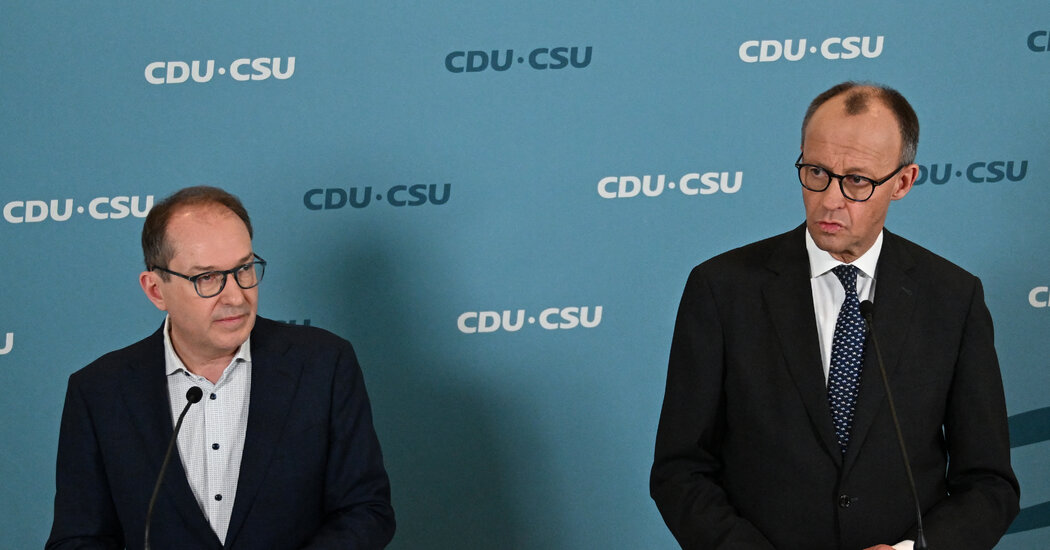

Friedrich Merz, the probable future chancellor of Germany, has announced a landmark deal securing the votes required to significantly boost government spending, notably in defense. This development signals a remarkable shift in Germany’s strategic and fiscal stance, even before Merz officially assumes office. The agreement, concluded with the center-left Social Democrats and the Green Party, allows for the lifting of Germany’s stringent borrowing limits for military undertakings. Defense allocations exceeding 1% of Germany’s GDP will be exempt from this limit, with defense broadly covering intelligence and information security.
The deal marks a pivotal response to recent geopolitical shifts, notably U.S. President Donald Trump’s indications of reducing American security commitments to Europe. Merz stated passionately that Germany is reasserting its role in ensuring continental freedom and peace, highlighting the new financial capacity to support Europe’s defense. Key party leaders, including the Social Democrats’ Lars Klingbeil, celebrated this as a critical message to Ukraine, Russia’s Vladimir Putin, and President Trump.
The coalition, which has recently struggled against the rise of populism in Germany, sees this accord as revitalizing, particularly gaining support from the Greens. This party’s endorsement came as they secured pledges for significant climate change investments, including a €3 billion aid package for Ukraine. The Green Party shared their satisfaction on X, emphasizing the deal’s alignment with future-oriented challenges.
Germany’s post-2008 aversion to major borrowing, while economically stabilizing, has been scrutinized for stunting infrastructure and economic growth, and limiting Germany’s leadership in new security dynamics. The resurgence of aggressive postures from Russia and a tentative American security stance underlines the urgency for Germany to step up its defense role. Analysts, such as those from Deutsche Bank Research Institute, are aligned on the necessity of substantial public investments in defense and infrastructure.
After Russia’s aggressive moves in Ukraine, outgoing Chancellor Olaf Scholz initiated steps towards boosted military expenditure. Although progress was made, it was limited. The recent February elections saw Merz pushing for more comprehensive defense funding and balancing it by budgetary cuts. However, electoral promises were adapted promptly post-elections due to Trump’s defensive posturing threats. Negotiations for government formation with the Social Democrats enabled increased borrowing, but the critical two-thirds legislative majority demanded the Greens’ backing to amend the debt regulations.
Gaining Green support meant Merz agreed to significant domestic spending, including a €500 billion investment over the next twelve years aimed at refurbishing Germany’s infrastructure, a move economists anticipate will rejuvenate the shrinking economy. Specifically, €100 billion from this fund will target climate initiatives, a non-negotiable Green stipulation ensuring new projects enhance the economy and environmental outcomes.
As the Bundestag prepares to deliberate these measures, Merz and Klingbeil remain optimistic about party support, though far-left and far-right factions could mount legal objections. Ultimately, negotiators displayed unity and resolve. Klingbeil highlighted the improved coalition dynamics, emphasizing responsibility and collaborative governance. The forthcoming legal hurdles notwithstanding, Friday’s developments signify a promising recalibration of Germany’s policy frameworks towards a revitalized, security-conscious Europe.
Original Source: https://www.nytimes.com/2025/03/14/world/europe/germany-defense-climate-spending-deal.html
Category : Politics and Government,Defense and Military Forces,Infrastructure (Public Works),Merz, Friedrich,Germany,Europe
Tags:
Publish Date: 2025-03-14 22:18:00