
The ongoing negotiations for extending the ceasefire between Israel and Hamas in Gaza were in a state of uncertainty on Thursday as attention shifted towards US-Russia talks regarding the Ukraine conflict. Steven Witkoff, the Middle East envoy for the Trump administration, was anticipated to leave the discussions in Qatar for Moscow. Witkoff’s assignment reflects Trump’s strategy to address two major global conflicts—the Gaza hostilities and the Ukraine war.
Amidst the backdrop of indirect talks between Israel and Hamas in Doha, no significant progress has been reported due to persistent disagreements over future actions, as indicated by an unnamed Israeli official familiar with the negotiations. This impasse comes despite a truce agreed upon in mid-January that involved a phased cessation of hostilities. The deal had temporarily halted Israel’s military actions against Hamas and facilitated the exchange of hostages, with over 30 hostages released by Hamas in return for over 1,000 Palestinian prisoners.
The early phase of this truce required both parties to discuss a comprehensive solution intended to end the war, guarantee the release of remaining hostages, and ensure the full withdrawal of Israeli forces from Gaza. However, the two sides remain at a standstill. Israel demands the disarmament of Gaza and the dismantlement of Hamas, which the latter refuses, maintaining its armed battalions. Although the initial 42-day truce period concluded in early March without a concrete second-phase plan, peace holds tentatively.
In Israel, criticism towards Prime Minister Benjamin Netanyahu is growing. Opponents accuse him of delaying an agreement that might weaken his political dominance. Conversely, hardliners in Netanyahu’s government insist on continuing military operations against Hamas, despite hostages’ families fearing for their loved ones’ survival. As the Israeli government reports, about 24 hostages remain captive in Gaza, along with the remains of over 30 others. This captivity stems from an October 2023 Hamas attack that left approximately 1,200 Israelis dead and reignited the 15-month-long Gaza conflict.
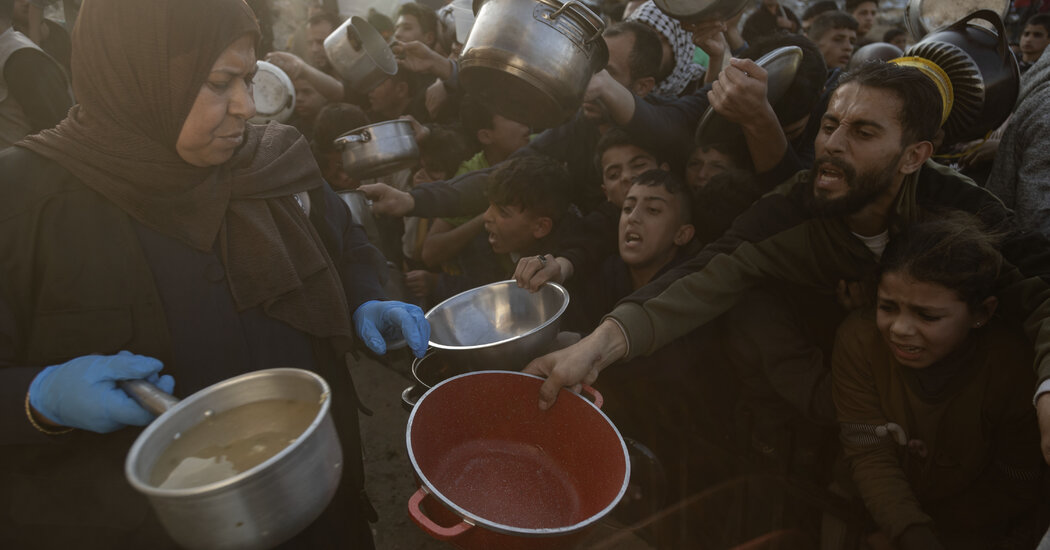
Recent Israeli restrictions on aid into Gaza have sparked concerns over a renewed humanitarian crisis. Critical resources like food and electricity for a wastewater treatment facility have been withheld, marking a shift from the relatively improved conditions during the ceasefire when aid flowed more freely. Qatar, a major broker of the ceasefire alongside Egypt and the United States, criticized these measures as violations of the agreement.
In another development, Adam Boehler, Trump’s envoy for hostages, met with senior Hamas figures in Qatar, diverging from the long-standing US policy of not directly negotiating with Hamas, labeled a terrorist organization by the US. The talks aimed at releasing Edan Alexander, an Israeli American captive, and four other people’s remains, ended without success. “A one-off attempt that hasn’t borne fruit,” remarked Secretary of State Marco Rubio, reflecting ongoing challenges in resolving the complex issues at hand.
This situation underscores the fragile balance maintaining the truce and the multitude of factors involved in reaching a lasting peace, all while global diplomatic efforts continue to shift and evolve in an ever-changing international landscape.
Original Source: https://www.nytimes.com/2025/03/13/world/middleeast/israel-hamas-ceasefire-trump-ukraine.html
Category : Israel-Gaza War (2023- ),International Relations,Humanitarian Aid,Hamas,Witkoff, Steven,Gaza Strip,Israel
Tags:
Publish Date: 2025-03-14 04:14:00