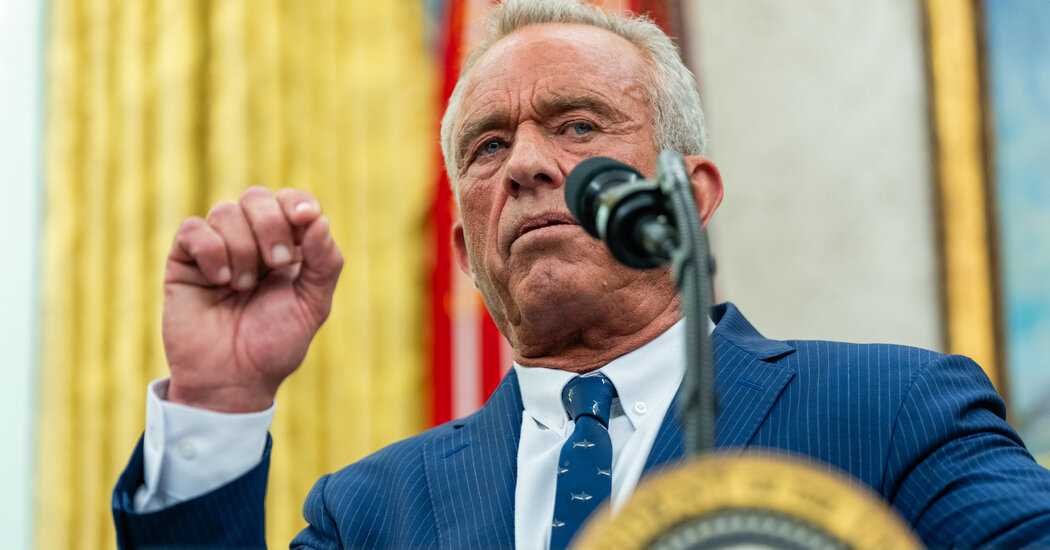
Shocking Revelation: Kennedy Links Measles Outbreak to Poor Diet and Health with Controversial Theories

In a recent interview, Robert F. Kennedy Jr., the Secretary of Health and Human Services, presented a measles containment strategy in West Texas that diverges from established scientific guidance. Kennedy’s plan, focused on an outbreak predominantly affecting a Mennonite community in Gaines County, relies on unconventional prevention and treatment methods. While he acknowledged the importance of vaccinations within such communities, Kennedy described immunization as a personal choice, citing concerns about vaccine safety that contradict extensive scientific research.
The measles outbreak in West Texas has infected nearly 200 individuals and tragically claimed the life of a child, marking the first U.S. measles-related death in a decade. Kennedy’s stance, as articulated during a 35-minute interview posted online by Fox News, suggests a complex view. He admitted that vaccines help prevent infections and assured that federal resources would be available to those seeking immunization. However, he raised alarms about perceived risks, underscoring a polarized message conflicting with public health advocacy.
Notably, Kennedy argued that measles infection may confer long-lasting immunity, purportedly shielding against diseases like cancer and heart disease, a concept lacking scientific validation. Despite this claim, health experts emphasize that vaccination remains the most effective defense against measles, with two doses of the MMR vaccine shown to be 97 percent effective. Additionally, Kennedy promoted the use of certain treatments like cod liver oil and antibiotics, reporting testimonials of miraculous recoveries, though these assertions lack scientific backing.
The Centers for Disease Control and Prevention remind that measles is a serious disease with potential outcomes including death, brain swelling, and pneumonia, especially among those without prior vaccination. The CDC underscores that, before vaccine availability in 1963, the virus annually caused significant morbidity and mortality among healthy children. Experts affirm there is no substantial evidence tying dietary habits or exercise to the severity of measles complications.
In his interview, Kennedy seemed more concerned with chronic disease prevalence than the acute threat posed by the current measles outbreak. He linked discussions on measles to broader health issues like autism, controversially questioning vaccine safety, although such connections have been thoroughly disproven through rigorous scientific inquiry.
Kennedy’s emphasis on unvalidated treatments over accepted medical practices troubles local healthcare providers. Dr. Leila Myrick, a family medicine doctor in Seminole, Texas, argued that such endorsements could mislead the community, mistakenly suggesting effective alternatives to vaccination. Experts including Dr. William Schaffner caution against Kennedy’s recommendations, stating no evidence supports antibiotics or steroids as efficacious treatments for measles, a viral infection.
This contentious discourse arises amid a broader public health conversation about vaccination and disease prevention. As health officials continue to promote vaccination, Kennedys’ conflicting messages could complicate efforts to quell the outbreak and secure community health. In light of these developments, maintaining clarity around scientifically substantiated public health practices remains crucial to safeguarding susceptible populations, particularly children, against preventable diseases like measles.
Original Source: https://www.nytimes.com/2025/03/10/health/measles-texas-kennedy-fox.html
Category : your-feed-science,Measles,Disease Rates,Vaccination and Immunization,Diet and Nutrition,Epidemics,Children and Childhood,Poverty,Mennonite Churches,Steroids,Deaths (Fatalities),Vitamins,Antibiotics,Vitamin A,Infections,Kennedy, Robert F Jr,Gaines County (Tex),Texas
Tags:
Publish Date: 2025-03-11 10:29:00