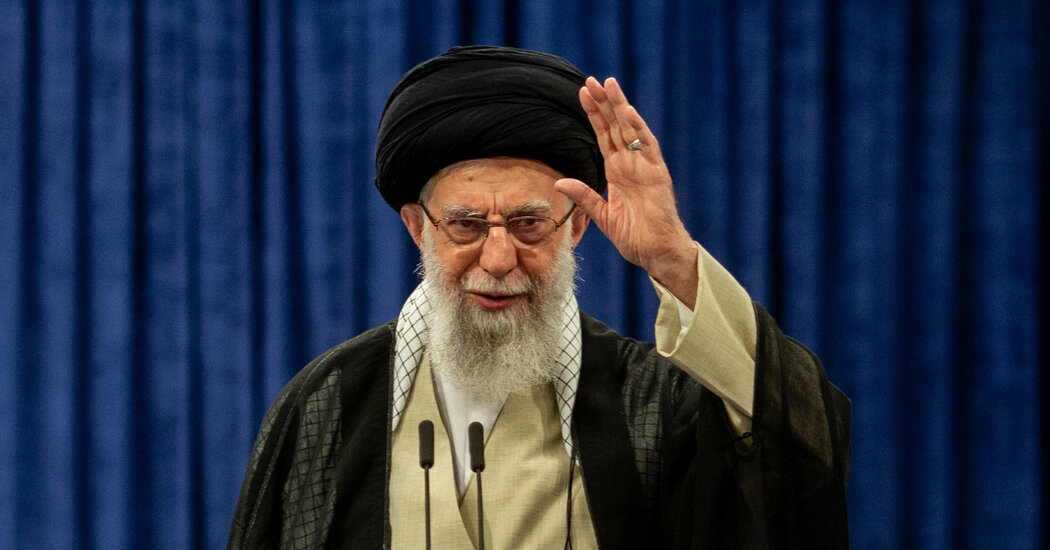

Iran’s Supreme Leader Ayatollah Ali Khamenei criticized “bullying governments” and expressed skepticism over negotiations with the United States regarding Iran’s nuclear program. His comments, made during a meeting with government and military officials in observance of Ramadan, appeared to be in response to a proposal from President Donald Trump. Although he didn’t explicitly reference Trump or the U.S., Khamenei’s remarks were clearly directed at Washington and its recent overtures for dialogue.
In his statement, Khamenei emphasized that certain governments push for negotiations not to genuinely resolve issues, but to impose their demands. He argued that these discussions are merely a pretext for making new demands, which Iran is unwilling to accept. This comes after President Trump suggested that Iran engage in talks concerning its advancing nuclear capabilities or face potential military action. The president highlighted concerns that Iran currently possesses enough near-weapons-grade nuclear material to produce approximately six bombs, increasing the urgency for a diplomatic solution.
The specifics of Trump’s letter to Iran, delivered earlier in the week, were not disclosed by the White House. Nonetheless, the message has sparked an internal debate within Iran about how to proceed. Despite Khamenei’s firm stance, other Iranian figures, particularly those within the moderate and reformist factions, have shown interest in negotiations. Among them is President Masoud Pezeshkian, who assumed office last year and has advocated for re-engagement on the nuclear issue.
The situation marks a critical juncture in U.S.-Iran relations, particularly following the unraveling of the 2015 nuclear agreement brokered by then-President Barack Obama. Under the terms of that accord, Iran significantly reduced its nuclear stockpile and agreed to stringent international inspections, showcasing compliance as affirmed by global monitors. However, Trump withdrew from the pact during his first term, reinstating harsh economic sanctions on Iran in hopes of forcing a more favorable deal for the United States. This strategic gamble did not yield the desired outcome as Iran opted not to return to the negotiating table.
Complicating matters, Trump’s moves to dismantle U.S. programs aimed at exposing Iran’s nuclear ambitions further strained efforts to curb nuclear proliferation. Although one of these programs has been restored, experts worry the disruptions may have lasting consequences on international non-proliferation efforts.
As the international community closely monitors these developments, the potential for negotiations and the balance between diplomacy and coercion remain pivotal. The interplay of leadership dynamics in Iran, differing international strategies, and pressing nuclear concerns underscore the high stakes at play in this ongoing geopolitical narrative.
Original Source: https://www.nytimes.com/2025/03/08/world/middleeast/trump-iran-nuclear-deal-leader-response.html
Category : United States International Relations,Nuclear Weapons,Embargoes and Sanctions,Khamenei, Ali,Pezeshkian, Masoud,Trump, Donald J,Iran
Tags:
Publish Date: 2025-03-09 01:55:00