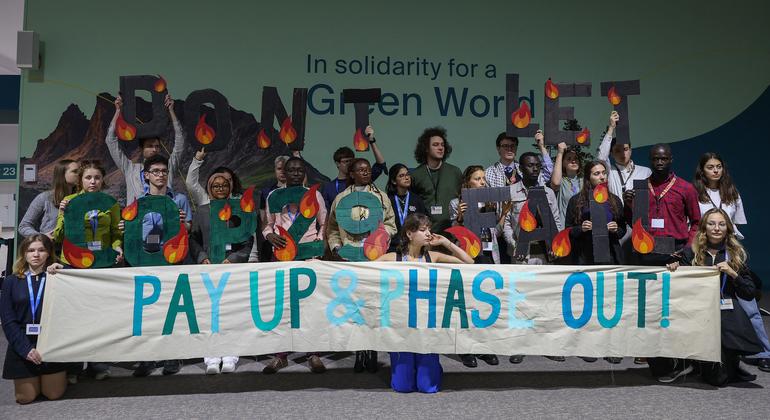

Negotiations at COP29 in Baku are focused on establishing a new climate finance target amidst growing global warming concerns highlighted by the Intergovernmental Panel on Climate Change (IPCC). The urgency remains to limit temperature rise to 1.5°C, demanding significant investments in clean energy and adaptation measures. Developing nations, particularly small island and least developed countries, are especially vulnerable and require financial aid to transition towards low-carbon economies and counteract climate impacts.
As the G20 summit approaches in Brazil, UNFCCC Executive Secretary Simon Stiell emphasized the critical role of climate finance beyond the UN process, urging G20 leaders to prioritize this issue. UN Secretary-General António Guterres labeled 2024 as a year of “climate destruction” and stressed that climate finance is an essential investment, not charity.
Despite meeting the previous $100 billion-a-year climate finance target, the amount is criticized as insufficient. COP29 aims to set a more ambitious target to support developing countries, potentially requiring trillions annually. Early negotiations saw a breakthrough with the adoption of Article 6 of the Paris Agreement, facilitating a global carbon market for trading carbon credits.
Anticipation surrounds potential impacts of the new US Administration on climate commitments. President Hilda Heine of the Marshall Islands and Ireland’s Environment Minister Eamon Ryan advocated for continued global cooperation regardless of changes in US policy.
Mr. Guterres emphasized a fair transition to renewable energies, avoiding exploitation of African countries rich in critical minerals. Emphasizing sustainable mining practices, he formed a High-Level Panel to ensure equitable benefits for resource-rich regions.
Youth activism at COP29 calls for immediate climate action and justice, urging world leaders to deliver an ambitious finance agreement. As COP29 proceedings continue, the decisions made will shape future climate resilience and low-carbon development globally.
Original Story https://news.un.org/feed/view/en/story/2024/11/1157081
Category :
Tags: