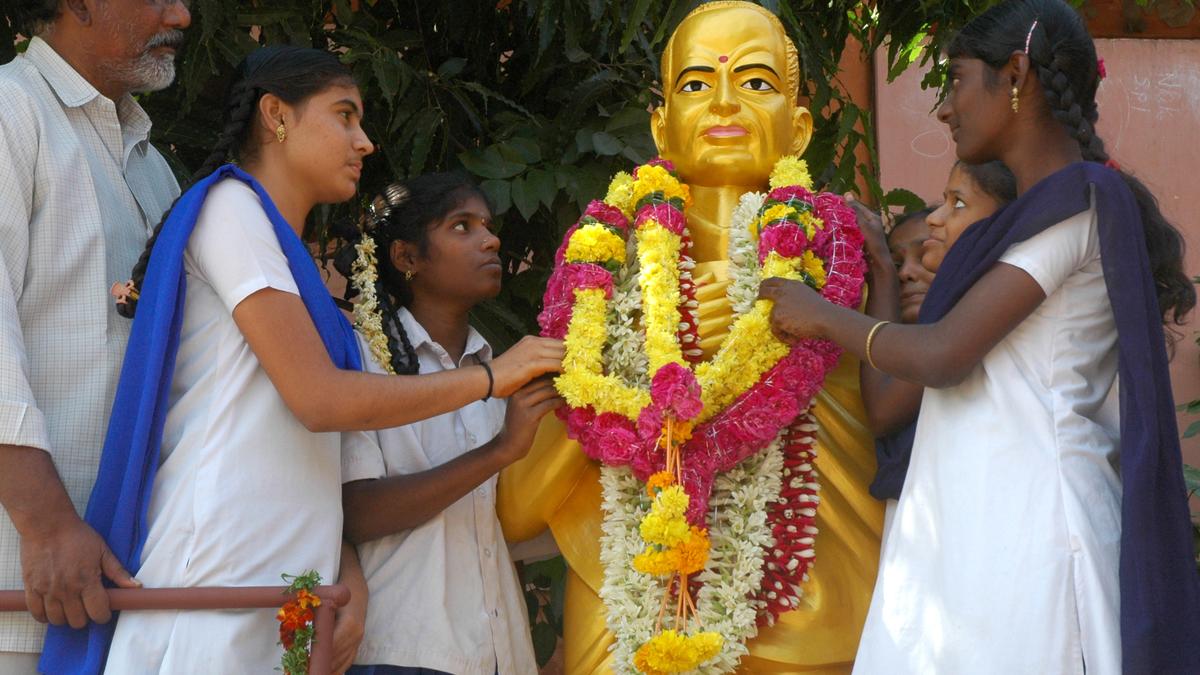

In the early 1950s, the Andhra linguistic movement gained momentum amid socio-political tensions in the Telugu-speaking regions of the Madras Presidency. Potti Sriramulu, a close ally of Mahatma Gandhi, emerged as a prominent figure, advocating for a separate state for Telugu speakers. On December 15, 1952, after fasting for 58 days, Sriramulu tragically passed away, igniting widespread protests. His self-sacrifice led Prime Minister Jawaharlal Nehru to announce the formation of Andhra Pradesh on October 1, 1953, along linguistic lines. This movement was rooted in decades of perceived injustices towards Telugu speakers, who faced marginalization in education and employment. Tensions arose in the 1910s when Telugu and Tamil speakers began forming groups to fight for independence from British rule. Discontent grew when a Tamilian was appointed judge in Guntur, despite qualified Telugu candidates.
The Andhra movement gained traction through the efforts of various leaders and publications, culminating in the Indian National Congress forming the Andhra Congress Committee. Decades of brewing discontent reached a peak after the 1952 elections, as frustrations with the government’s decisions favored C. Rajagopalachari, who opposed the formation of the Andhra State. Sriramulu’s protest symbolized the struggle for linguistic identity and autonomy, setting a precedent for future state formations in India. The movement served as a forerunner for states’ linguistic reorganization, although the bifurcation of Andhra Pradesh in 2014 rekindled debates about the state’s identity and historical significance.
Original Story https://www.thehindu.com/news/national/andhra-pradesh/andhra-pradeshs-tumultuous-road-to-statehood/article68818647.ece
Category : Andhra Pradesh
Tags: