Architecting AI-Native Commerce for 10-Min Delivery and Capital Efficiency

We fetishize speed – not strategy. 10‑minute delivery and flashy AI demos look great on a stage, but they do not, by themselves, create durable customer value or defensible economics. The real question for founders and CTOs is: how do you architect for speed without mortgaging margin, resilience, or regulatory compliance?
Context
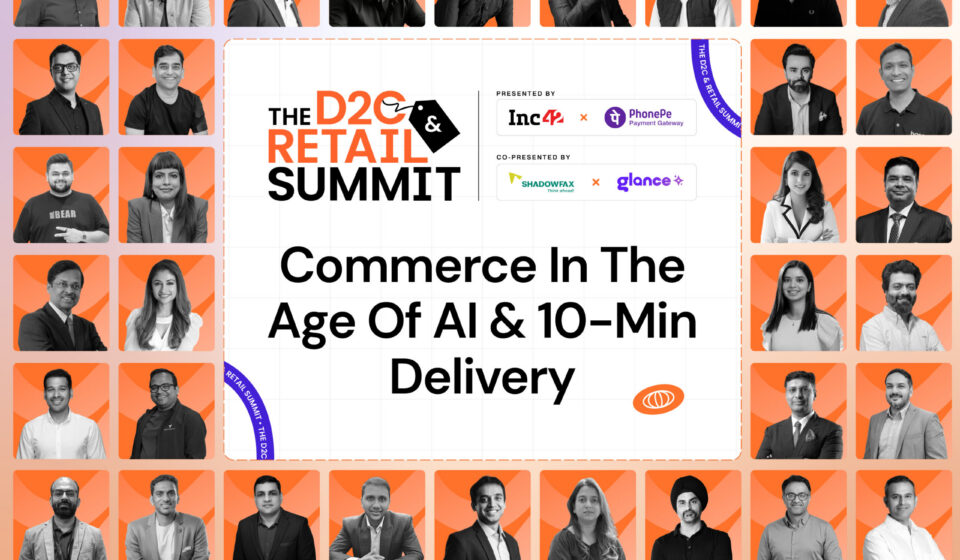
Inc42’s D2C & Retail Summit (19 August 2026, The Leela Ambience, Gurugram) frames this tension neatly under the theme “Commerce In The Age Of AI & 10‑Min Delivery.” The agenda – from quick commerce economics to AI‑native operating leverage and export playbooks – highlights that the next wave of consumer brands must reconcile hyper‑speed delivery with capital discipline and long‑term product distribution moats.
Analysis – what this means for architecture and product strategy
-
Speed is an outcome of systems design, not a marketing tactic.
If 10‑minute delivery is a product promise, it must be backed by distributed systems: micro‑fulfilment centers (MFCs), real‑time inventory sync, deterministic order‑routing and last‑mile orchestration. Architecturally this pushes you toward event‑driven, eventually consistent models (think CQRS + event sourcing) that tolerate temporary divergence between cart view, inventory view and fulfilment reality. Accept the trade‑off: strict consistency kills scale; eventual consistency requires robust compensating actions, idempotent operations and clear UX signalling. -
AI multiplies operational leverage – and operational risk.
Generative models and real‑time recommender systems can materially reduce CAC and improve conversion, but their productionization is non‑trivial. ML pipelines need feature stores, reproducible training workflows, model‑versioned deployments, latency‑budgeted inference endpoints and continuous monitoring for data drift and fairness. Treat models like stateful services with SLOs, not experimental notebooks. Also plan for failure modes – hallucinations in conversational commerce, incorrect stock predictions, or bias in personalization can erode trust faster than any growth channel can acquire it. -
Capital efficiency is an architectural constraint.
Choices such as serverless vs reserved capacity, centralized warehousing vs networked MFCs, and build vs buy for orchestration have direct P&L consequences. For startups, favor composable, API‑first platforms and SRE practices that allow graceful degradation (e.g., degrade personalization to deterministic rules during load spikes). Invest early in telemetry and cost attribution so every architectural decision maps to unit economics – CAC, AOV, repeat rate and fulfillment cost. -
Global ambitions require modular, region‑aware systems.
Exporting is more than translation. It demands multi‑region deployments, localized tax and duty computation, currency and pricing engines, and logistics adapters to diverse couriers. Architect the checkout and compliance systems as pluggable modules; avoid hard‑coded market logic. This reduces friction when you move from “India first” to “India + diaspora + new markets.” -
Observability, resilience and governance become competitive differentiators.
As systems fragment across edge, cloud and third‑party services, comprehensive observability (tracing, distributed metrics, SLOs) and chaos‑tested resilience are non‑negotiable. Equally, data governance – consent management, data minimization, and compliance with local data residency rules – must be designed into the data fabric, not bolted on at the end.
A Bharat perspective (brief, practical)
For India – and regions like the Northeast where last‑mile connectivity and supply chains have unique constraints – frugal, fault‑tolerant design wins. Lightweight offline‑first capabilities, compact on‑device models for conversational flows, and predictable low‑latency sync windows between regional warehouses will reduce failed deliveries and improve customer experience without exploding costs. Public digital rails (payments, identity) are strengths – design to interoperate with them, while limiting dependence on any single external provider.
Key takeaways for CTOs and founders
- Define the product promise first (speed, price, service) and then back it with tech SLOs and cost targets.
- Build event‑driven, observable platforms that prioritize graceful degradation over brittle “all‑or‑nothing” features.
- Treat AI as an operational service: invest in MLOps, monitoring, and clear rollback strategies.
- Modularize market logic for exports and internationalization; make tax, duty and logistics pluggable.
- Instrument cost and unit economics end‑to‑end – every infra choice should map to an economic hypothesis you can validate.
Closing thought
Speed and intelligence are powerful enablers – but only when they’re engineered into resilient, observability‑driven systems that respect margin, trust and the complexity of real world logistics.
About the Author: Sanjeev Sarma is the Founder Director and Chief Software Architect at Webx Technologies. With a core focus on Generative AI integration, Cloud‑Native Scalability, and Enterprise Software Architecture, he has spent over two decades driving digital transformation across Northeast India and beyond. Beyond his corporate leadership, Sanjeev is deeply invested in shaping the future of the IT industry. He serves as an Industry Expert on the Board of Studies for Assam Don Bosco University’s School of Technology, advises state technology committees, and actively mentors emerging tech startups at STPI. He brings a unique, dual perspective of high‑level enterprise execution and future‑ready academic curriculum development.