Scaling Intelligence: Designing Software, Hardware, and Teams for the AI Era

The next wave of software isn’t just smarter models – it’s a different infrastructure.
Why we mistake “AI” for models alone
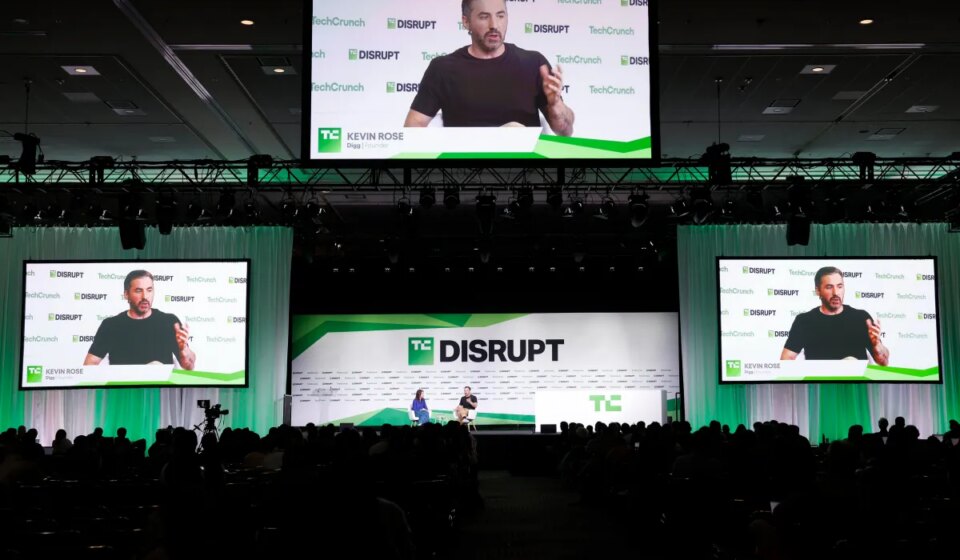
We often treat AI as a product feature: a bigger model, a better demo, a startup valuation headline. That view misses the engineering and governance canvas required to make AI reliable, affordable, and broadly useful. The conversations lined up at events like TechCrunch Disrupt 2026 are useful because they force a shift in focus: from models as magic to systems engineering, economics of compute, and the real-world trade-offs every architect must manage.
Context: what’s changing right now
Tech leaders from device makers to chip designers, platform builders to payments firms, are debating the same set of problems: how to design interactions beyond screens, how to democratize software creation, how to sustain the compute and energy needs of AI, and how to make emerging financial rails and surveillance technologies accountable. Those debates foreground a single principle: AI changes the unit of value from software features to the socio-technical systems that make those features safe, scalable, and economically viable.
What this means for enterprise architecture (my view)
-
Reframe architecture around cost-per-outcome, not ops-per-second.
- CTOs must stop optimizing purely for latency or throughput and start optimizing for “cost to deliver useful work.” That means measuring how much compute, energy, and human oversight a use case needs to reach production-grade reliability and regulatory compliance. Large LLMs might shine in research demos, but many enterprise problems are better solved by narrow, curated pipelines that combine smaller models, deterministic services, and human-in-the-loop checks.
-
Data contracts are now the security perimeter.
- With AI, data quality, lineage, and contractual expectations determine system behavior more than classical perimeter security. Design principles should include immutable provenance, automated validation gates, and clearly versioned datasets that map to model behavior. This reduces hidden technical debt where models degrade silently because their input distribution shifted.
-
Edge vs. cloud: nuanced splits, not dogma.
- “Beyond screens” and device-first experiences are real – but they create new orchestration complexity. The right partitioning often places lightweight models and decision logic at the edge for latency and privacy, with heavy training and observability centralized. Architects should define clear APIs and fallbacks so devices degrade gracefully when connectivity, compute, or energy budgets are constrained.
-
Compute strategy must be multi-dimensional.
- Scaling AI isn’t solved by buying more GPUs. Consider total cost of ownership: capital, power, colocation, cooling, and software portability. Heterogeneous compute (specialized accelerators, inference-optimized instances, model distillation) will be key levers to control long-term cost without sacrificing capabilities.
-
Governance is architecture.
- Regulations, auditability, and explainability should be designed into data flows and model lifecycle tooling from day one. Treat governance artifacts (audit logs, model cards, consent records) as first-class system outputs-necessary for compliance and for trust with customers.
A practical Bharat parallel (why this matters for India)
For India, and particularly regions like Northeast India where I work, these architectural shifts present both constraints and opportunities. DPI components (digital identity, payments rails, and public data registries) can accelerate AI adoption if we prioritize interoperable data contracts and low-bandwidth edge strategies. Frugal engineering – smaller models, aggressive quantization, and offline-first design – can deliver high-value services while respecting local connectivity and energy limits.
Key takeaways for CTOs and founders
- Measure value as “cost to produce reliable outcomes,” not just model accuracy.
- Build immutable data contracts and automated validation into release pipelines.
- Use heterogeneous compute strategies to manage long-term economics.
- Design governance as code: auditability and explainability must be automated.
- Prioritize human-in-the-loop patterns where safety, regulation, or trust are non-negotiable.
Closing thought
The era after the smartphone will reward teams that treat AI as a systems problem – where models, data, compute economics, and social contracts are designed together, not stitched together after the fact.
About the Author: Sanjeev Sarma is the Founder Director and Chief Software Architect at Webx Technologies. With a core focus on Generative AI integration, Cloud-Native Scalability, and Enterprise Software Architecture, he has spent over two decades driving digital transformation across Northeast India and beyond. Beyond his corporate leadership, Sanjeev is deeply invested in shaping the future of the IT industry. He serves as an Industry Expert on the Board of Studies for Assam Don Bosco University’s School of Technology, advises state technology committees, and actively mentors emerging tech startups at STPI. He brings a unique, dual perspective of high-level enterprise execution and future-ready academic curriculum development.