Concentration Risk: Architecting Capital-Efficient Startups for Mega-Rounds

We obsess about weekly headline numbers – but the real story is what those numbers hide.
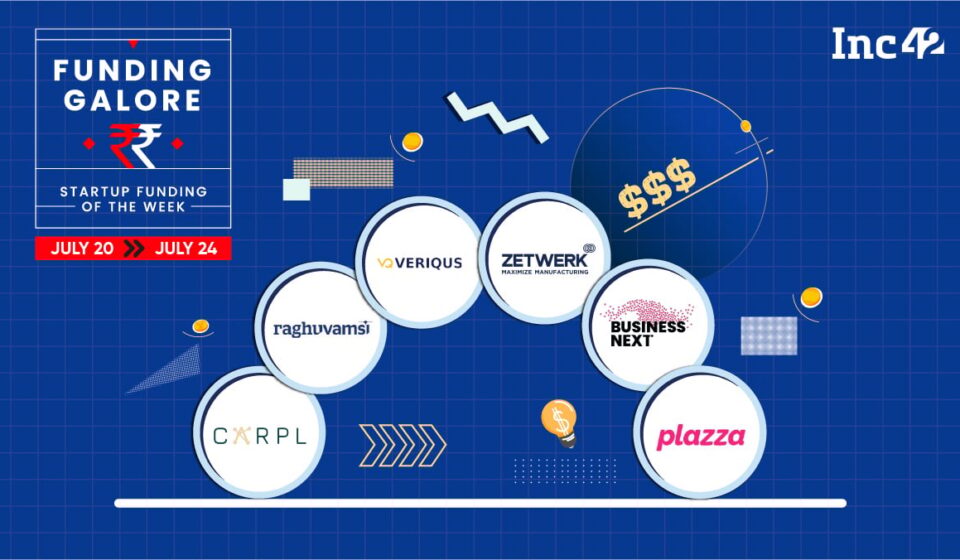
Context: A recent snapshot of Indian startup funding for July 18–24, 2026 shows total funding of $209.1M across 14 deals – down about 26% from the prior week. Four large rounds (each >$40M) made up some 82% of the total, while early-stage activity and AI funding contracted sharply (AI accounted for a single $259K round that week).
Why that concentration matters for architects and founders
-
Capital concentration is a feature, not a bug. Investors are increasingly allocating large tickets to capital‑intensive, revenue‑proven opportunities (manufacturing solutions, enterprise SaaS, aerospace). For founders this raises the bar: later-stage cheques are reserved for businesses that have demonstrated durable unit economics, repeatable sales cycles and clear paths to scale. For architects, it means designing systems with predictable operational envelopes – not experiment-friendly brittle stacks that break when load or compliance requirements change.
-
Weekly swings in AI funding reveal the gap between hype and production-readiness. Last week’s “AI dominance” vs. this week’s near-absence shows investor sentiment can be ephemeral. From an enterprise architecture standpoint, that argues for an “AI as a capability” approach, not a moonshot-first mentality: build clean data foundations, production-grade MLOps, model governance and well‑defined inference/latency contracts so AI features can be switched on or off without rewriting systems.
-
Early-stage drought is a pipeline risk. Seed activity in that week was thin – a worrying signal for the future supply of product‑market innovators. The immediate implication for founders: prioritize capital efficiency and measurable go-to-market traction. For technical leaders: prefer modular, API-first architectures that enable rapid iteration with low infra spend (serverless, event-driven patterns, feature flags).
-
Hardware and advanced manufacturing are attracting large rounds – and with them architectural complexity. Investments into manufacturing, aerospace and deeptech indicate investor appetite for tangible industrial value. These domains demand edge compute, digital twins, stringent OT/IT integration and robust supply‑chain telemetry. Enterprises and startups in these sectors must plan for hybrid architectures, secure device connectivity, and lifecycle management for firmware and edge models.
Actionable guidance for CTOs, founders and ecosystem builders
- Treat data infrastructure as your strategic asset. Invest once in a governed data lakehouse, lineage and identity/consent primitives. This reduces integration cost for AI experiments and enterprise customers alike.
- Design for capital friction. Assume the “next” round will be harder; aim for 12–18 months of runway with milestones that materially de-risk the business (revenue growth, customer retention, gross margin improvements).
- Build composable product platforms. API-first services, event buses and clear service-level contracts make it cheaper to pivot and to onboard large enterprise customers.
- Operationalize MLOps and model governance early. Even small AI features need reproducibility, drift detection and rollback plans – the cost of not having them shows up as stability incidents and lost trust.
- For deeptech/hardware ventures, allocate engineering effort to secure device provisioning, OTA update mechanisms and digital twin integration from day one.
A brief note for India (and regions like the Northeast)
The funding tilt toward manufacturing and deeptech creates an opening for regional clusters. Localized R&D partnerships, skill programs, and incubation that focus on hardware‑software co‑design can turn capital into sustainable jobs and exportable IP. Regional startup builders must lean into frugal engineering – high impact, low-cost design – while aligning with national manufacturing and DPI priorities.
Takeaways
- Large, concentrated rounds signal investor preference for scaleable, proven outcomes.
- Volatility in AI funding is a reminder: focus on production readiness over novelty.
- Early-stage scarcity demands capital-efficient product and architecture choices.
- Deeptech funding requires hybrid, secure and maintainable architectures.
Closing thought
Markets will chase the obvious winners; the real long-term value accrues to teams that build resilient systems and predictable revenue engines – and then use AI and cloud to amplify those strengths, not to paper over their absence.
About the Author: Sanjeev Sarma is the Founder Director and Chief Software Architect at Webx Technologies. With a core focus on Generative AI integration, Cloud-Native Scalability, and Enterprise Software Architecture, he has spent over two decades driving digital transformation across Northeast India and beyond. Beyond his corporate leadership, Sanjeev is deeply invested in shaping the future of the IT industry. He serves as an Industry Expert on the Board of Studies for Assam Don Bosco University’s School of Technology, advises state technology committees, and actively mentors emerging tech startups at STPI. He brings a unique, dual perspective of high-level enterprise execution and future-ready academic curriculum development.