Architecting Clean Energy Independence for Climate Resilience

When celebration meets crisis: why extreme heat and wildfire risk should reframe enterprise strategy
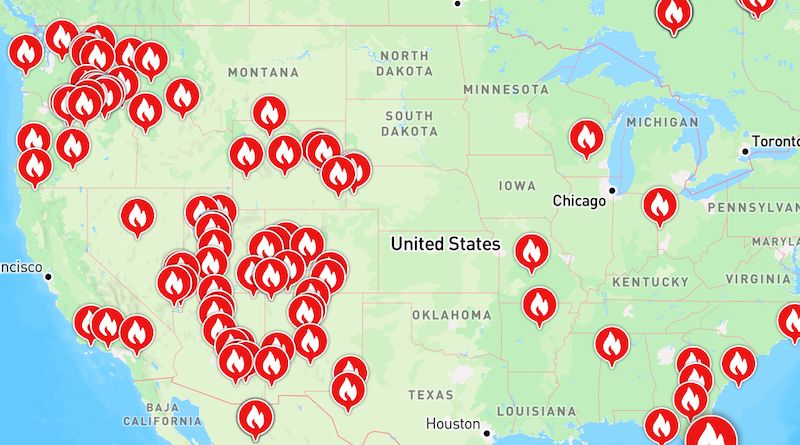
Two days ago I read reporting about multiple New Jersey towns postponing or cancelling July 4th events because of extreme heat, while concurrent coverage showed major wildfires across the U.S. West destroying homes and stretching firefighting resources. Those are not isolated headlines – they are symptoms of a systemic risk that should be baked into how we design infrastructure, run operations, and set technology strategy.
The signal: climate risk is now an operational risk
The immediate story is local – cancelled events, evacuated communities, and damaged property. The strategic signal is broader: climate change is moving from a long-term sustainability concern to a near-term continuity and resilience mandate. For enterprises – whether a cloud provider, a manufacturing plant, or a government services platform – the consequences are tangible: disrupted supply chains, data-center cooling limits, degraded network availability, and rising insurance and compliance costs.
What this means for enterprise architecture
-
Treat climate as a scenario in every capacity plan. Just as we run load tests and failure drills, we must run climate stress tests: higher ambient temperatures, prolonged power derates, and increased incidence of fire/flood-related outages. Design SLAs and capacity buffers around those scenarios rather than historic averages.
-
Move from centralized dependency to hybrid, distributed resilience. Centralized systems optimized purely for cost-efficiency are brittle under extreme events. A mix of cloud regions, edge nodes, and on-site micro-infrastructure (on-site solar + battery, microgrids) provides both performance benefits and an outage hedge. For mission-critical services, prioritise architectures that allow graceful degradation and localized operation when wide-area services fail.
-
Electrification and load-shifting are not just environmental choices – they’re defensive architecture. As buildings and fleets electrify, electricity demand profiles will change. Enterprises should invest in smart demand management: load-shifting, demand response, and predictive scheduling. That reduces peak strain on grids and creates new levers for resilience and cost control.
-
Rethink cooling and thermal resilience for compute. Data centers are sensitive to heat stress. Strategies such as adaptive workload placement, free-cooling, liquid-cooling pilots, and geographic diversification reduce exposure. Plan procurement and placement with climate trajectories in mind.
-
Embed sustainability into procurement and risk models. Carbon and climate risk should be treated like currency in vendor selection: what’s the resilience plan for each key supplier? Do they have contingency power, off-site backups, or diversified logistics for extreme weather?
Trade-offs and long-term debt
There are trade-offs: distributed resilience increases capital expenditure and operational complexity. Electrification and storage add upfront cost. Legacy systems resist modular redesign. But the alternative – repeated crisis-driven repairs and reputational damage – is far costlier. The real architectural debt will be incurred by organizations that wait for regulation or market pressure before adapting.
A note for India and Northeast practitioners
The parallels are clear: Northeast India already faces floods, landslides, and episodic power stress. For public services and SMEs, distributed clean energy (roof-top solar with batteries), community microgrids, and resilient last-mile connectivity are pragmatic, frugal investments. Investing in modular, API-driven services enables rapid failover to local nodes when central links are compromised.
Actionable takeaways for CTOs and founders
- Add climate-stress scenarios to capacity planning and incident runbooks today.
- Prioritise hybrid distribution: multi-region cloud + edge + on-prem micro-infrastructure for mission-critical apps.
- Pilot behind-the-meter solar + battery at key facilities and link them to workload scheduling for demand response.
- Make procurement decisions conditional on suppliers’ resilience plans and carbon trajectories.
- Treat resilience and sustainability as strategic, measurable KPIs (cost of downtime, carbon risk-adjusted ROI).
Closing thought
Extreme weather has stopped being a niche sustainability headline – it is now a structural design constraint. Enterprises that treat climate risk as a core architectural requirement will not only survive the next decade; they will gain a strategic advantage in a world where resilience and responsibility increasingly determine market access and trust.
About the Author: Sanjeev Sarma is the Founder Director and Chief Software Architect at Webx Technologies. With a core focus on Generative AI integration, Cloud-Native Scalability, and Enterprise Software Architecture, he has spent over two decades driving digital transformation across Northeast India and beyond. Beyond his corporate leadership, Sanjeev is deeply invested in shaping the future of the IT industry. He serves as an Industry Expert on the Board of Studies for Assam Don Bosco University’s School of Technology, advises state technology committees, and actively mentors emerging tech startups at STPI. He brings a unique, dual perspective of high-level enterprise execution and future-ready academic curriculum development.