Converging Security and Admin Certification in Cloud-Native Talent Strategy

We treat certifications as checkpoints – discrete stamps that say “you passed this test on that day.” CNCF’s recent CARE update reframes that mental model: certification can be a moving, ecosystem-aware signal of ongoing competency rather than an administrative headache. That shift matters for how architecture teams hire, structure career progression, and design secure cloud-native operations.
What changed (brief)
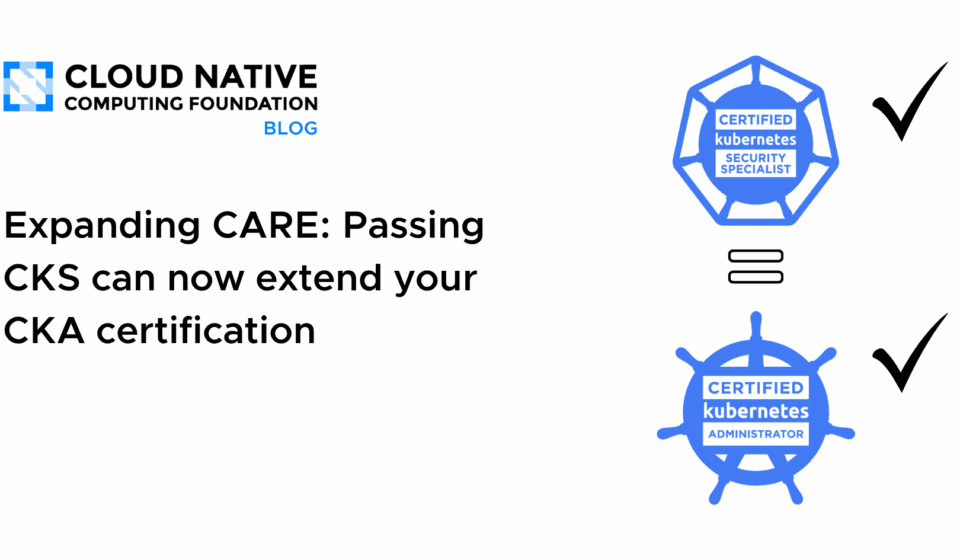
The Cloud Native Computing Foundation updated its CARE program so that passing or recertifying the Certified Kubernetes Security Specialist (CKS) will automatically reinstate or extend the Certified Kubernetes Administrator (CKA) certification to the same expiration date. The change reduces a renewal window and links an advanced, security-focused credential to its foundational admin counterpart.
Why this matters to enterprise architecture
At an architectural level, this is more than credential housekeeping. It acknowledges a simple truth: deep security work in Kubernetes presumes and exercises core administrative skills. For CTOs and architects, that has three strategic implications.
-
Signal consolidation – clearer competency maps: When a single exam implicitly validates two tiered competencies, teams gain a cleaner signal for role design and workforce planning. Hiring grids, career ladders, and on-call rosters can map fewer credentials to clearer responsibilities, reducing ambiguity when creating SRE/Kubernetes job profiles.
-
Incentives toward specialization in security: Removing renewal friction for CKA when earning CKS nudges operators to invest in security specialization. That’s good for organizations moving beyond “lift-and-shift” clusters toward hardened, production-grade platforms. Expect better posture in areas like workload hardening, runtime defenses, and supply-chain hygiene as more admins prioritize security skills.
-
Risks and trade-offs – don’t mistake certificates for competence: Architectural resilience depends on observable behaviour (runbooks, incident response, CI/CD pipelines) as much as on certificates. There is a real risk of credential inflation or checkbox hiring unless organizations pair certifications with practical assessments: internal blue/green drills, chaos exercises, and peer-reviewed runbook audits.
Operational actions for engineering leaders
- Revisit competency matrices: Map CKS outcomes explicitly to the administrative tasks you expect your CKA holders to perform. Align role descriptions, promotion criteria, and training budgets to that mapping.
- Integrate cert tracking into HR/LMS: Automate expiry tracking and training triggers so skill maintenance becomes part of career planning rather than ad-hoc admin.
- Emphasize lab-based validation: Complement external certificates with internal, scenario-driven assessments – e.g., secure cluster bootstrap, runtime forensics, or supply-chain incident simulations.
- Use this change to rebalance talent development: Reward security-focused rotations, create shared tooling for cluster hardening, and build a repeatable path from admin → security engineer within your teams.
- Guard assessment integrity: Continue to value on-the-job evidence (pull requests, incident postmortems) as primary, with certifications as corroborating signals.
A practical note for India (and Northeast) adopters
For Indian enterprises and the growing cloud-native community in Northeast India, reduced renewal friction is pragmatic. Talent is scarce; small teams cannot afford multiple separate recertification cycles. A combined signal that favors security competence makes upskilling investments more efficient and helps STPI-affiliated startups and regional engineering hubs build stronger, security-first Kubernetes practices sooner.
Key takeaways
- Treat the CARE change as an opportunity to simplify competency frameworks and reduce administrative overhead.
- Couple external certifications with internal, hands-on validation to prevent false confidence.
- Use the policy change to accelerate security specialization through deliberate rotations, labs, and tooling investments.
- Automate cert lifecycle management within HR and engineering tooling to keep skills visible and actionable.
Closing thought
Certifications are most valuable when they reduce uncertainty about what people can actually do; policy changes that align credential incentives with practical, security-minded work are a small but meaningful step toward more resilient cloud-native architectures.
About the Author: Sanjeev Sarma is the Founder Director and Chief Software Architect at Webx Technologies. With a core focus on Generative AI integration, Cloud-Native Scalability, and Enterprise Software Architecture, he has spent over two decades driving digital transformation across Northeast India and beyond. Beyond his corporate leadership, Sanjeev is deeply invested in shaping the future of the IT industry. He serves as an Industry Expert on the Board of Studies for Assam Don Bosco University’s School of Technology, advises state technology committees, and actively mentors emerging tech startups at STPI. He brings a unique, dual perspective of high-level enterprise execution and future-ready academic curriculum development.