Architecting Trustworthy Agricultural Data Platforms Against Food Disinformation

Contrarian opening: Transparency is necessary – but not sufficient
We’ve been told a simple prescription for food disinformation: get farmers on social media and let them tell their story. I recently read a Farmscape piece (June 15, 2026) that echoed this sentiment: frontline producers posting daily operations as a way to correct misleading narratives. That’s a helpful start. But as a systems architect who spends his life turning human problems into sustainable technical systems, I believe this prescription misses the deeper architectural challenge: credible transparency requires interoperable data, verifiable metrics, and institutional incentives – not just more Instagram reels.
What’s the real signal here
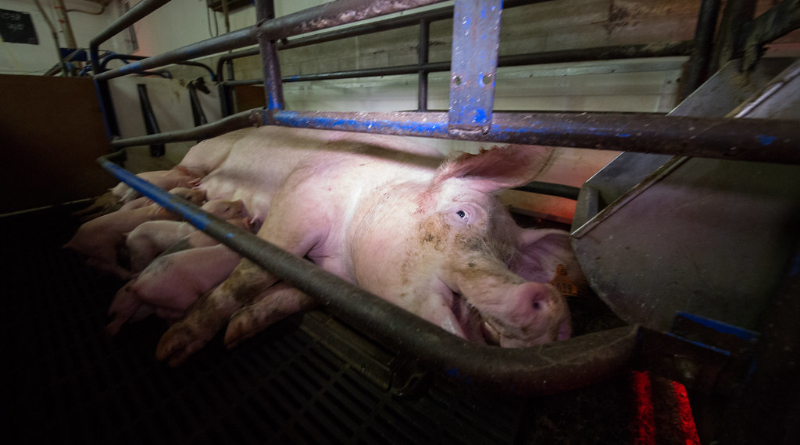
At issue are three tensions surfaced by the reporting: (1) individual narratives can humanize practices but are limited in scale and verification, (2) industrial actors can perform “green” PR while externalizing risks (flooding, pollution, animal welfare), and (3) climate impact requires looking beyond direct emissions to land-use, productivity, and future demand. Those tensions point to an engineering problem, not only a communications one.
Analysis – the enterprise architecture of trustworthy food systems
For decision-makers – CTOs in agri-tech, government data leads, and foundations funding rural digitalization – the design question is how to build a truthful, resilient information layer for food systems that balances three things: accuracy, farmer agency, and scalability.
-
Data-first transparency: Encourage farmer storytelling, but anchor it to standardized, machine-readable datasets. Photos and videos are powerful; they must be paired with simple, auditable metadata (location, date, practice tags). That enables aggregation, longitudinal analysis, and third‑party verification without erasing the human story.
-
Verifiability, not just visibility: Social posts are ephemeral. Architectures should include independent verification paths – e.g., satellite and drone remote sensing for land-use change, sensor networks for on‑farm emissions proxies, and sampled lab tests for water quality. Use analytics to flag anomalies and drive targeted audits rather than attempting impossible blanket verification.
-
Data governance and consent: Smallholders must retain agency. Design consent-first models (data trusts, tiered sharing) that allow farmers to opt into different use-cases – consumer-facing traceability, regulator reporting, or commercial marketplaces – with clear value exchange (premiums, access to markets, or technical assistance).
-
Low-bandwidth, offline-first UX: The last mile matters. Systems must work on feature phones, support intermittent connectivity, and minimize human data entry. UX that respects farmers’ time increases adoption far more than incentives to “post more.”
-
Incentives and economic alignment: Transparency costs money. Public and private incentives – certification premiums, subsidy targeting, or pay-for-data programs – are necessary to convert voluntary posting into sustained, quality data flows. Without incentives, the rich will narrate and the poor will be silent.
Localization – why this matters for Bharat (and particularly the Northeast)
India’s agricultural landscape is dominated by smallholders. Any credible transparency architecture must scale down as well as up. Practical design patterns (offline-first mobile clients, regional language support, and localized trust brokers such as cooperatives or panchayats) are essential. Building these systems in the Northeast – where connectivity and terrain add friction – can produce robust, frugal patterns that are reusable across low-resource geographies.
Takeaways for leaders
- Treat transparency as an integration problem: human narratives + standardized data + verification pipelines.
- Prioritize farmer agency via consented data models and clear economic returns.
- Invest in low-bandwidth, offline-capable interfaces for true inclusivity.
- Use sampled verification (remote sensing + targeted lab/audit) to scale trust affordably.
- Align policy incentives to reward verified practices, not just storytelling.
Closing thought
In an era of fragmented media and climate urgency, honesty in agriculture will win only when it is engineered – not just narrated. We must shift from hoping for more posts to building systems that make truthful, verifiable information the default.
About the Author: Sanjeev Sarma is the Founder Director and Chief Software Architect at Webx Technologies. With a core focus on Generative AI integration, Cloud-Native Scalability, and Enterprise Software Architecture, he has spent over two decades driving digital transformation across Northeast India and beyond. Beyond his corporate leadership, Sanjeev is deeply invested in shaping the future of the IT industry. He serves as an Industry Expert on the Board of Studies for Assam Don Bosco University’s School of Technology, advises state technology committees, and actively mentors emerging tech startups at STPI. He brings a unique, dual perspective of high-level enterprise execution and future-ready academic curriculum development.