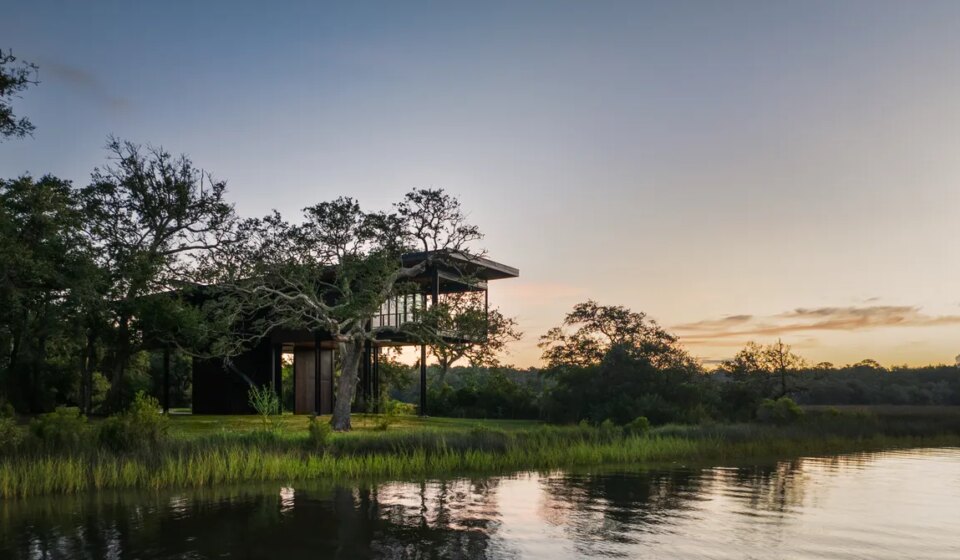
Architecting for Extremes: Systems Designed to Last Generations

Contrarian: Resilience is not a bunker – it’s good design
We too often equate resilience with over‑engineering: concrete walls, redundant everything, and an exponential bill. Recent reporting on architects who design homes to withstand extreme weather reminds us of a different truth: resilience that endures is often the product of thoughtful simplicity, material intelligence, and a mindset that prioritizes long‑term maintainability over short‑term spectacle.
Context – the signal from architecture
A profile of an architect working on climate‑resilient homes shows a pattern worth translating into enterprise architecture: houses that are meant to last generations are designed to be low‑maintenance, adaptable to harsh sites, and visually coherent rather than bunker‑like. Those same attributes-durability, maintainability, and graceful coexistence with challenging environments-are the exact qualities modern software and infrastructure teams must bake in as climate and operational volatility rise.
What this means for enterprise architecture
Think of a resilient house as a metaphor for a resilient system. The principles map cleanly:
-
Design for longevity, not short release cycles. Choosing technologies and patterns because they are trendy increases future maintenance debt. Opt instead for stacks and components with predictable upgrade paths, clear ownership, and easy observability. I’ve seen systems with flashy microservice sprawl become near‑impossible to maintain; simple, well‑documented modules keep systems understandable across teams and time.
-
Reduce moving parts where possible. Low‑maintenance homes minimize failure modes; equivalently, each additional component in a distributed system adds risk. Balance modularity with operational simplicity: prefer simpler service contracts, well‑defined interfaces, and defensive defaults.
-
Embrace graceful degradation. Buildings survive storms by shedding non‑essential loads and protecting core functions. Systems should do likewise-design for partial availability, prioritized workflows, and clear fallbacks so critical business functions continue under stress.
-
Test the extremes. Architects consider wind, flood, seismic activity before construction; engineers should run chaos exercises, disaster‑recovery drills, and load failures regularly. These are not checkbox audits-they’re the practical way to ensure runbooks, automation, and human responses work when the unexpected happens.
-
Make maintainability visible. A house that lasts generations embeds legible systems: easy access to critical components, simple maintenance schedules. For software, invest in telemetry, runbooks, and docs that new team members can use without tribal knowledge. Observability is the equivalent of clear access panels and labelled fuse boxes.
-
Account for lifecycle economics. Upfront investment in robust design reduces total cost of ownership. The same is true for modular refactoring, security hardening, and investing in developer experience to reduce toil.
Localization – why this matters to regions like Northeast India
The parallels to Northeast India are concrete. Climate volatility-floods, landslides, cyclones-creates real constraints for digital infrastructure and the communities that depend on it. In these contexts, resilience isn’t an academic exercise: it’s about delivering usable services when networks are intermittent and power is unstable. Practical implications include offline‑first application design, local caching strategies, lightweight synchronization protocols, and community‑centric operational models where local teams can perform essential maintenance without remote escalation.
Takeaways for CTOs, architects and founders
- Prioritize maintainability: choose patterns your team can support five years from now.
- Design for graceful degradation: identify core business flows and protect them first.
- Reduce unnecessary complexity: every component needs a clear operational owner.
- Institutionalize disaster rehearsals: runbooks and chaos tests reveal true resilience.
- Invest in observability and documentation as first‑class features-these are the access panels of software.
- For geographically vulnerable regions, adopt offline‑capable, low‑toil architectures and build local capacity.
Closing thought
Resilience is not an aesthetic or a feature toggle; it’s an ethos-design decisions made today that spare the next generation unnecessary repair work and enable services to persist when conditions get hard.
About the Author: Sanjeev Sarma is the Founder Director and Chief Software Architect at Webx Technologies. With a core focus on Generative AI integration, Cloud-Native Scalability, and Enterprise Software Architecture, he has spent over two decades driving digital transformation across Northeast India and beyond. Beyond his corporate leadership, Sanjeev is deeply invested in shaping the future of the IT industry. He serves as an Industry Expert on the Board of Studies for Assam Don Bosco University’s School of Technology, advises state technology committees, and actively mentors emerging tech startups at STPI. He brings a unique, dual perspective of high-level enterprise execution and future-ready academic curriculum development.