
Six Naga civilians abducted from Leilon Vaiphei on May 13, 2026, were found dead and mutilated in Kangpokpi district weeks later, reigniting outrage across Manipur and the Northeast and raising urgent questions about the Suspension of Operations (SoO) framework meant to curb violence. The bodies, recovered on June 10, left families and communities confronting another episode of extreme civilian vulnerability in a conflict that critics say has outgrown moral and legal limits.
On June 14, Manipur Deputy Chief Minister Losii Dikho alleged that those responsible belonged to a group covered under the SoO and appealed to Prime Minister Narendra Modi for strict action. Chief Minister Yumnam Khemchand Singh said the case has been handed to the National Investigation Agency (NIA) and pledged that anyone found involved, regardless of position, would face legal consequences.
Local reports say the six men were initially handed over by villagers in Leilon Vaiphei to Kuki militants; fourteen other Naga hostages, mostly women and children, were later released. Families at the JNIMS mortuary struggled to recognise disfigured remains. Eyewitness accounts, hostage messages and forensic evidence mentioned in local reporting point to Kuki militants who are party to the SoO, prompting calls for decisive action by the NIA.
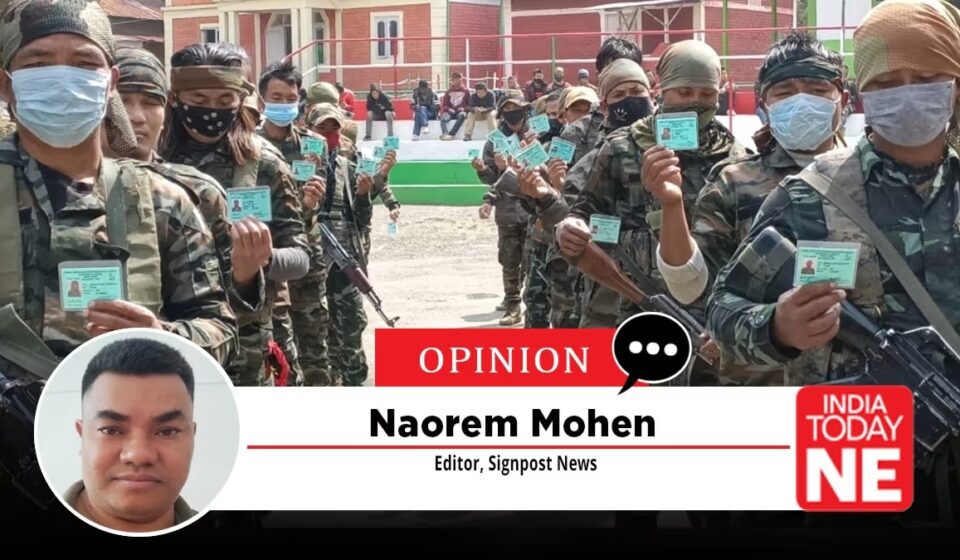
The killings have reopened a broader debate over the SoO, a ceasefire-like arrangement designed to bring armed groups under monitored conditions, reduce hostilities and enable political dialogue. The SoO was renegotiated in September 2025 with the Union Home Ministry, the Manipur government, the Kuki National Organisation (KNO) and the United People’s Front (UPF); the Union government said the revised pact would remain effective for one year from signing. Critics say the agreement can only be judged by conduct on the ground — discipline, verifiable compliance and public trust — not by signatures alone.
If armed cadres under SoO stay confined to camps and follow ground rules, the arrangement may help peace. But accusations that cadres under SoO have been involved in abduction, intimidation, extortion, arming local formations or ethnic violence have eroded public trust and made the framework morally contentious. Civilian deaths while protected groups receive stipends or political engagement deepen that distrust.
Observers and victims’ groups point to a pattern of brutal attacks and unresolved disappearances. They cite a November 2024 incident in Jiribam where six members of a Meitei family, including an infant identified as Laishram Lamnganba Singh, were found dead in the Barak River with severe injuries reported in autopsy. More than 50 people remain missing, families say, while other cases from 2023–2026 — including missing students and filmed executions — underscore persistent impunity.
Calls are growing for stronger enforcement: revocation of SoO protections for proven perpetrators, sustained operations to dismantle illegal networks, prosecution of commanders and local collaborators, and fast-track trials with exemplary punishment. Civil society organisations such as the Naga Women’s Union and the Native People’s Committee have written to the Prime Minister and Union Home Minister demanding review or abrogation of the SoO where violations continue.
The NIA’s involvement is welcomed by many, but families and community leaders stress that only swift, transparent investigations and accountability can restore public faith. For grieving households across Manipur, justice must mean protection of civilians and the rule of law — not arrangements that appear to shield those accused of atrocities.
Original Source: https://www.indiatodayne.in/opinion/story/how-long-will-soo-remain-a-license-for-kuki-militants-to-take-innocent-lives-1408176-2026-06-15?utm_source=rssfeed
Category:
Tags:
Publish Date: 2026-06-15 10:05:00