Architecting Interoperable Charging Ecosystems: Standards, Modularity, Trust

We chase watts and glossy feature lists-but real adoption is won (or lost) at the point where a person, a meeting room, or a hotel nightstand tries to charge three different devices with one cable-less hub. The next wave of wireless charging is less about marginal speed improvements and more about standards, ergonomics, and the operational burden created by accessory design choices.
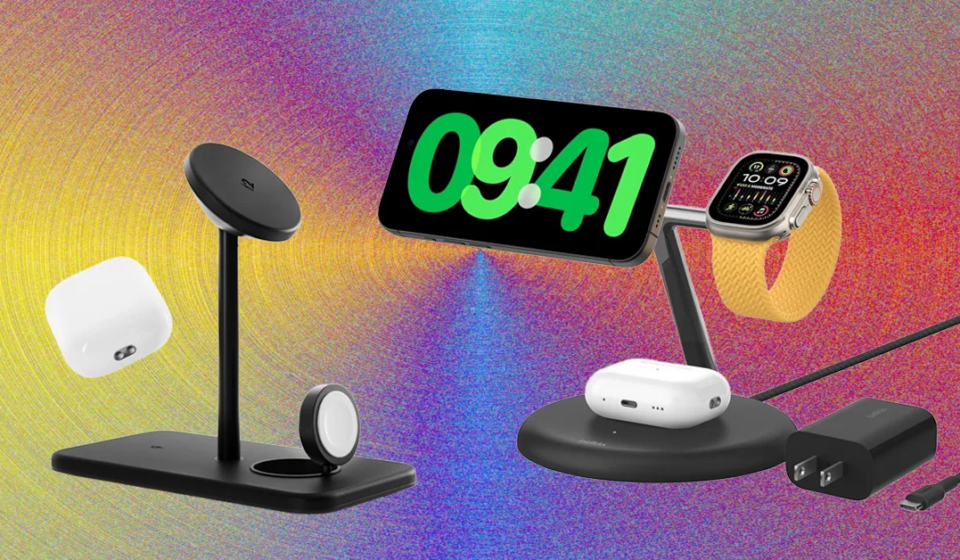
A recent consumer-technology roundup surveyed the growing category of multi-device wireless chargers-2‑in‑1, 3‑in‑1 and even 4‑in‑1 stations-and surfaced the pattern: magnetic alignment (MagSafe-style) and the Qi2 standard are enabling new form factors, while vendors experiment with foldable designs, active cooling, displays and modular attachments. Reviewers consistently flagged the same trade-offs: inconsistent ports, proprietary connectors, thermal management, fiddly mechanics, and feature creep that doesn’t translate to better day‑to‑day reliability.
What this means for enterprise architects, product leaders and procurement teams
-
Standards matter more than specs. Qi2 introduces magnetic alignment and higher, more efficient charging rates-conceptually this solves the “did it seat correctly?” problem. But standards only reduce friction if they are actually adopted across devices and accessories. For IT teams provisioning shared spaces, specifying Qi2 (or later) compliance – and insisting on USB‑C PD for power delivery – turns a tangle of cables and adapters into predictable infrastructure. Treat wireless charging the same way you treat Wi‑Fi: define a minimum standard and enforce it across suppliers.
-
UX and reliability beat peak performance. A charger that promises a few extra watts but slips, overheats, or requires a special barrel cable will create more support tickets and device downtime than one with conservative numbers and robust ergonomics. From a systems design perspective, “fast” is worthless if the device isn’t kept correctly aligned, or if thermal throttling undercuts throughput. Prioritize sustained performance, magnet strength that works through common cases, drop‑tests and thermal cycling in procurement evaluations.
-
Modular, repairable design reduces technical debt. Many modern chargers add displays, active cooling, and app integrations-useful features, but they increase points of failure and complexity for lifecycle management. For enterprise deployments, prefer modular solutions: replaceable power bricks, swappable watch modules, and clear firmware update policies. This reduces e‑waste and long‑term support costs.
-
Vendor decisions create ecosystem lock‑in. Proprietary connectors and missing adapters force end users to rely on specific vendor parts or to hoard extras-an operational and sustainability cost. Insist on open, widely available interfaces (USB‑C PD; Qi2 certification) and require vendors to include necessary power adapters and cables in boxed units to reduce silent friction for users.
A practical lens for India (and similar emerging markets)
In shared‑workspace and hospitality contexts across India, inconsistent chargers and missing adapters are a common pain point. Standardizing on Qi2 and USB‑C PD for public charging kiosks, co‑working desks, and government facilities simplifies user experience and lowers maintenance overhead-especially where last‑mile accessory supply is uneven. Small design choices (include a charger in the box; avoid obscure barrel ports) have outsized impact in markets where replacement parts are harder to source.
Actionable checklist for CTOs and procurement leads
- Require Qi2 (or newer) certification and USB‑C PD support.
- Include tests for magnet strength with common third‑party cases, sustained thermal performance, and mechanical endurance.
- Prefer modular hardware with replaceable power modules and clear firmware/update warranties.
- Require vendors to ship with adapters/cables and to document failure modes and repair paths.
- Evaluate total cost of ownership: replacement parts, service tickets, and end‑of‑life disposal.
Closing thought
The wireless‑charging story is not just about faster energy transfer; it is a study in how standards, simple ergonomics, and supply‑chain pragmatism determine whether a technology becomes ubiquitous or remains niche. For architects and product leaders, the priority is clear: design and procure for predictable, maintainable, and sustainable experience-not peak numbers on a spec sheet.
About the Author: Sanjeev Sarma is the Founder Director and Chief Software Architect at Webx Technologies. With a core focus on Generative AI integration, Cloud-Native Scalability, and Enterprise Software Architecture, he has spent over two decades driving digital transformation across Northeast India and beyond. Beyond his corporate leadership, Sanjeev is deeply invested in shaping the future of the IT industry. He serves as an Industry Expert on the Board of Studies for Assam Don Bosco University’s School of Technology, advises state technology committees, and actively mentors emerging tech startups at STPI. He brings a unique, dual perspective of high-level enterprise execution and future-ready academic curriculum development.