Architecting for Outcomes: Bridging Business, Constraints, and Agentic AI

We obsess over technology. We rally around new frameworks, IDEs, and agentic AIs – then wonder why projects still fail to move the needle for users and the business. The contrarian: architectural success starts less with the latest tech and more with clearer problem statements, explicit constraints, and language that lets teams act together.
Context
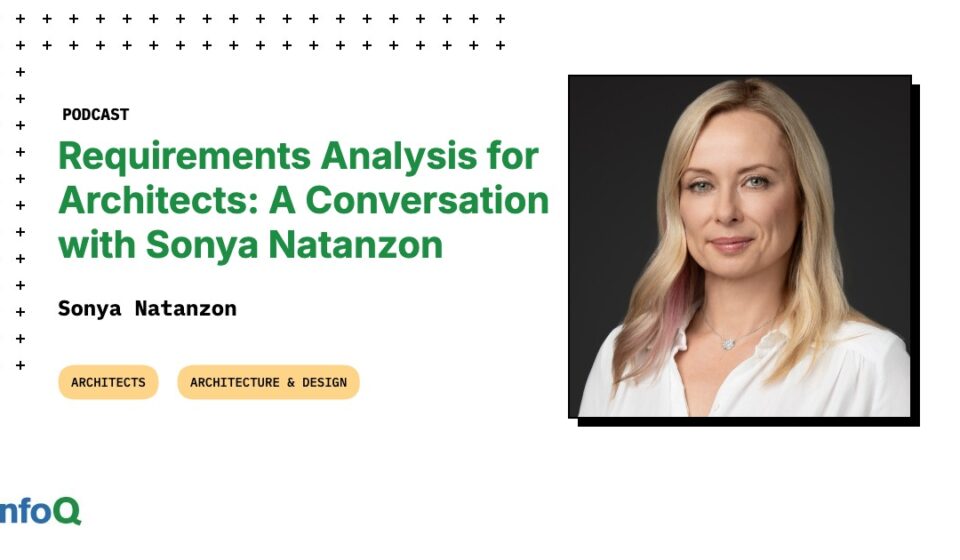
I recently listened to an interview with Sonya Natanzon where she argued that great architecture is often “accidental” – the product of continuous conversation, careful problem-framing, and the discipline to prioritize business outcomes over technological elegance. She covered ubiquitous language, the value of constraints, pragmatic use of Domain‑Driven Design techniques (often delivered as workshops rather than doctrine), and the emerging friction between agentic AI tooling and developer skill-building.
Analysis – what this means for enterprise architects and CTOs
-
Begin with outcomes, not features. Too many initiatives begin with “we need X” (a solution). Translate that immediately into a crisp problem statement: what useful outcome are we trying to enable, and what bad outcome do we want to eliminate? This switch is not semantics – it changes measurable goals, trade-off analysis, and the architecture you choose. For executives: require outcome metrics before greenlighting large rewrites or microservices projects.
-
Constraints are design accelerants. Don’t treat constraints as annoyances; treat them as architectural levers. Regulatory, performance, operational, and organizational constraints help prune the solution space and dramatically reduce design paralysis. Make constraints explicit in every architecture decision record (ADR).
-
Build ubiquitous language as an operational artefact. A glossary is more practical than philosophical DDD debates. Run cross-functional workshops (Event Storming-style sessions, even without calling them that) and publish a living glossary and scenario tests. That reduces translation cost between product, engineering and ops – and reduces rework.
-
Preserve and measure engineering intuition. Agentic AIs will accelerate routine work – but they risk deskilling juniors if we simply accept their outputs. Operational countermeasures:
- Make “explainability” part of code acceptance: junior engineers must articulate why a change was made and what assumptions were embedded.
- Keep a robust code-review + testing pipeline; treat AI-generated code like any external contributor.
- Design experiments that surface abstraction breakdowns (performance tests, chaos experiments, load profiles) so teams retain intuition about where automation will fail.
-
Reframe best practices as context-sensitive patterns. A reference architecture is a starting point, not a straight‑to‑production blueprint. Encourage engineers to document contextual assumptions when they reuse patterns – if you can’t list the business and operational preconditions, don’t copy-paste.
-
Governance for agentic tooling is mandatory. Decide explicitly which types of tasks can be delegated to agents, what approval gates remain, and where audit trails are required. Instrument both the agent interactions and the runtime systems for observability and drift detection.
Localization – an angle for Indian engineering ecosystems
In India (and especially in emerging tech hubs like Northeast India), these issues are practical: startups and MSMEs may adopt cloud and AI rapidly but lack the institutional habits to convert speed into durable capability. My work with local incubators and STPI engagements suggests a high-leverage approach: pair AI tooling with mentor-led apprenticeships and domain-focused projects (healthcare, agritech, supply chain) so juniors build both outcomes-focused thinking and domain intuition while delivering real value.
Takeaways
- Insist on problem statements and outcome metrics before large architectural changes.
- Capture constraints and language early – they are your design accelerators.
- Treat AI-produced code as untrusted until explained, reviewed and tested.
- Use workshops and living glossaries to operationalize DDD without ideology.
- Invest in apprenticeship models to prevent deskilling even as productivity tools mature.
Closing thought
Technology will keep changing the “how”; the durable job of architecture is to keep asking “why” – and to convert that “why” into measurable outcomes, shared language, and systems that survive the next wave of tooling.
About the Author: Sanjeev Sarma is the Founder Director and Chief Software Architect at Webx Technologies. With a core focus on Generative AI integration, Cloud-Native Scalability, and Enterprise Software Architecture, he has spent over two decades driving digital transformation across Northeast India and beyond. Beyond his corporate leadership, Sanjeev is deeply invested in shaping the future of the IT industry. He serves as an Industry Expert on the Board of Studies for Assam Don Bosco University’s School of Technology, advises state technology committees, and actively mentors emerging tech startups at STPI. He brings a unique, dual perspective of high-level enterprise execution and future-ready academic curriculum development.