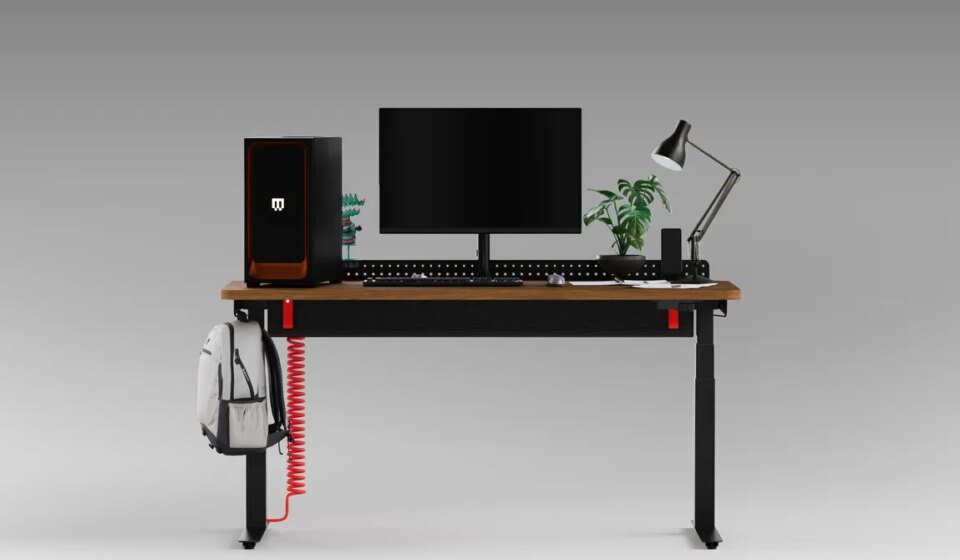

We obsess over digital micro-interactions – subtle haptics, a perfectly timed animation, that tiny delay that kills perceived performance – and yet we still underestimate how much the physical micro-interactions around us shape behaviour, focus, and productivity. A desk that nudges you to stand, a dial that resists just enough to feel “right,” or a cable that tucks itself away: these are design decisions with strategic consequences for organisations and product teams alike.
The signal: Herman Miller’s Coyl desk trades generic mechanisms for tactile, intentional details – coiled cable management inspired by vintage handsets, a rotary dial that adjusts height to a tenth of an inch and provides sensory feedback, a display that shows exact height, and modular accessories such as pegboards and hooks. It’s a premium product that packages ergonomics, precision, and extensibility into a single work-surface.
Why this matters to architects and technology leaders
1) Micro-interactions translate into measurable behaviour change. The Coyl’s dial is not decoration: it gives users clear, repeatable control. In software systems we call that “deterministic control” – APIs, toggles, and feedback loops that let operators reliably reproduce outcomes. Physical feedback reduces cognitive friction the same way well-placed logs, metrics, and idempotent APIs reduce operational friction.
2) Precision + visibility = trust. The desk shows the exact height and lets users store presets. For enterprise systems, this is the equivalent of precise telemetry plus easily applied runbooks. When teams can both see state and enact fine-grained change, they act faster and with less risk.
3) Modularity wins. The back panel, hooks and accessory ecosystem let the same base product serve different user personas. Architecturally, this is a reminder: design systems (whether furniture or platforms) should allow orthogonal extensions instead of monolithic add-ons. It reduces obsolescence and lowers upgrade costs.
4) Premium design forces trade-offs. Coyl’s price points signal a build-for-quality decision. For organisations, the question is rarely binary “buy vs build” – it’s “buy this premium capability now or pay hidden costs later in productivity and ergonomics.” Short-term procurement savings often become long-term technical or human-cost debt.
Actionable guidance for CTOs, Founders and Office Ops
– Treat workplace hardware like infrastructure: pilot before wide rollout, and measure usage (sit-stand transitions, preset adoption, wellbeing surveys).
– Demand observability: if a device offers state (desk height, usage), capture that telemetry into workplace dashboards for actionable insights.
– Choose modularity: prefer suppliers that provide upgrades and accessories rather than one-off replacements.
– Run a lifecycle cost analysis – not just CAPEX but health, retention and productivity benefits. I’ve seen modest ergonomic investments reduce absenteeism and improve focus across teams.
– For product teams, prototype tactile interactions early. Physical feel can differentiate a product as effectively as a new feature set.
A short note for India / Northeast contexts
The core lessons apply equally in Indian startups and government projects: ergonomics and intention don’t require imported luxury. In constrained budgets, prioritise the interactions that most reduce friction (clear controls, predictable presets, cable management) and consider local manufacture or modular vendors. For public-sector deployments and co-working spaces in Northeast India, frugal-but-intentional design often delivers outsized gains in usability and maintenance.
Takeaways
– Design for feedback: make system state visible and controllable.
– Prioritise modular extensibility over monolithic features.
– Measure the human ROI of physical infrastructure.
– Balance premium against lifecycle costs – “cheap now” can mean costly later.
– Prototype tactile and physical interactions early, as you would UI micro-flows.
Design is not decoration. It’s a lever. Whether we talk about a desk dial or a control-plane API, the same engineering principles apply: feedback, precision, and extensibility drive trust and long-term value. Leaders who see hardware as part of their product and platform strategy will get disproportionate returns – in productivity, retention, and the simple delight of work well done.
About the Author
Sanjeev Sarma is the Founder Director of Webx Technologies Private Limited, a leading Technology Consulting firm with over two decades of experience. A seasoned technology strategist and Chief Software Architect, he specializes in Enterprise Software Architecture, Cloud-Native Applications, AI-Driven Platforms, and Mobile-First Solutions. Recognized as a “Technology Hero” by Microsoft for his pioneering work in e-Governance, Sanjeev actively advises state and central technology committees, including the Advisory Board for Software Technology Parks of India (STPI) across multiple Northeast Indian states. He is also the Managing Editor for Mahabahu.com, an international journal. Passionate about fostering innovation, he actively mentors aspiring entrepreneurs and leads transformative digital solutions for enterprises and government sectors from his base in Northeast India.