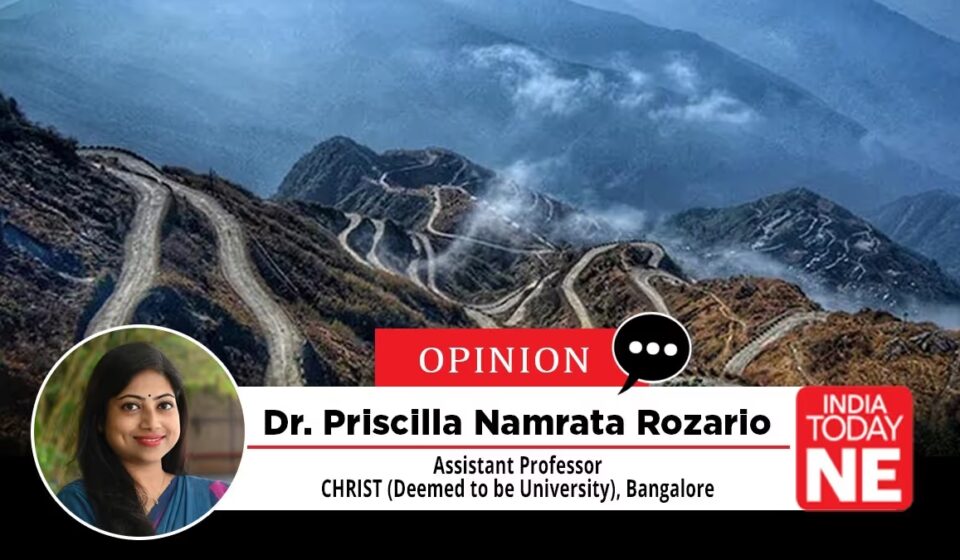

Short, scrolling reels on Instagram are remaking how mainstream India sees the Northeast — increasing curiosity and visitation but also risking reduction of complex places into consumable spectacles, argues Dr. Priscilla Namrata Rozario. Drawing on childhood memories in West Bengal and decades of cultural exchange, she warns that visibility driven by influencers can easily slip into exoticisation and commodification unless paired with deeper, more sustained engagement.
Rozario recalls how the Northeast became real to her not through maps but through friendships and everyday conversations. Lunch breaks with classmates from Meghalaya opened windows onto Shillong’s rains, hilltop church choirs, music cafés and Christmas gatherings, and foods flavoured with bamboo shoot and smoked meat. Those personal encounters, she says, taught her more about the region than any textbook could, turning an abstract corner of the map into human lives and memories.
Historically, Kolkata helped sustain those ties. For decades the city served as an educational and cultural hub for students from the Northeast; classrooms, hostels, cafés, churches and college festivals forged everyday relationships that made the region feel familiar to Bengal. Over time, Rozario notes, those ties weakened as education and migration patterns shifted toward cities like Bengaluru, Delhi, Pune and Hyderabad, and younger Bengalis now meet the Northeast more through screens than through shared space.
That shift helps explain the power of Instagram reels. In a few seconds of scrolling viewers can be carried to the tea gardens of Assam, the hornbill festivals of Nagaland, the monasteries of Arunachal Pradesh or the lakes of Manipur. This visibility counters long-standing underrepresentation of the region in national tourism narratives and encourages travel beyond clichéd circuits. Yet Rozario asks: what kind of Northeast do these reels present?
Too often the answer is packaged as “hidden paradise,” “untouched landscapes” or “offbeat escapes,” she argues — phrases that, while flattering, exoticise people and places and turn mountains and communities into visual aesthetics. Influencer-driven tourism rewards spectacle, immediacy and monetisable content, she warns, but regions with fragile ecologies and layered ethnic histories cannot safely be reduced to viral backdrops.
Rozario’s prescription is simple and personal: visibility is welcome, but it must lead to meaningful engagement rather than commodification. Travel should grow from curiosity, shared food and music, historical ties and conversation. For her, the remedy is to step away from drone shots and curated itineraries and to travel unhurriedly — not to “discover” the Northeast but to see it through one’s own eyes, as her friendships once allowed her to do.
Dr. Priscilla Namrata Rozario is a social historian and Assistant Professor of Historical Studies in the Department of Liberal Arts, School of Social Sciences at CHRIST (Deemed to be University), Bengaluru. Her research examines historical consciousness, collective memory and identity in urban and rural contexts.
Original Source: https://www.indiatodayne.in/opinion/story/between-memory-and-the-reel-how-digital-media-is-reshaping-northeast-tourism-1392707-2026-05-16?utm_source=rssfeed
Category:
Tags:
Publish Date: 2026-05-16 13:24:00