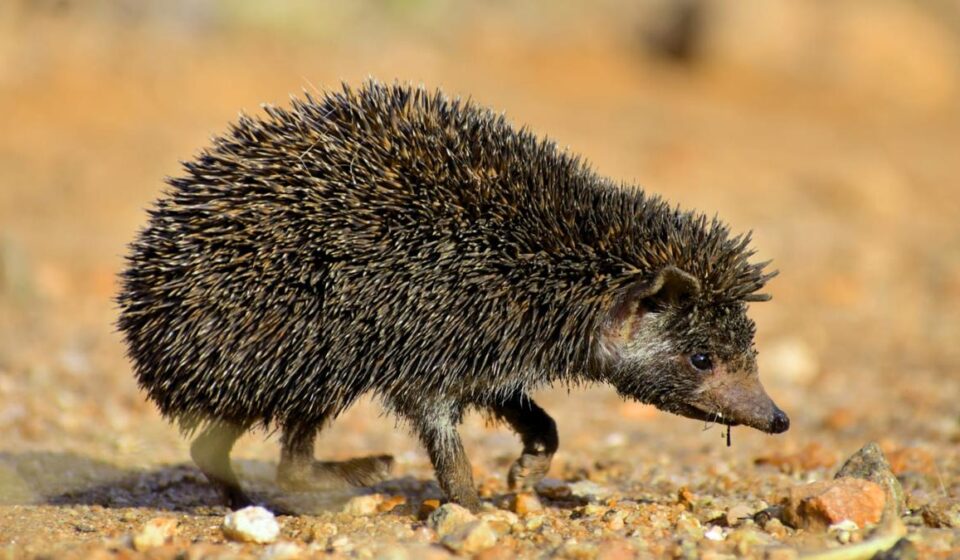
Unlocking the Secrets: First Complete Mitochondrial Genome Analysis of Madras Hedgehog Reveals Astonishing Insights into This Enigmatic Species

The Madras hedgehog, or Paraechinus nudiventris, has long been shrouded in mystery despite its coexistence with human communities for millennia. A groundbreaking study, published in the scientific journal Mitochondrial DNA Part A, marks a significant advancement in understanding this enigmatic species. The research, titled “Mitochondrial genome of the lesser-known Madras hedgehog: genomic characterization and comparative analysis within Erinacidae,” presents the first complete mitochondrial genome analysis of the Madras hedgehog.
R. Brawin Kumar, one of the paper’s authors, emphasized the historical obscurity surrounding the species, which is one of four hedgehog species found in India. He noted that the lack of genetic data has left questions about its evolutionary origins, relationships with other hedgehog species, and conservation needs largely unanswered. The Madras hedgehog inhabits diverse ecosystems, including semi-arid plains, dry grasslands, thorn forests, and rocky landscapes, but its biology remained poorly understood-until now.
The research team, which included scientists from BOKU University in Vienna-Harald Meimberg and Thapasya Vijayan-successfully sequenced and analyzed the entire mitochondrial genome for the first time. The genome comprises 17,232 base pairs and features 13 protein-coding genes, 22 transfer RNAs, and two ribosomal RNA genes, standard for vertebrate mitochondrial architecture. This comprehensive genetic blueprint provides crucial insights into the hedgehog’s biology and evolution.
One exciting finding from the analysis revealed that the Madras hedgehog is a sister species to the Indian hedgehog (Paraechinus micropus). The two species diverged approximately 3.69 million years ago during a period marked by significant climatic and geological transformations in South Asia. The research specifically utilized DNA from hedgehogs that had unfortunately been killed in vehicle accidents across 62 square kilometers in the Thoothukudi district.
This research holds broader implications beyond its immediate scientific concerns. Given India’s rich biodiversity, much of which remains inadequately studied, the Madras hedgehog serves as a critical case study. Its long-standing presence alongside human populations in southern India underscores the necessity of understanding the species’ genetic identity, which has remained elusive until now.
Kumar highlighted the importance of this research for the species’ future conservation. He urged state governments in regions where the Madras hedgehog is found to conduct surveys across all districts to better grasp the species’ distribution and habitat needs.
As ecological pressures and habitat loss escalate, the need to document and protect such species becomes imperative. The revelations from this study are a step forward in safeguarding the Madras hedgehog and ensuring its survival for future generations.
This pioneering research not only adds to our understanding of the Madras hedgehog but also emphasizes the critical need for ongoing studies into the biodiversity of small mammals in India, paving the way for coordinated conservation efforts.
Original Source: https://www.thehindu.com/sci-tech/energy-and-environment/first-complete-mitochondrial-genome-analysis-of-madras-hedgehog-sheds-new-light-on-the-enigmatic-species/article70829163.ece
Category : Environment
Tags:
Publish Date: 2026-04-06 17:13:00