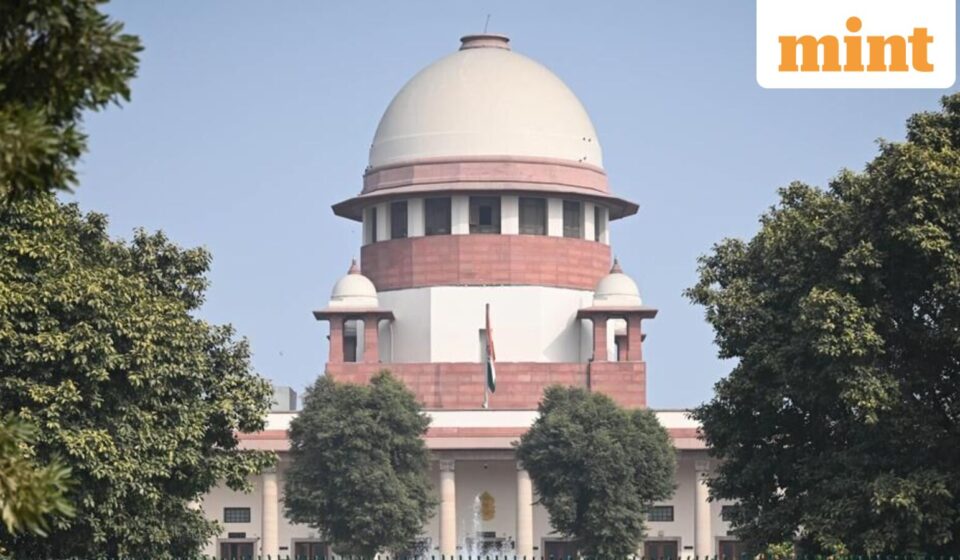
Uttarakhand Man Battles Adverse CIBIL Score for Years-Supreme Court Comes to His Rescue! Discover His Inspiring Journey!

In a significant ruling, the Supreme Court has granted relief to Uttarakhand resident Rajendra Singh Panwar, whose CIBIL credit score remained negative for years despite having no outstanding loans or payment defaults. Justices JB Pardiwala and KV Viswanathan heard Panwar’s petition, which highlighted his predicament stemming from inaccuracies in his credit report since 2020.
CIBIL scores serve as a crucial indicator of an individual’s creditworthiness, encapsulating their financial history in a three-digit figure. In his petition, Panwar contended that a negative score severely restricted his access to essential financial services. He argued that two other individuals sharing his name were linked to the same PAN number, and their payment defaults were erroneously reflected in his credit records. Despite rectifying his PAN, the association with the prior identifier kept his risk score elevated.
The Supreme Court directed major banks, including the State Bank of India (SBI) and Punjab National Bank (PNB), to clarify whether Panwar had any outstanding loans or defaults. In response, the PNB submitted an affidavit affirming that it had not reported any defaults against Panwar and noted the absence of adverse credit information in their records. Meanwhile, SBI communicated to the court that it only reports credit facilities utilized by Panwar, which are associated with his updated PAN details. Following these findings, CIBIL confirmed to the court that Panwar’s records have been corrected.
In a related context, a recent report by TransUnion CIBIL reveals a remarkable evolution in credit awareness among Indians. Nearly 183 million citizens are now actively monitoring their CIBIL scores, marking a significant shift towards increased financial literacy and responsibility. The report, “CIBIL for Every Indian – Uncovering How India Owned Its Credit Journey in 2025,” highlights that about 75% of these users reside in non-metro areas, demonstrating a notable trend where financial behavior is expanding beyond major urban centers.
This year-on-year growth in credit awareness-28% as of December 2025-indicates a substantial change in the way individuals approach their financial health. The number of first-time credit monitorers has surged by 27% annually, suggesting that tracking credit is evolving into a regular habit rather than a reactive measure tied solely to loan applications.
Bhavesh Jain, MD and CEO of TransUnion CIBIL, emphasized this paradigm shift, stating, “Historically, many consumers interacted with their credit profile only when they needed a product such as a personal loan or a credit card. Today, monitoring is not related merely to a single transaction but is embraced as ongoing financial hygiene.” He added that this transformation reflects a broader trend in India, where consumers are not just seeking credit but are becoming proactive in managing their financial journeys.
With this move towards regular monitoring, CIBIL Scores are no longer static numbers but rather dynamic indicators of an individual’s financial well-being that people actively track and strive to improve.
As the landscape of financial literacy continues to evolve in India, initiatives like these could play a pivotal role in empowering consumers, helping them to navigate the complexities of credit and finance in today’s rapidly changing economic environment.
Original Source: https://www.livemint.com/news/india/uttarakhand-man-flags-adverse-cibil-score-for-years-despite-no-loan-or-default-sc-rescues-him-heres-what-happened-11775382484223.html
Category :
Tags:
Publish Date: 2026-04-05 16:05:00