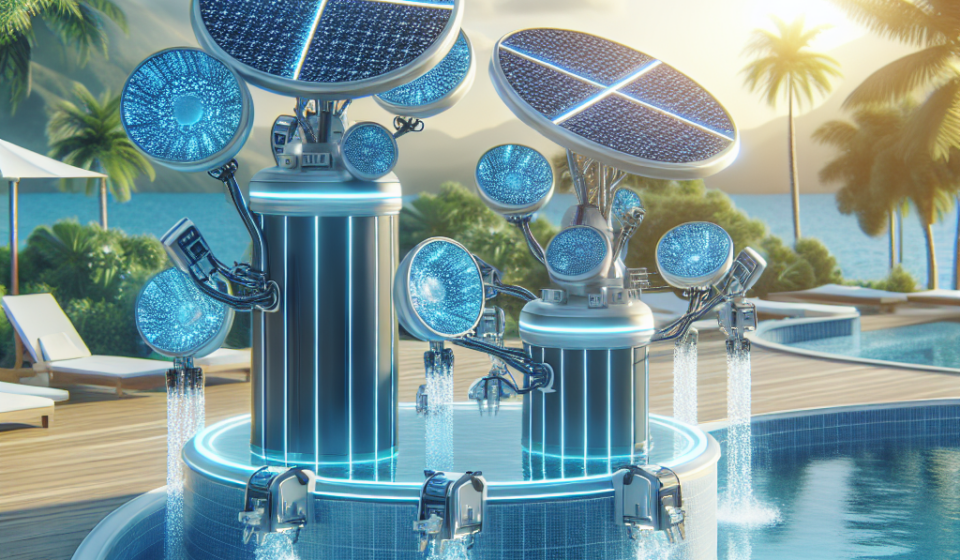

We are conditioned to celebrate single, impressive robots – the fastest algorithm, the quietest motor, the cleverest sensor. But the real architectural shift isn’t a better standalone device; it’s when multiple purpose-built systems are designed to operate as one coordinated ecosystem. That’s the contrarian takeaway I had after reading about the Aiper Experts Duo – two specialized pool robots working together under a cognitive AI layer.
Context
I recently came across a system that pairs a floor-and-wall cleaner with a solar-assisted surface robot and overlays them with adaptive AI for coordination and continuous optimization. Rather than pitching incremental improvements in suction or battery life, the story signals a broader move: from isolated automation to orchestrated, intent-driven maintenance.
Analysis – why this matters to architects and CTOs
1. System-of-systems thinking replaces product thinking. Typical consumer automation optimizes a single function. The smarter play – and the one enterprises should internalize – is to design components that expose predictable interfaces (telemetry, commands, health signals) and accept coordination policies. That allows specialization without operational chaos.
2. Edge intelligence + cloud orchestration is a practical compromise. The Aiper Duo pairs on-device AI for real-time navigation with higher-level planning (weekly schedules, energy-awareness). Architecturally, this is the sweet spot for many IoT use-cases: run latency-sensitive models at the edge, aggregate learning and policy updates centrally, and push improvements via secure OTA channels.
3. Energy-aware design is strategic, not cosmetic. Integrating solar-harvesting behavior into scheduling demonstrates a critical principle – treat energy as a first-class resource. For distributed devices, scheduling, load balancing, and graceful degradation based on energy forecasts extend uptime and reduce maintenance costs.
4. Operational observability wins over perfect autonomy. No matter how smart a robot is, maintenance and failure modes will exist. Successful deployments bake in rich health telemetry, traceable decision logs, and remote remediation APIs. That lowers mean time to repair and makes product teams effective at iterative improvements.
5. Security, data governance, and upgrade paths are often afterthoughts – they mustn’t be. When you coordinate multiple devices and collect environmental data, you create new attack surfaces and privacy considerations. Zero-trust for device-to-cloud interactions, signed firmware, and clear data-retention policies should be part of the design from day one.
Actionable guidance for CTOs and product leaders
– Define minimal, versioned interfaces between components (telemetry, commands, policies) so teams can iterate independently.
– Split intelligence: keep high-frequency perception at the edge; centralize learning and policy updates.
– Treat energy models as part of capacity planning – simulate scenarios where nodes reduce duty cycles and measure customer impact.
– Invest in observability: device health, decision logs, and user-experience metrics are the inputs for real-world model tuning.
– Consider servitization: predictable, low-touch hardware paired with subscription services (maintenance, analytics) often yields better unit economics than one-off sales.
A small Bharat note (where it genuinely connects)
In markets like India – and specifically in remote hospitality clusters across Northeast India – the value of low-touch, energy-efficient maintenance is amplified. Seasonal staffing, intermittent power, and higher service-delivery costs make a coordinated, solar-aware device ecosystem more than a convenience; it can be a business enabler for smaller hotels, resorts, and institutional campuses.
Takeaways
– Move from single-device optimization to orchestration-first product design.
– Architect for hybrid intelligence: edge for latency, cloud for learning.
– Make energy and observability design priorities.
– Bake security and upgradeability into the product lifecycle.
– Explore service-led business models to capture long-term value.
Closing thought
Products that learn how to work together – not just work harder – will be the ones that scale reliably in the messy, resource-constrained environments where technology truly creates value.
About the Author Sanjeev Sarma is the Founder Director of Webx Technologies Private Limited, a leading Technology Consulting firm with over two decades of experience. A seasoned technology strategist and Chief Software Architect, he specializes in Enterprise Software Architecture, Cloud-Native Applications, AI-Driven Platforms, and Mobile-First Solutions. Recognized as a “Technology Hero” by Microsoft for his pioneering work in e-Governance, Sanjeev actively advises state and central technology committees, including the Advisory Board for Software Technology Parks of India (STPI) across multiple Northeast Indian states. He is also the Managing Editor for Mahabahu.com, an international journal. Passionate about fostering innovation, he actively mentors aspiring entrepreneurs and leads transformative digital solutions for enterprises and government sectors from his base in Northeast India.