Facing the Crisis: How Inflation and Tariffs Are Driving Menstrual Product Prices Through the Roof!

Rising inflation and fluctuating tariff policies have led to significant price hikes for everyday products, impacting consumer budgets across the board. One often-overlooked category affected by these economic pressures is menstrual products, including sanitary pads and tampons. According to data from market research firm Circana, the average cost of these items has surged nearly 40% since 2020, climbing from approximately $5.37 to $7.43 per unit. Over the same period, dollar sales for menstrual products increased by almost 30%. However, sales volume itself has dropped by around 6% since 2022, indicating that consumers may be seeking alternatives.
The data analysis by NielsenIQ shows that unit prices of consumer packaged goods have risen by an average of 2.7% year-to-date, correlating with climbing inflation. The latest Consumer Price Index (CPI) data indicated a 2.4% annual rise in inflation, with personal care products experiencing an even steeper increase of 22.1% since January 2020. This has placed additional strain on many households, as Sarah Broyd, a partner at Clarkston Consulting, notes. She emphasizes that consumers are increasingly faced with difficult choices, having to prioritize essentials like food and prescriptions over menstrual products, which are considered necessary but increasingly unaffordable.
Menstrual products have also been affected by government tariffs. In 2025, the U.S. collected $115 million from tariffs on cotton-based menstrual items, up from $42 million in 2020. Most menstrual products are imported from countries like Canada, China, and Mexico, which have all faced varying levels of tariffs imposed by former President Donald Trump. Alongside these tariffs, many states still impose a “pink tax,” adding a sales tax on menstrual products; for instance, Tennessee, Mississippi, and Indiana have the highest rates at 7%.
The financial burden is palpable for consumers. New Yorker Dafna Diamant, 30, remarked on the rising costs she encounters at the checkout, with packs of tampons sometimes costing upwards of $25. “It’s crazy, and it just feels like as a woman, you have to pay sometimes $50 every couple of months,” Diamant told CNBC. This sentiment reflects a broader concern shared by many women, who find it troubling that menstrual health poses a recurring expense.
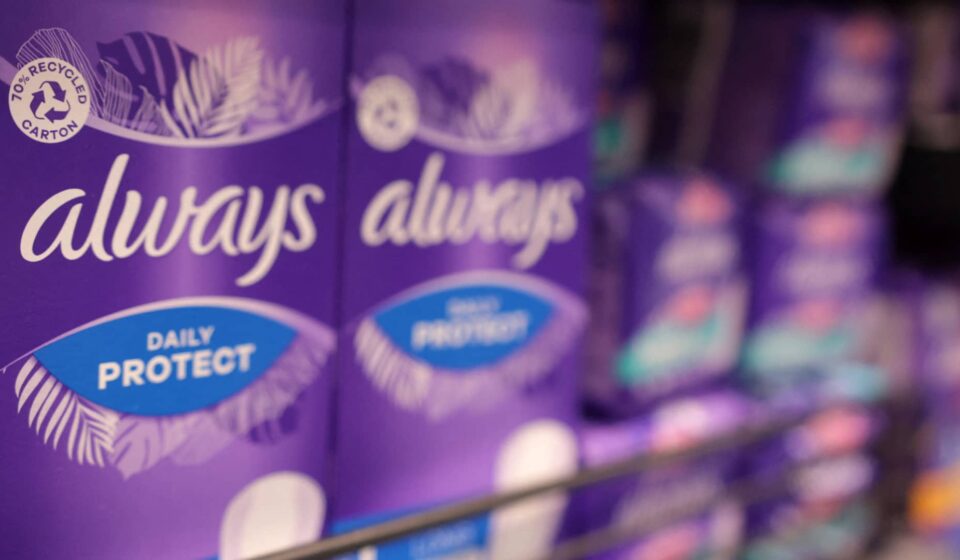
Large companies, too, are feeling the pressure. Procter & Gamble, which owns the Always brand, announced in July a price increase for 25% of its personal care products due to a $1 billion tariff impact. Similarly, Kimberly-Clark, maker of Kotex, reported $300 million in tariff-related costs. Broyd adds that menstrual products have faced a “triple whammy” of rising material costs, inflation, and cross-border frictions from tariffs.
The surge in costs has prompted some consumers to turn towards reusable menstrual products. With younger demographics leading the charge, companies like Saalt, which offers menstrual cups and underwear, report significant growth as consumers seek more economical and sustainable alternatives. Saalt’s CEO, Cherie Hoeger, mentions that a reusable cup can dramatically reduce the lifetime cost of menstrual health products by up to $1,800.
As traditional brand loyalty faces challenges, the rise of eco-friendly and cost-effective alternatives may signal a shift in how menstrual health is approached by consumers. The ongoing economic pressures reveal that affordability is crucial, highlighting the need for accessible solutions that address both health and financial well-being.
Original Source: https://www.cnbc.com/2026/03/22/menstrual-products-tampons-feminine-care-prices-inflation.html
Category :
Tags:
Publish Date: 2026-03-22 17:30:00