
The long-simmering rivalry between Israel and Iran is moving into a more dangerous phase, raising the risk of a direct strategic confrontation that could ripple far beyond West Asia. Once largely a shadow conflict fought through covert operations, cyber attacks and proxy networks, the dispute now carries serious implications for global energy markets, diplomatic alignments and international security. If escalation occurs, the effects would be felt worldwide.
The hostility has deep roots in the political upheaval that followed Iran’s 1979 revolution. The Islamic Republic transformed regional politics, with Tehran refusing to recognise Israel and positioning itself as a persistent critic of Israeli policies. Israel, for its part, views Iran’s regional influence and strategic ambitions with intense suspicion. Over decades, this mutual distrust has hardened into one of the defining rivalries of contemporary geopolitics.
In recent years the contest has acquired a sharper strategic edge. Israeli leaders, including Prime Minister Benjamin Netanyahu, have repeatedly warned that Iran must not be allowed to develop a nuclear weapons capability. Iranian officials insist their nuclear programme is for peaceful civilian use. The weakening of diplomatic frameworks such as the Joint Comprehensive Plan of Action (the 2015 nuclear accord) has made negotiation harder. With diplomatic tools fraying, the relationship is increasingly managed by deterrence, clandestine strikes and an ever-present risk of miscalculation.
The rivalry has also expanded into a wider struggle for influence across West Asia. Iran projects power through political and military partnerships and networks of allied groups. Israel has built stronger diplomatic and security ties with several Arab states that share concerns about Iran. Local conflicts are now frequently entwined with this broader strategic competition.
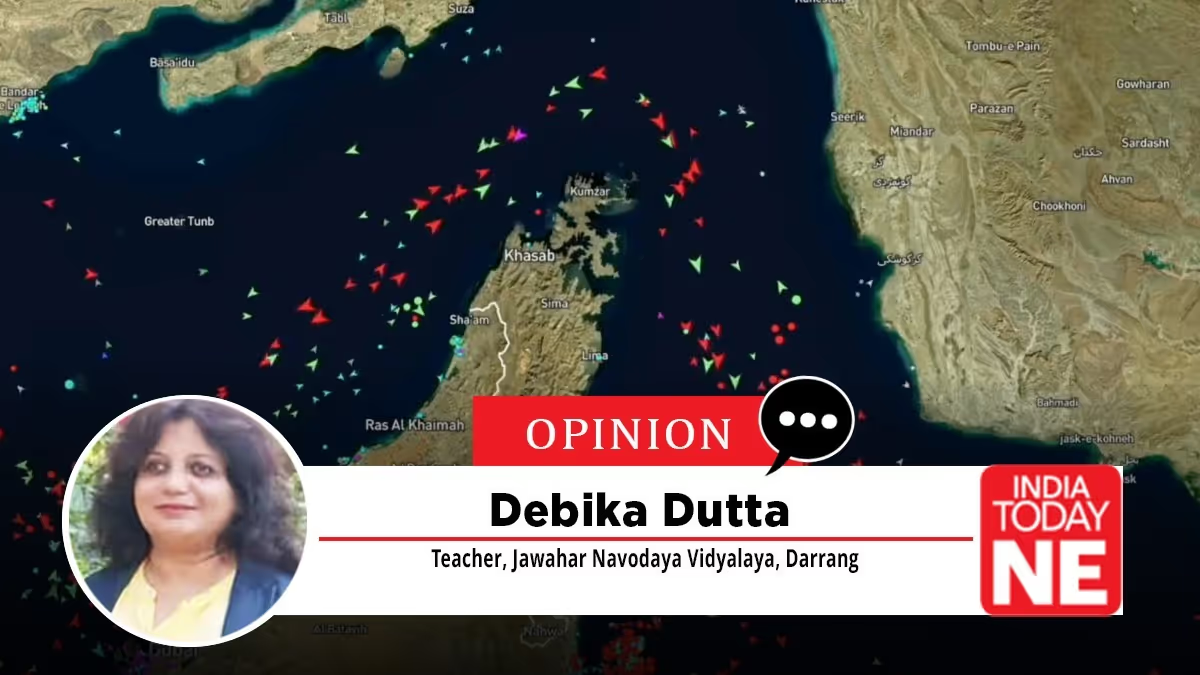
The economic stakes are high. West Asia is central to the global energy supply and the Strait of Hormuz remains a critical chokepoint for oil shipments. Any disruption there could quickly push up energy prices and deepen economic uncertainty worldwide.
Major powers are watching closely. The United States remains Israel’s principal strategic partner, while China and Russia have increased their engagement in the region. In an already fragmented global order — strained by the war in Ukraine and Indo-Pacific competition — a larger conflict in West Asia could reshape alliances and economic relationships.
For India, the stakes are practical and immediate: energy imports, trade ties, investment and a large Gulf diaspora whose remittances support many families. Instability would affect India’s economic security and the welfare of its citizens abroad, and could also influence transport costs and development projects in the country’s eastern and northeastern regions.
India has long pursued a balanced approach, keeping strong ties with Israel while engaging Iran constructively. Preserving that equilibrium amid rising tensions will demand diplomatic agility and strategic foresight. Lasting stability, the article argues, will depend less on confrontation than on renewed diplomacy, confidence-building measures and sustained international effort to reduce the risk of unintended conflict.
Debika Dutta teaches at Jawahar Navodaya Vidyalaya, Mangaldai, Assam. She writes on geopolitics, international relations and contemporary affairs.
Original Source: https://www.indiatodayne.in/opinion/story/west-asias-dangerous-new-faultline-1359550-2026-03-14?utm_source=rssfeed
Category:
Tags:
Publish Date: 2026-03-14 13:29:00