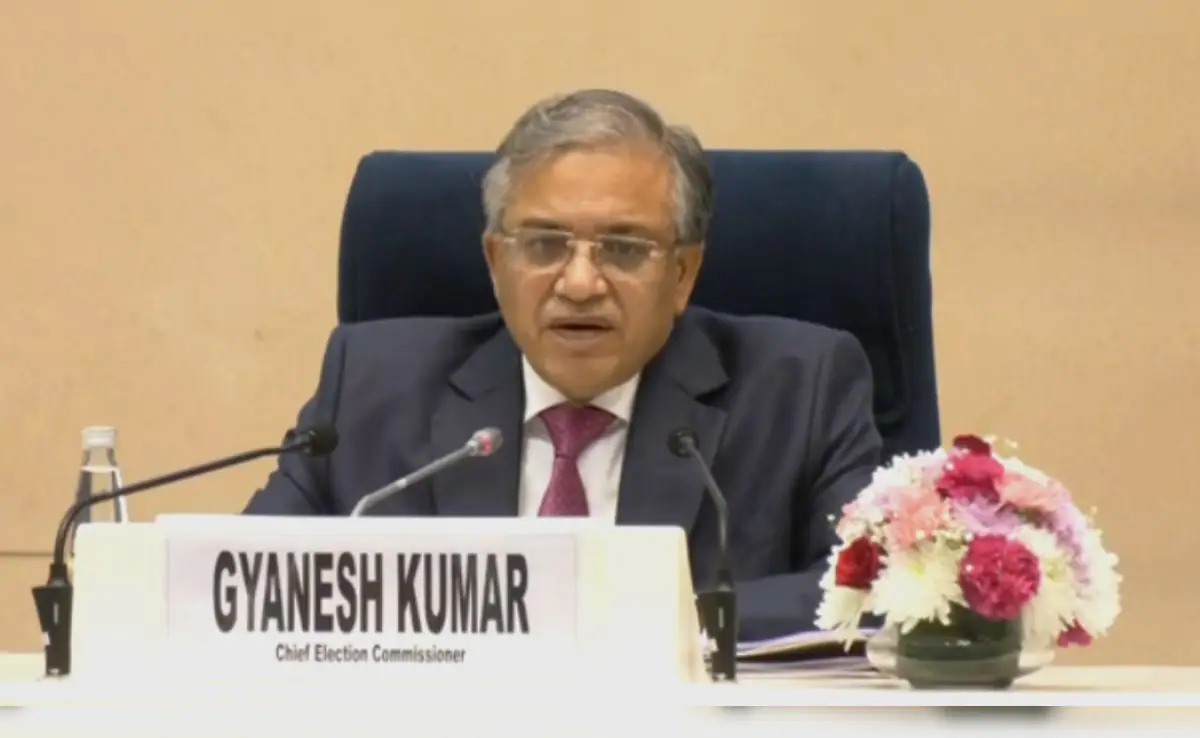

The Trinamool Congress has submitted a 10‑page notice seeking the removal of Chief Election Commissioner Gyanesh Kumar, alleging seven grounds including large‑scale deletions from electoral rolls in Bihar and West Bengal during the Special Intensive Revision, a biased attitude towards certain political parties, and misbehaviour by the CEC. Gyanesh Kumar is the first Chief Election Commissioner to face such a notice, which the party says was lodged after the INDIA bloc reached a consensus and as part of a deal that included lending support to the Congress’s no‑confidence motion against the Lok Sabha Speaker.
A formal impeachment notice requires the backing of 100 Lok Sabha and 50 Rajya Sabha members; the Trinamool’s submission carried the signatures of 130 Lok Sabha and 63 Rajya Sabha MPs, exceeding those minimum thresholds. Party leaders say signatures were collected only after opposition parties agreed on the move.
If the notice is found to be in order and the material is sufficient, the Lok Sabha Speaker and the Rajya Sabha Chairman will jointly constitute a three‑member committee. By rule, that committee must include a Supreme Court judge, a chief justice of a high court, and a senior advocate or distinguished jurist. Its task will be a preliminary inquiry to decide whether a prima facie case for impeachment exists.
If the committee finds no prima facie case, the matter will be closed. If it does, the motion moves to separate debates in each House. The removal procedure for the Chief Election Commissioner mirrors that for a Supreme Court judge under Article 124(4) of the Constitution, permitting removal only for proven misbehaviour or incapacity.
Even if the motion proceeds to debate, it faces a high numerical hurdle: removal requires a special majority — at least 50 percent of the House’s total membership — and the support of one‑third of members present and voting. Given current arithmetic, the opposition lacks the numbers to secure this threshold in either House, making defeat likely if the motion reaches a vote.
The CEC will have the right to legal representation in the House. Parliament has a precedent: during the 1993 impeachment proceedings against Justice V. Ramaswami, a separate dock was built in the Lok Sabha chamber for the defence; Ramaswami resigned after debate. A related judicial inquiry is already under way in the Justice Yashwant Varma cash row: the Speaker in February constituted a three‑member panel — including Supreme Court Justice Aravind Kumar, Bombay High Court Chief Justice Chandrashekhar, and senior advocate B.V. Acharya — which is expected to report in the Monsoon Session in July‑August.
Opposition strategists acknowledge the process could take five months or more, by which time West Bengal’s elections are likely to be concluded and a new state government in place. Trinamool leaders describe the impeachment notice as a tactical move to pressure the Election Commission and to signal to voters whose names were removed from rolls that the party has taken their grievance to the highest judicial and parliamentary forums.
Original Source: https://www.ndtv.com/india-news/the-process-to-impeach-poll-body-chief-and-how-opposition-is-prepared-11212709#publisher=newsstand
Category:
Tags:
Publish Date: 2026-03-14 00:54:00