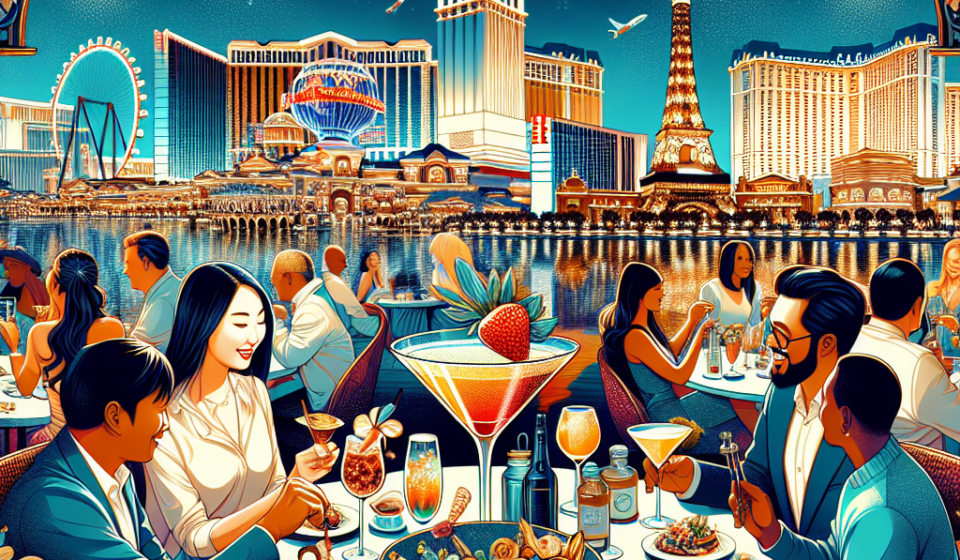

Ten years ago the hospitality conversation was largely about occupancy rates and OTA distribution. Today it’s about curated, place-based experiences delivered with the precision of a well-orchestrated software release. A recent roundup of Las Vegas restaurants, bars and cultural venues – from neighborhood cafés to immersive arenas – is a useful signal: consumers are valuing bespoke experiences, authenticity, and theatricality as much as convenience. That shift matters for architects and technology leaders building the systems that power modern hospitality.
Context
The source piece catalogues a wide range of venues – artisanal cafés, heritage steakhouses, destination fine-dining, cocktail bars, and immersive venues like the Sphere – and highlights how each sells not just food or drink but a distinct experience. The common thread is orchestration: staffing, supply chain, ambience, and timing all need to align to deliver the promise.
Analysis – what this means for enterprise and product strategy
1. Experience is a product that crosses systems. Hospitality is no longer a single line item in a P&L; it’s a composite product whose components live in separate systems – reservations, POS, kitchen display, inventory, CRM, workforce management, and guest-facing apps. Treat the guest journey as an integration problem and design an event-driven, composable architecture so a table request, a dietary preference, or an in-venue activation can propagate to every dependent system in real time.
2. Authenticity vs. scale is a classical trade-off. Venues that feel “local” or curated often resist over-standardization. From an engineering standpoint, this argues for configurable microservices and feature flags rather than monolithic templates. Let each outlet own its menus, pricing rules, and guest touchpoints while sharing core services (payments, loyalty, analytics).
3. Operational resilience matters more than flashy features. The article’s celebration of late-night tacos and massive seafood platters masks hard logistics – sourcing fresh seafood inland, staffing late shifts, and keeping inventory accurate across high-variance demand. Invest in robust inventory telemetry, supplier SLAs, and offline-capable POS so the front of house never appears fragile to a guest.
4. Personalization without privacy risk. The best venues deploy subtle personalization – remembering a favorite cocktail, offering a table with the right light level – but this requires data. Build unified guest profiles with consent-first mechanisms, clear retention policies, and privacy-by-design. The trust divide is easy to break and costly to repair.
5. Immersive venues are edge computing problems. Large-scale audiovisual experiences (e.g., the Sphere) demand low-latency orchestration across AV, ticketing, crowd management, and experience logic. This is an argument for edge compute, distributed orchestration engines, and real-time observability – not just more cloud instances.
Actionable steps for CTOs, founders and hospitality leaders
– Adopt a composable stack: separate core services (payments, identity, loyalty) from configurable front-end modules for each venue.
– Model the guest journey as events and expose a real-time event bus for downstream consumers (kitchen, bar, housekeeping).
– Prioritise resilient POS and inventory systems with offline modes and clear reconciliation processes.
– Build a consent-first guest profile (single source of truth) and use it to orchestrate micro-personalization while logging consent actions auditable for compliance.
– Measure experience metrics (dwell time, repeat rate, time-to-serve, social sentiment) alongside revenue metrics to guide investments.
Closing thought
Places win when technology fades into the background and the experience takes center stage. As architects we must create systems that are invisible, reliable, and elastic enough to let chefs, bartenders, and designers do the one thing machines can’t do well yet: surprise people.
About the Author
Sanjeev Sarma is the Founder Director of Webx Technologies Private Limited, a leading Technology Consulting firm with over two decades of experience. A seasoned technology strategist and Chief Software Architect, he specializes in Enterprise Software Architecture, Cloud-Native Applications, AI-Driven Platforms, and Mobile-First Solutions. Recognized as a “Technology Hero” by Microsoft for his pioneering work in e-Governance, Sanjeev actively advises state and central technology committees, including the Advisory Board for Software Technology Parks of India (STPI) across multiple Northeast Indian states. He is also the Managing Editor for Mahabahu.com, an international journal. Passionate about fostering innovation, he actively mentors aspiring entrepreneurs and leads transformative digital solutions for enterprises and government sectors from his base in Northeast India.