Unlocking Wealth: How the Nikkei 225, Kospi, and Hang Seng Index Can Propel Your Investment Journey

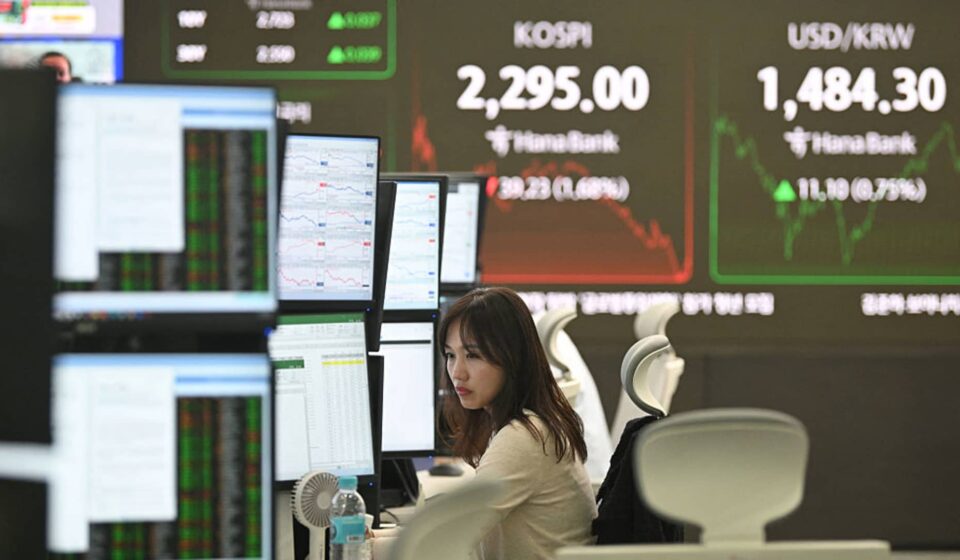
On April 9, 2025, South Korea’s Kospi index surged over 5%, leading a regional market recovery after a significant drop in oil prices and a positive turn on Wall Street. This rebound was spurred by U.S. President Donald Trump’s comments suggesting that the ongoing conflict with Iran might be winding down.
Trump indicated his willingness to take control of the Strait of Hormuz, a critical passage for oil transportation, which led to oil prices plummeting more than 10%. As reported by CBS News, he stated that “the war is very complete, pretty much,” a comment that appeared to bolster investor confidence. International Brent crude prices fell to $89.03 per barrel, while U.S. crude dropped to $86.05 per barrel, marking a sharp decline from their recent peaks above $100.
Bob McNally, president of Rapidan Energy Group, highlighted the severity of the current oil supply disruption, stating, “With 20% of world oil supply stopped, we have the largest interruption ever.” This disruption eclipsed previous crises, notably the Suez Crisis of 1956, when 10% of global oil supply was affected. The current geopolitical tensions surrounding the Strait of Hormuz have thus far resulted in unprecedented market impacts.
In addition to South Korea, other Asian stock markets experienced gains. The small-cap Kosdaq index rose over 4%, while Australia’s S&P/ASX 200 climbed 1.35%. Japan’s Nikkei 225 and Topix indices increased by 1.66% and 1.3%, respectively. Hong Kong’s Hang Seng index and the CSI 300 also noted improvements, rising by 1.56% and 0.9%.
Travel stocks in Hong Kong marked a notable rebound, with shares of Air China seeing a nearly 3% rise, followed closely by China Eastern Airlines at 2.9% and China Southern Airlines at 2.85%. Singapore Airlines also gained 1.54%, reflecting a renewed optimism in the travel sector.
In the U.S., stock markets closed positively after substantial fluctuations earlier in the day. The S&P 500 rose 0.83%, closing at 6,795.99, while the Dow Jones Industrial Average added 239.25 points, ending the session at 47,740.80. This marked a recovery from one of its most significant weekly dips in nearly a year. The tech-heavy Nasdaq Composite jumped 1.38% to settle at 22,695.95, illustrating a remarkable turnaround from earlier losses when the Dow was down nearly 900 points.
Overall, the market’s response underscores a complex interplay between geopolitical developments and economic sentiment, as investors react to changing conditions in the oil market and broader market dynamics. As the situation evolves, the ramifications for global markets and the oil supply chain will remain critical to watch.
Original Source: https://www.cnbc.com/2026/03/10/asia-pacific-markets-nikkei-225-kospi-hang-seng-index.html
Category :
Tags:
Publish Date: 2026-03-10 08:08:00