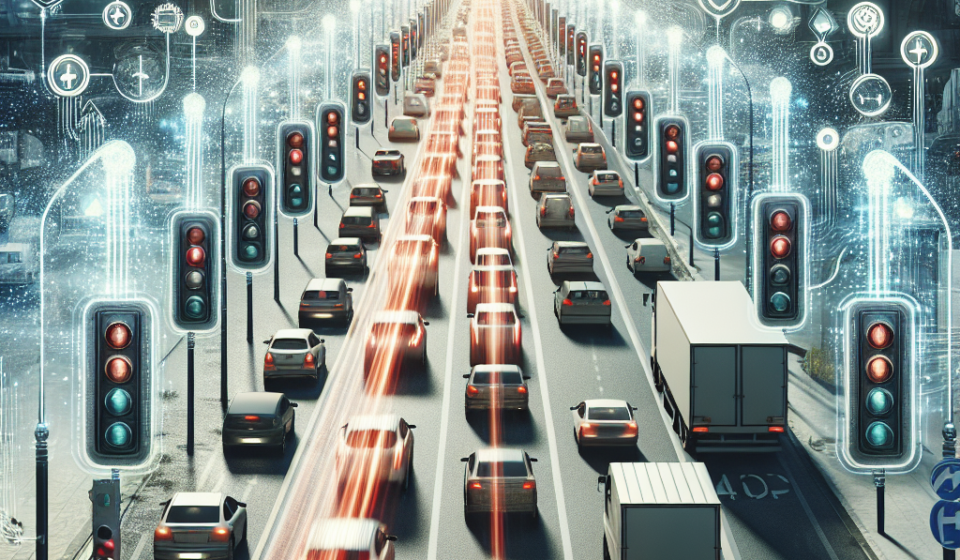

We celebrate big ideas – electrification, autonomous vehicles, city-wide AI – but sometimes the highest-leverage interventions are small, physical cues that change behavior. A white bar on a traffic signal that only buses can see is exactly that kind of pragmatic design: low‑visibility to most road users, high-impact for system performance.
The signal
I recently read about white, bus-only signal bars used in Transit Signal Priority (TSP) systems. These “queue-jump” or bus-priority indicators let buses receive a dedicated right-of-way at intersections (when paired with bus lanes or queue-jump lanes), reducing delay and idling without disrupting the normal signal cycle for other road users.
What it means for architects and cities
At first glance this is a traffic-engineering story. Architecturally, though, it’s a miniature lesson in systems thinking that translates directly to enterprise and public‑sector digital strategy.
– Prioritization matters: Just as Quality of Service (QoS) in networks gives certain packets precedence, TSP gives scheduled public transport deterministic access to constrained infrastructure. The practical effect is predictability – travel-time variance for buses drops, making service more reliable and attractive to riders. For product architects, the lesson is identical: identify the highest‑value flows and create guarded fast paths for them rather than flattening all requests into a single queue.
– Edge intelligence and interoperability: The white bar is only useful when supported by sensors, vehicle-to-infrastructure (V2I) signalling, and back-end traffic management systems. This requires clear standards (think UTC/NTCIP equivalents), robust edge processing for low-latency decisions, and APIs so bus operators, traffic control, and analytics platforms can share state. For enterprise systems, this mirrors the need for well-defined contracts and observability between microservices and edge systems.
– Trade-offs and operational discipline: A TSP signal only delivers benefit when used with dedicated lanes or controlled environments. Without those operational constraints, priority signals can simply move congestion or create conflicts. That’s the classic speed vs. stability trade-off: short-term gain (faster buses) can create long‑term complexity if the surrounding ecosystem doesn’t adapt (lane enforcement, routing, scheduling).
– Governance, privacy, and enforcement: Recent experiments where cities used cameras and AI to enforce bus-lane rules show how quickly technical solutions bump into legal and civic concerns. Enforcement systems must be transparent, auditable, and backed by policy. Data governance – what telemetry is collected from buses, how long it’s retained, and who can query it – must be settled before scaling.
Actionable guidance for CTOs, city planners and founders
– Pilot narrowly, measure decisively: Choose one corridor with a clear bus-lane and measurable KPIs (dwell time, headway variance, emissions). Run the TSP pilot for a minimum of 3–6 months to capture operational cycles.
– Design for standards and modularity: Use open ITS standards for signal control and V2I messaging to avoid vendor lock‑in. Architect the system as modular components (detection → decision → actuation → analytics).
– Security and resilience: Treat intersection control as critical infrastructure. Harden communications (mutual TLS), enforce role-based access, and build fail-safe fallbacks to normal signal phases.
– Engage citizens and operators early: Drivers, bus operators and local communities must understand the “why.” Visible signage, public outreach, and an appeals process for enforcement build legitimacy.
– Consider frugal retrofits for India: Low-cost magnetic or RFID sensors, retrofit signal housings, and lightweight edge controllers can make pilots affordable in mid-sized Indian cities where mixed traffic is the norm.
Localization note (when it applies)
In Indian cities – including many in the Northeast – the promise of faster, more reliable buses is huge: improved last-mile connectivity, lower emissions, and better access to jobs. But Indian streets are often mixed and informal; the technical solution must be paired with operational measures (lane enforcement, route rationalization) and social buy-in to succeed.
Takeaways
– Small, domain-aware design changes can produce outsized systemic benefits.
– Prioritize flows, standardize interfaces, and instrument outcomes.
– Combine technology pilots with policy, enforcement and community engagement.
Closing thought
If we want resilient, equitable urban mobility, we must balance tech ambition with pragmatic, human-centered interventions – sometimes the smartest thing a city can do is install a white bar.
About the Author Sanjeev Sarma is the Founder Director of Webx Technologies Private Limited, a leading Technology Consulting firm with over two decades of experience. A seasoned technology strategist and Chief Software Architect, he specializes in Enterprise Software Architecture, Cloud-Native Applications, AI-Driven Platforms, and Mobile-First Solutions. Recognized as a “Technology Hero” by Microsoft for his pioneering work in e-Governance, Sanjeev actively advises state and central technology committees, including the Advisory Board for Software Technology Parks of India (STPI) across multiple Northeast Indian states. He is also the Managing Editor for Mahabahu.com, an international journal. Passionate about fostering innovation, he actively mentors aspiring entrepreneurs and leads transformative digital solutions for enterprises and government sectors from his base in Northeast India.