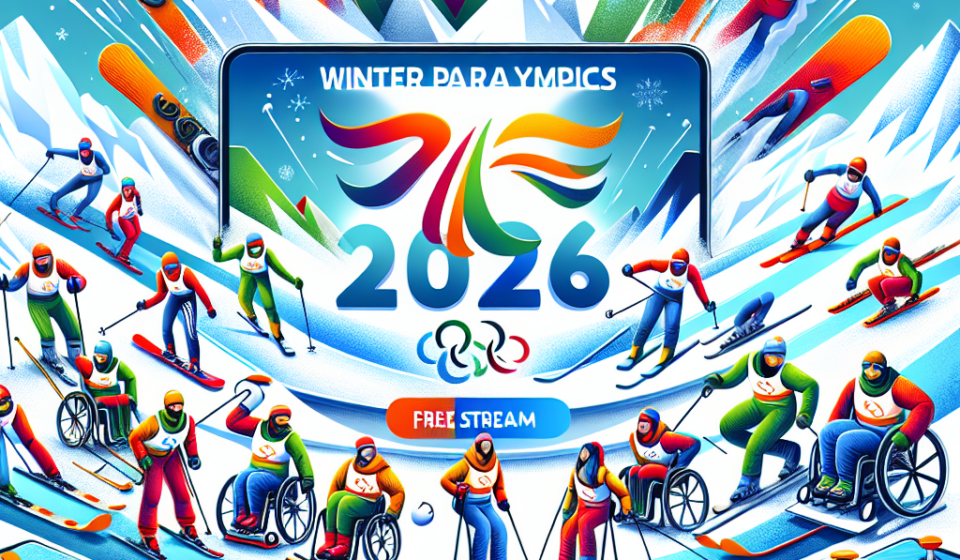

We celebrate bigger medal counts and free YouTube streams – and rightly so – but there’s a blind spot beneath the fanfare: expanded event coverage does not automatically translate into equitable, reliable access. The 2026 Winter Paralympics illustrate a tension every technology leader should recognise – growth in content + fragmented distribution + geoblocks = a complex systems problem that disproportionately affects the very audiences the Games intend to include.
Context: Milano–Cortina 2026 is the fullest Winter Paralympics program yet, with record medal events and a patchwork of national broadcasters offering both free and paid streams. At the same time, viewers are routinely nudged toward VPNs to reach home services while abroad. That operational reality raises architectural, legal and – crucially – accessibility questions that extend far beyond sport.
What this means for architecture and product strategy
– Access is a systems design challenge, not a marketing problem. When content is fractured across rights-holders and geographies, the user’s experience becomes a brittle chain: device capability, CDN health, DRM, authentication, regional licensing and network conditions all need to succeed in sequence. Any weak link breaks the promise of live sport.
– Inclusion must be engineered from day one. Paralympic coverage should lead the industry in accessibility (live captions, real-time audio-description, intuitive navigation and language localisation). These are not optional features; they’re fundamental quality attributes. Failure to prioritise them is a product risk and an ethical one.
– Geoblocking + VPN usage expose trade-offs between legal compliance, user privacy and UX. Encouraging VPNs is a symptom of distribution failure. For platform owners, better solutions are negotiated licensing, flexible geo-permissions, or partnerships with global federated platforms – combined with privacy-respecting authentication flows.
– Real-time scale is a different beast than on-demand scale. Live events require low-latency streaming, synchronized metadata (start lists, live timing), and seamless fallback (multi-CDN, edge logic). Monitoring must be real-time, with automation to reroute traffic or switch encoders without interrupting broadcast.
– Monetisation vs. trust. Paywalls and exclusive rights are valid business models, but they must be balanced against long-term brand trust. Overly aggressive DRM and poor customer support on live days create lasting reputational debt.
Practical briefings for CTOs and Founders
– Architect for multi-CDN and ABR (adaptive bitrate) with automated failover and region-aware routing.
– Make accessibility measurable: require live-caption accuracy SLAs, multi-language audio-description, and WCAG-compliance checks in release gates.
– Design an auth layer that supports federated identity and ephemeral access tokens to simplify cross-border licensing without compromising privacy.
– Invest in telemetry and synthetic transactions that emulate live-user journeys across devices and geographies – test before the first whistle.
– Negotiate rights with developer APIs in mind: require feeds for schedules, result metadata and athlete profiles to enrich apps and reduce UI friction.
– Offer a low-bandwidth experience: progressive pictures, delayed-but-complete streams, and device-side caching for intermittent networks.
Why this matters for India – and especially the Northeast
In regions with patchy connectivity, like many parts of Northeast India, “access” means more than platform availability. It requires mobile-first design, aggressive bitrate adaptation, local language commentary, and offline-first strategies for delayed highlights. Public-private partnerships – between state broadcasters, local ISPs and platform teams – can extend reach far beyond the headline feed. I’ve argued in technology advisory meetings that accessibility goals should be codified into procurement and licensing terms; doing so creates incentives for global rights-holders to deliver truly inclusive coverage.
Takeaways
– Bigger content libraries do not equal better access; distribution architecture determines who benefits.
– Accessibility and localisation are competitive advantages, not cost centers.
– Design live-stream systems as resilient, privacy-aware ecosystems that serve users across devices and network realities.
Closing thought
If we want the spirit of the Paralympics – inclusion, dignity, opportunity – to be lived digitally, we must treat access as a first-class architectural discipline. Great sport can inspire millions; great systems make sure everyone can watch.
About the Author
Sanjeev Sarma is the Founder Director of Webx Technologies Private Limited, a leading Technology Consulting firm with over two decades of experience. A seasoned technology strategist and Chief Software Architect, he specializes in Enterprise Software Architecture, Cloud-Native Applications, AI-Driven Platforms, and Mobile-First Solutions. Recognized as a “Technology Hero” by Microsoft for his pioneering work in e-Governance, Sanjeev actively advises state and central technology committees, including the Advisory Board for Software Technology Parks of India (STPI) across multiple Northeast Indian states. He is also the Managing Editor for Mahabahu.com, an international journal. Passionate about fostering innovation, he actively mentors aspiring entrepreneurs and leads transformative digital solutions for enterprises and government sectors from his base in Northeast India.