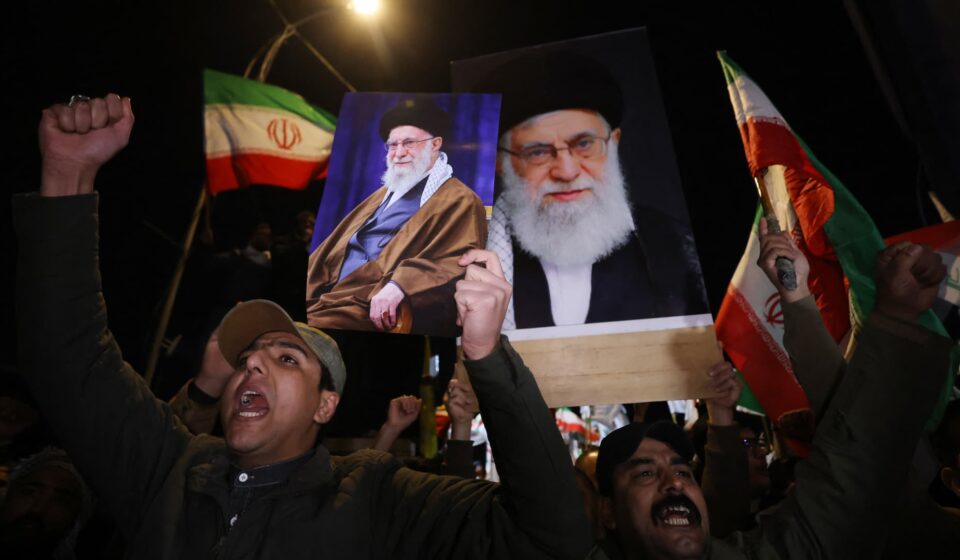

Iraqi Shiite protesters gathered in Baghdad on February 28, 2026, to express their outrage against U.S. and Israeli strikes on Iran. Carrying portraits of Iran’s Supreme Leader, Ayatollah Ali Khamenei, and waving Iranian flags, the demonstration took place near the U.S. embassy in the heavily fortified Green Zone. AFP journalists reported that several hundred individuals participated in the protest, underscoring growing tensions in the region.
As conflicts escalate in the Middle East, cybersecurity experts are sounding alarms over an impending wave of cyberattacks from Iran targeting U.S. businesses and infrastructure. Pavel Gurvich, CEO of cybersecurity firm Tenzai, emphasized the urgency of the situation, stating, “From a timing perspective, it’s now or never.” He noted that Iran possibly possesses stored capabilities, ready to unleash them during a high-risk moment.
In retaliation for U.S. and Israeli military actions over the weekend, Iran has intensified its own strikes against U.S. military assets, embassies, and regional hubs, including major cities like Tel Aviv, Doha, and Dubai. This ongoing conflict raises concerns about potential Iranian cyberattacks, particularly at a time when the Cybersecurity and Infrastructure Security Agency (CISA) is dealing with significant internal challenges, including a partial government shutdown and staff furloughs.
U.S. Secretary of Homeland Security Kristi Noem recently stated that her department is collaborating with other federal agencies to monitor threats closely. However, CISA has faced a staggering loss of personnel, with about one-third of its employees departing since the onset of the Trump administration. Interim director Madhu Gottumukkala recently faced scrutiny for poor decision-making, including the controversial uploading of sensitive documents to the public AI tool ChatGPT and failing a polygraph test related to access requests.
The turbulence within CISA is compounded by a government shutdown that has left the agency’s website largely unchanged since February 17, 2026, indicating a lack of active management. As a result, crucial cybersecurity assessments and training sessions have been canceled, raising alarms about future vulnerabilities. Lawmakers have expressed concerns regarding the U.S. government’s preparedness, with House Appropriations Committee Chairman Tom Cole warning that CISA’s increasingly strained resources could hinder national defenses.
Even amid an Internet shutdown, cybersecurity experts warn that Iranian groups could exploit vulnerabilities through proxies and VPNs. Adam Meyers, from CrowdStrike, reported a noticeable increase in claims related to network disruptions attributed to Iran-linked factions, which could pose risks to financial institutions and critical infrastructure. John Hultquist, chief analyst at Google’s Threat Intelligence Group, noted that while Iran often inflates the significance of its cyber activities, its threats should not be underestimated.
JPMorgan Chase CEO Jamie Dimon highlighted the heightened risk for financial institutions, anticipating a global surge in cyberattacks. He characterized cyber threats as one of the foremost challenges facing banks today. Historically, Iran has demonstrated its capabilities in cyber warfare, notably hacking emails associated with Donald Trump’s campaign in 2024 and executing significant denial-of-service attacks against major banks in 2012 and 2013. Hultquist reiterated that Iran’s cyber strategies tend to follow a recognizable pattern, predicting ongoing disruptive attacks directed at U.S., Israeli, and Gulf Cooperation Council targets.
As tensions flare and cyber threats rise, the intersection of geopolitical conflict and digital warfare underscores an urgent need for robust cybersecurity measures across vulnerable sectors.
Original Source: https://www.cnbc.com/2026/03/03/iran-cisa-cybersecurity-war-threat.html
Category :
Tags:
Publish Date: 2026-03-04 03:32:00