Argentina’s Groundbreaking Labor Reform: Transform Your Work Life with New Salary, Vacation, and Hour Changes!

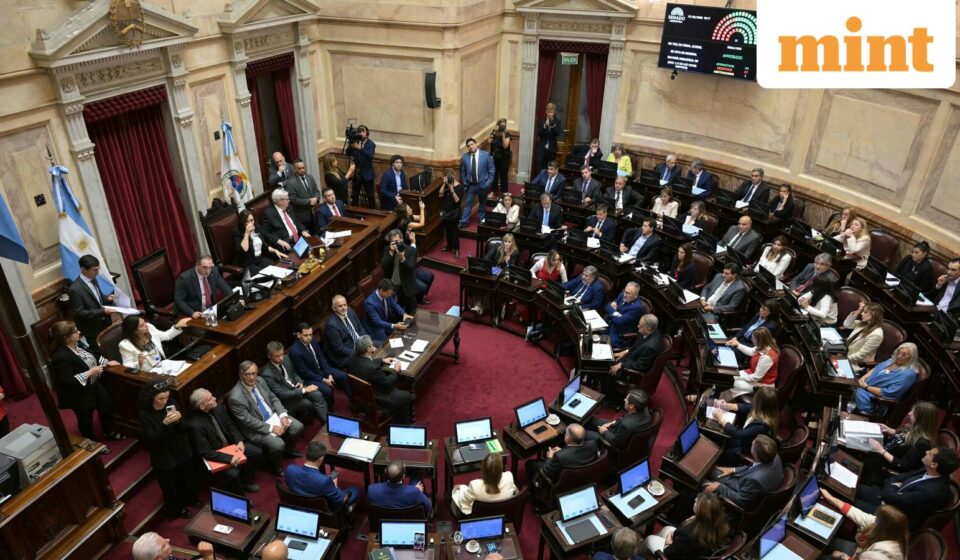
Argentina’s Congress has passed President Javier Milei’s proposed labour reform, igniting a heated debate across the nation. This “labor modernization law” introduces significant alterations to employment regulations, including extended working hours and reduced severance pay. According to AFP, the bill was adopted on Friday and includes provisions that lower employer taxes while limiting the right to strike.
Spanning 100 pages, the legislation comprises 218 articles. Key changes include allowing working days of up to 12 hours, a departure from the current 8-hour limit; severance packages calculated without extra income such as bonuses; and provisions enabling companies to negotiate directly with employees regarding pay and working conditions. The reform also allows employers to adjust salaries based on productivity and permits payments in foreign currencies.
In an effort to regulate union activities, the new law stipulates that workers must seek permission to hold assemblies in the workplace, with disruptions deemed punishable offenses. Certain sectors, including education and healthcare, are categorized as essential, requiring them to maintain a minimum operational capacity of 75% during strikes, effectively limiting union actions.
Vacation policies have also been revised; employers can now divide paid time off into shorter segments and mandate summer vacations at least once every three years. The law abolishes certain professional statutes for select jobs like hair stylists and journalists six months post-implementation. Additionally, specialized labor courts are set to be eliminated.
This reform is poised to impact all registered workers, potentially extending to those in informal employment who can be officially registered under the new provisions. The measures address not only private sector employees but also public workers governed by the same Labor Contract Law.
Although the bill has passed in both the Senate and the House of Deputies, it must receive a final confirmation from the upper house before becoming law. Reports indicate that President Milei aims for the legislation to be finalized before March 1, when he plans to address Congress at the beginning of the ordinary sessions.
Public response to the labor reform has been starkly polarized, with protests erupting across the country. A recent survey revealed that approximately 48.6% of Argentines support the law, while 45.2% oppose it. The General Confederation of Labor (CGT), a key union organization, has expressed its discontent, planning to challenge the reform in court following a general strike that recently paralyzed parts of Argentina.
Critics argue that the reform represents a dangerous rollback of workers’ rights. Sergio Emiliozzi, a 60-year-old teacher, voiced concerns that the law would make it easier for employers to dismiss workers, undermining job security. Opposition parties have dismissed claims that the reform will stimulate job creation, citing the closure of roughly 21,000 companies and a significant job loss of around 300,000 since Milei assumed office.
Matias Cremonte, President of the Latin American Association of Labor Lawyers, criticized the reform as “regressive” and founded on flawed assumptions, highlighting that global evidence suggests job creation is more influenced by economic policies than labor laws. Currently, a report from Argentina’s national statistics institute indicates that 80% of businesses have no immediate hiring plans, while 15% are considering layoffs.
The unfolding situation reflects the complexities of Milei’s economic agenda, which has garnered international attention, particularly following backing from U.S. President Donald Trump, who has tied financial aid to Argentina’s currency to Milei’s success. As the situation evolves, the implications of this labor reform are likely to resonate across various sectors of Argentine society.
Original Source: https://www.livemint.com/news/world/argentina-labour-reform-approved-what-changes-from-employees-salary-vacations-to-working-hours-11772248055985.html
Category :
Tags:
Publish Date: 2026-02-28 08:42:00