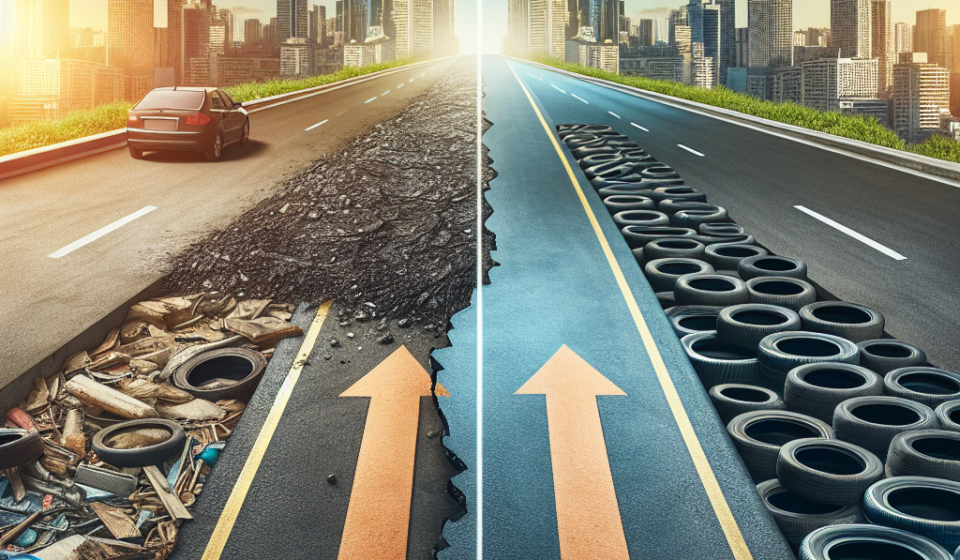

We’re quick to treat waste as an externality – a problem to be hidden or buried – rather than as latent infrastructure. That mindset is exactly why a simple engineering idea from the road-repair world deserves a second look: using shredded, end-of-life tyres as structural and surfacing material isn’t just environmental symbolism; it’s systems-level thinking that changes how we design for resilience and long-term cost.
The signal: a recent piece described two practical uses of recycled tyres – Tire-Derived Aggregate (TDA) as a lightweight, insulating subgrade fill, and Rubberized Asphalt Concrete (RAC), where crumb rubber is blended into asphalt. TDA reduces vertical stress on weak soils and improves drainage; RAC increases pavement resilience and can divert thousands of scrap tyres from landfill per mile of resurfacing.
What this means for architects, CTOs and civic leaders
There are three architectural lessons here that translate directly into enterprise and infrastructure strategy.
1) Reuse reduces load – materially and architecturally
Just as TDA lightens the physical load on subgrade soils, software and systems benefit when we reuse components rather than overburden foundations with ad-hoc patches. Legacy systems become fragile when teams continually bolt on quick fixes; the same short-term “fill” approach that fixes a pothole for a week can accelerate long-term failure. Consider modular components, well-defined interfaces and lightweight orchestration layers that reduce systemic stress and make replacements incremental and less risky.
2) Insulation and drainage are resilience patterns
TDA’s thermal insulation and drainage roles are patterns we should adopt in system design: isolate critical state (thermal insulation), and ensure clear channels for failure modes to escape (drainage). In practice this means stronger abstractions, better observability, and intentional flow-control for error handling. These are the non-glamorous engineering chores that prevent catastrophic outages later.
3) Circular economy requires end-to-end thinking (and governance)
RAC shows the payoff when supply chains, standards and on-ground execution align. But it also highlights trade-offs: variable input quality, regulatory acceptance, procurement inertia, and the need for measurement frameworks. The enterprise analogue is clear – adopting reusable components or third-party platforms needs governance, QA, and lifecycle metrics, otherwise “green” choices become technical debt.
Actionable steps for leaders
– Pilot with measurable KPIs: start with short, instrumented pilots (1–2 km) and track lifecycle metrics – failure rate, maintenance cost, and material diverted from waste streams. The same applies to tech pilots: instrument, measure, iterate.
– Invest in standards and QA: define acceptance tests for recycled materials or third-party components to avoid variable quality.
– Build cross-functional procurement: pair engineering, procurement and legal to create contracts that encourage innovation (performance-based contracts rather than lowest-bid).
– Use digital twins and sensors: embed low-cost monitoring (strain, moisture, temperature) to validate assumptions and help scale responsibly. This reduces political risk and builds evidence for wider rollout.
– Localize supply chains: turn waste into local economic opportunity – tyre processing units create jobs and reduce transport costs and emissions.
A note for Bharat – especially Northeast India
This is directly relevant. The Northeast’s heavy monsoon, hillside terrain and patchwork of rural roads make drainage and subgrade resilience critical. Rubberized layers and TDA offer a frugal, circular approach to reduce maintenance cycles and landfill burden. Coupling pilots with local MSMEs for tyre processing, and leveraging state-level R&D (and where applicable, STPI advisory channels), can create replicable models for resilient, affordable rural infrastructure.
Takeaways
– Think beyond one-off fixes: design for lifecycle, not just next quarter.
– Measure before scaling: pilots with telemetry create defensible data for policy and procurement.
– Align incentives: procurement, standards and local industry must move together for circular solutions to work.
Closing thought
Innovation often looks like old problems solved with new systems thinking. Reimagining waste as a structural asset – whether in asphalt or architecture – forces us to plan with horizons longer than a maintenance budget. That is the real shift we need.
About the Author
Sanjeev Sarma is the Founder Director of Webx Technologies Private Limited, a leading Technology Consulting firm with over two decades of experience. A seasoned technology strategist and Chief Software Architect, he specializes in Enterprise Software Architecture, Cloud-Native Applications, AI-Driven Platforms, and Mobile-First Solutions. Recognized as a “Technology Hero” by Microsoft for his pioneering work in e-Governance, Sanjeev actively advises state and central technology committees, including the Advisory Board for Software Technology Parks of India (STPI) across multiple Northeast Indian states. He is also the Managing Editor for Mahabahu.com, an international journal. Passionate about fostering innovation, he actively mentors aspiring entrepreneurs and leads transformative digital solutions for enterprises and government sectors from his base in Northeast India.