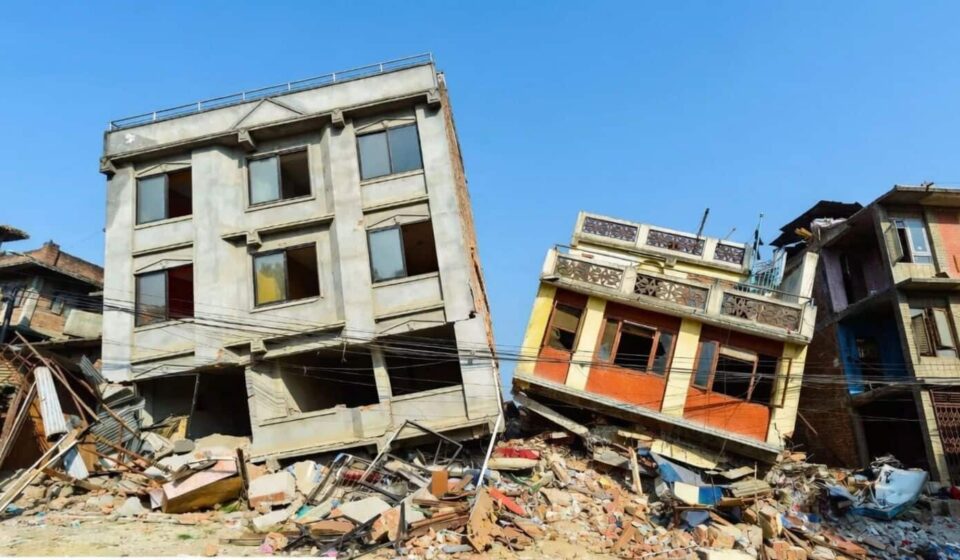

A groundbreaking study from the Massachusetts Institute of Technology (MIT) has unveiled a rare seismic phenomenon dubbed “boomerang earthquakes.” Unlike typical earthquakes, which rupture outward from their point of origin, these unique events can temporarily reverse along the same fault line. This intriguing research, published in AGU Advances, indicates that even straightforward, linear faults might undergo this unexpected behavior under certain conditions.
Historically, boomerang earthquakes have been considered rare, with only a handful of documented cases. Notable instances include a 2016 earthquake in the Atlantic Ocean that shifted eastward before reversing westward, as well as Japan’s catastrophic 2011 Tohoku earthquake and the recent seismic activity along the Turkey-Syria border. Previous analyses largely attributed these unusual patterns to intricate networks of intersecting faults. However, the new research challenges that assumption, opening the door to the possibility that even simple straight faults can produce these surprising reversals.
To delve deep into this phenomenon, the MIT researchers employed advanced computer modeling techniques to simulate an elastic crust featuring a single, straight fault. They varied parameters such as fault length, starting points, and travel directions during their testing. Their findings revealed a distinct behavior: only earthquakes progressing in one direction exhibited the reversal pattern. This reversal can be attributed to the fault’s frictional dynamics, which involve not just a simple drop in stress but a more complex interplay of rising and falling pressures.
Crucially, distance emerged as a significant factor contributing to this phenomenon. The research indicated that when a section of the fault ceases to slide, it can lead to a buildup of stress behind the moving rupture. This accumulation of energy may trigger a secondary slip in the opposite direction. The simulations suggest that larger earthquakes are more likely to demonstrate this behavior as compared to their smaller counterparts, raising new questions about how different sizes of seismic events operate.
The implications of this research extend to earthquake detection and hazard assessments. The study suggests that existing detection methods may overlook these back-propagating seismic fronts, potentially reshaping our approach to understanding earthquake risks. While still in the exploratory stages, this new insight enhances our comprehension of earthquake physics, particularly when considering faults that were once thought to exhibit simpler behavior.
Overall, the findings underscore the necessity for continued investigation into this unique type of earthquake. By refining our existing models and detection techniques, we can pave the way for improved hazard assessments and preparedness strategies for future seismic events. This research not only sheds light on boomerang earthquakes but also reinvigorates the scientific community’s understanding of the complexities underlying seismic activity, urging further study into this captivating aspect of Earth science.
Tags: #Earthquakes #Seismology #MIT #BoomerangEarthquakes #EarthquakeResearch #AGUAdvances
Original Source: https://www.newsbytesapp.com/news/science/boomerang-earthquakes-can-reverse-back-along-the-fault-study-finds/story
Category :
Tags:
Publish Date: 2026-02-22 17:51:00