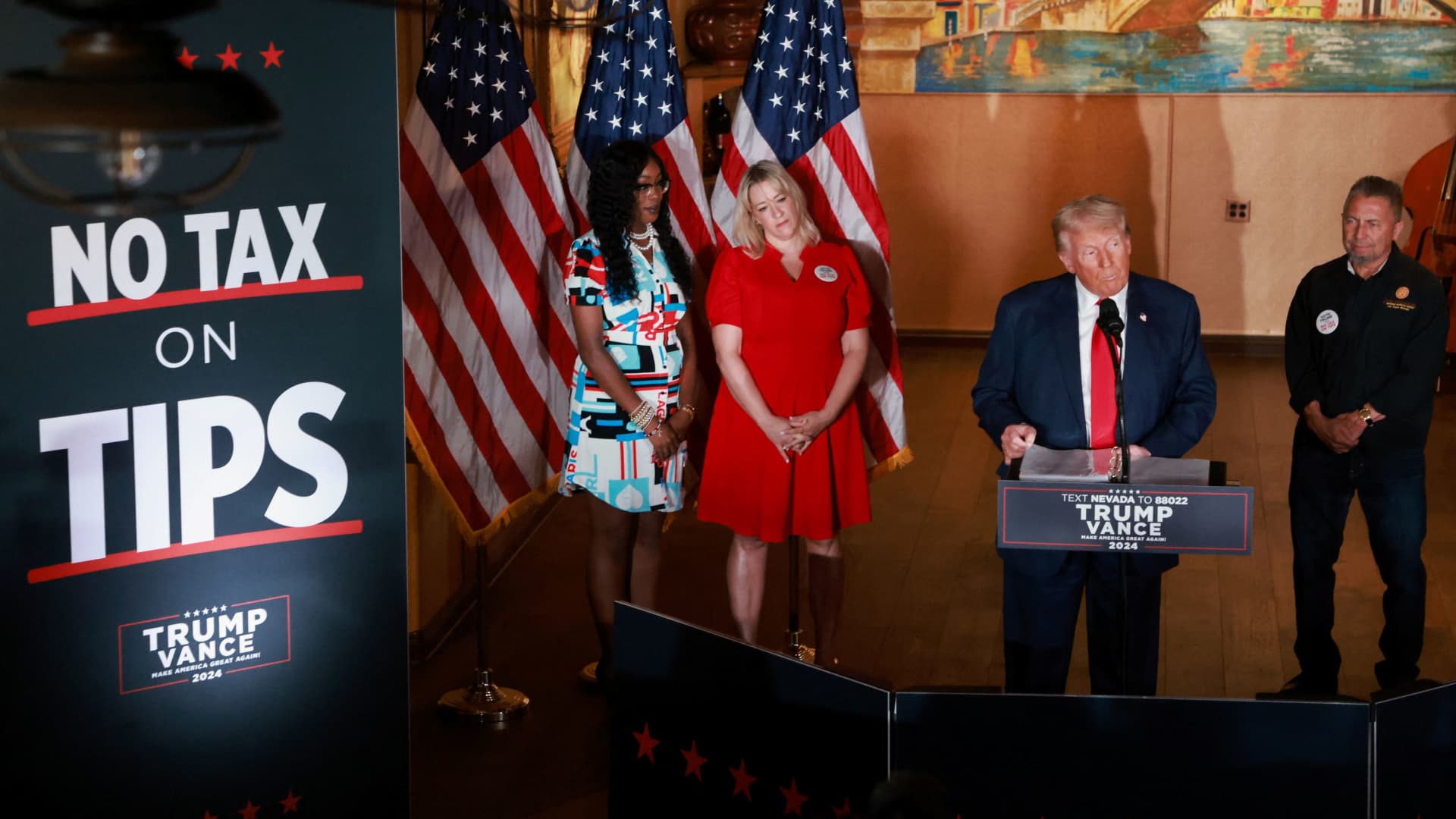

In the run-up to the presidential election, both Republican nominee Donald Trump and Democratic contender Kamala Harris have pledged to eliminate federal taxes on tipped income, a policy aimed at winning over tipped workers in Nevada, a critical swing state. Trump announced his plan in June, quickly followed by Harris, signaling bipartisan support for the initiative.
Despite growing support, the policy faces scrutiny. Critics argue it would benefit a small percentage of the workforce, excluding most low-wage workers, and could introduce fairness issues among similar job categories. Additionally, nearly 40% of tipped workers already pay no federal income tax, making the policy’s impact limited.
Differing legislative proposals have emerged. Republican bills, led by Ted Cruz and others, propose a full tax exemption on tipped income but maintain payroll taxes. Critics warn these bills could potentially be exploited by high-income earners restructuring their salaries as tips. In contrast, Harris’ supported TIPS Act aims to exempt tips for lower earners and eliminate the subminimum wage for tipped employees, gaining backing from Nevada’s Culinary Workers Union.
The restaurant industry holds mixed views. While some favor maintaining the tip credit system, others advocate for a broader dialogue on minimum wage adjustments. The financial implications are significant, with the Yale Budget Lab estimating a tax-only proposal could cost $107 billion over a decade.
As both parties gear up for a contentious election, the future of the no-tax-on-tips policy remains uncertain. Economists suggest alternative measures, such as expanding tax credits, might provide more equitable solutions for supporting low-wage workers. Whether the next administration will prioritize this initiative remains to be seen.
Original Story https://www.cnbc.com/2024/11/04/no-taxes-on-tips-president-us-economy.html
Category :
Tags: