Unveiling Wonder: The Astonishing Marvel of Hooke’s Micrographia – A Monumental Masterpiece

Robert Hooke’s “Micrographia” and Its Impact on Science
While Charles Darwin and Isaac Newton are often celebrated for their groundbreaking contributions to science, Robert Hooke’s “Micrographia” deserves recognition for its unique influence on a different field. Published in 1665, Hooke’s work was the first treatise on microbiology, bringing the world of microscopy into public consciousness. Born in 1635 on the Isle of Wight, Hooke initially considered a career in art before switching to science, where he excelled in many disciplines.
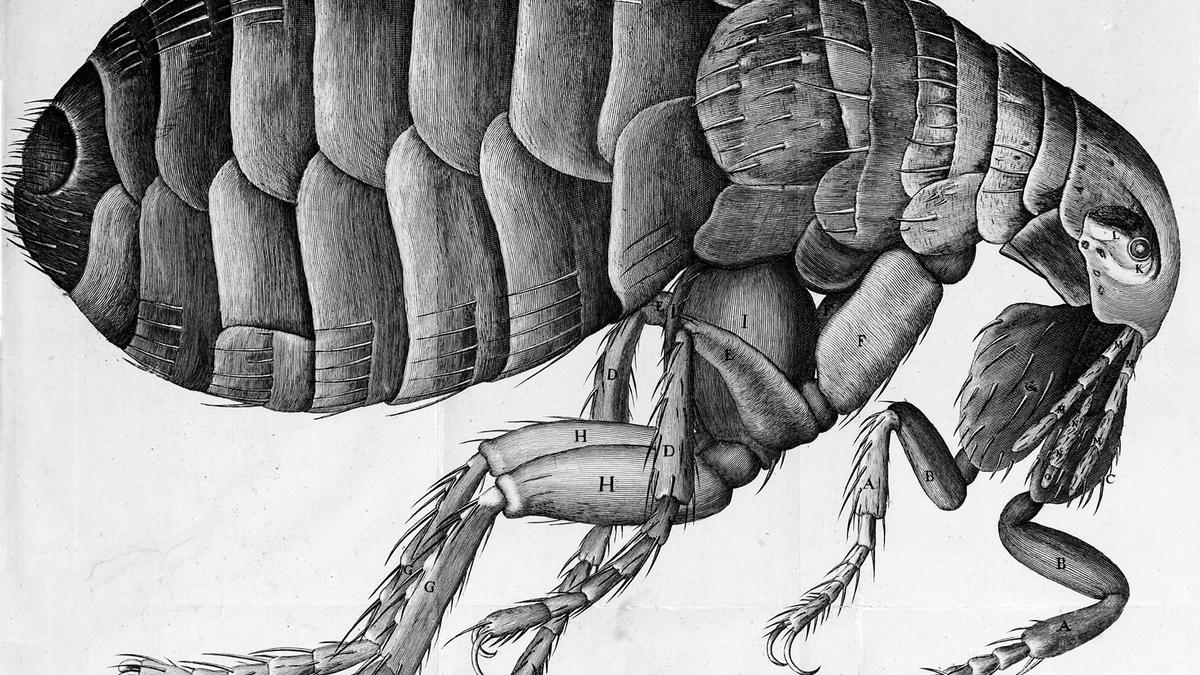
As the first Curator of Experiments for the Royal Society, Hooke conducted extensive research between 1661 and 1664, leading to the publication of “Micrographia.” The book showcased the potential of the microscope, describing intricate details of rocks, plants, and insects. Hooke’s observations led him to coin the term “cell” in a biological context, marking a significant milestone in the study of biology.
“Micrographia” was more than a scientific hit; its detailed engravings and accessible writing captivated the public, influencing notable figures such as Samuel Pepys. Despite its success, Hooke never received the recognition he sought, overshadowed by contemporaries like Newton, with whom he had a recorded animosity.
Today, “Micrographia” remains a testament to Hooke’s contributions to science, and thanks to digital technology, the Royal Society has made its complete version available online, allowing new generations to explore its content. However, the lack of authentic portraits of Hooke from his time persists, though efforts, such as that by amateur painter Rita Greer, strive to recreate his likeness based on historical descriptions.
Published – November 03, 2024, 12:22 am IST.
Original Story https://www.thehindu.com/children/micrographia-hookes-monumental-masterpiece/article68791068.ece
Category :
Tags:
Publish Date: 2024-11-03 00:22:00