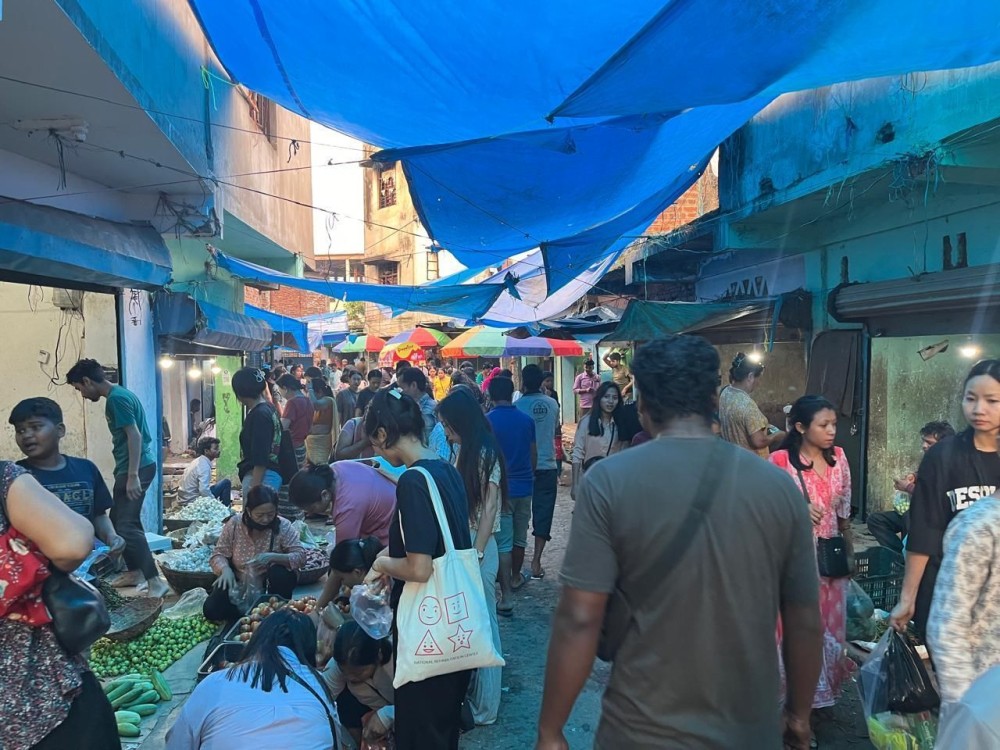
Is Your Health at Risk? Discover the Truth About Food Quality in Nagaland | MorungExpress

Food Safety Responsibility Begins at Home, Say FSSAI Officials
Morung Express News, Dimapur | September 15
The Food Safety and Standards Authority of India (FSSAI) has emphasized the growing imperative of food safety, asserting that responsibility starts at home. Samlamgwamlie Michui, a Food Safety Officer in Dimapur, highlighted that with rising awareness about food safety in Nagaland, it is crucial for families to adopt proper food habits, understand consumer rights, and stay informed about market products.
In an interview with The Morung Express, FSSAI officials shared their ongoing efforts to ensure food safety. The FSSAI Nagaland unit, divided into three zones—Kohima, Dimapur, and Mokokchung—regularly collects and tests market samples, responds to consumer complaints, and inspects establishments for expired products.
A new initiative, the "Food Safety on Wheels" (FSW), involves a mobile lab for spot testing and public awareness. FSW visits remote villages, demonstrating tests from the DART (Detect Adulteration through Rapid Tests) handbook, enabling even ordinary citizens to check for common adulterants in foods like sugar, oil, and spices.
Zuthungbemo Ngullie, an FSW food technician, advised the public to avoid loose or unlabeled food items, citing common adulterants like brick powder in unpackaged chili powder. Simple home tests can detect such impurities.
FSSAI also requires food business operators (FBOs) to obtain licenses or register. Establishments with annual turnovers over Rs 12 lakhs need a license, while those below can complete a simpler registration. Michui noted that enforcement remains challenging in Dimapur due to workforce shortages, although approximately 500 street food vendors are registered.
Hygiene remains a priority. FSSAI insists street vendors avoid using newspapers for food wrapping and recommends hand gloves, headgear, and regular cleaning. Consumers have the right to raise complaints directly with shop owners and the Designated Officer in their districts.
Addressing the persistent myth of "plastic rice," officials clarified it as a misunderstanding of fortified rice enriched with vitamins and minerals to combat anemia. This rice, distributed through the Public Distribution System (PDS), bears no plastic content. Similarly, other fortified foods like flour, oil, and milk are marked with a (+) sign. Michui stressed the importance of reading labels to understand product contents, urging entrepreneurs to provide accurate nutritional information.
Food safety is a collective responsibility, starting at home and extending to businesses and the wider community.
Original Story https://www.morungexpress.com/how-safe-is-food-quality-in-nagaland
Category : Nagaland
Tags: